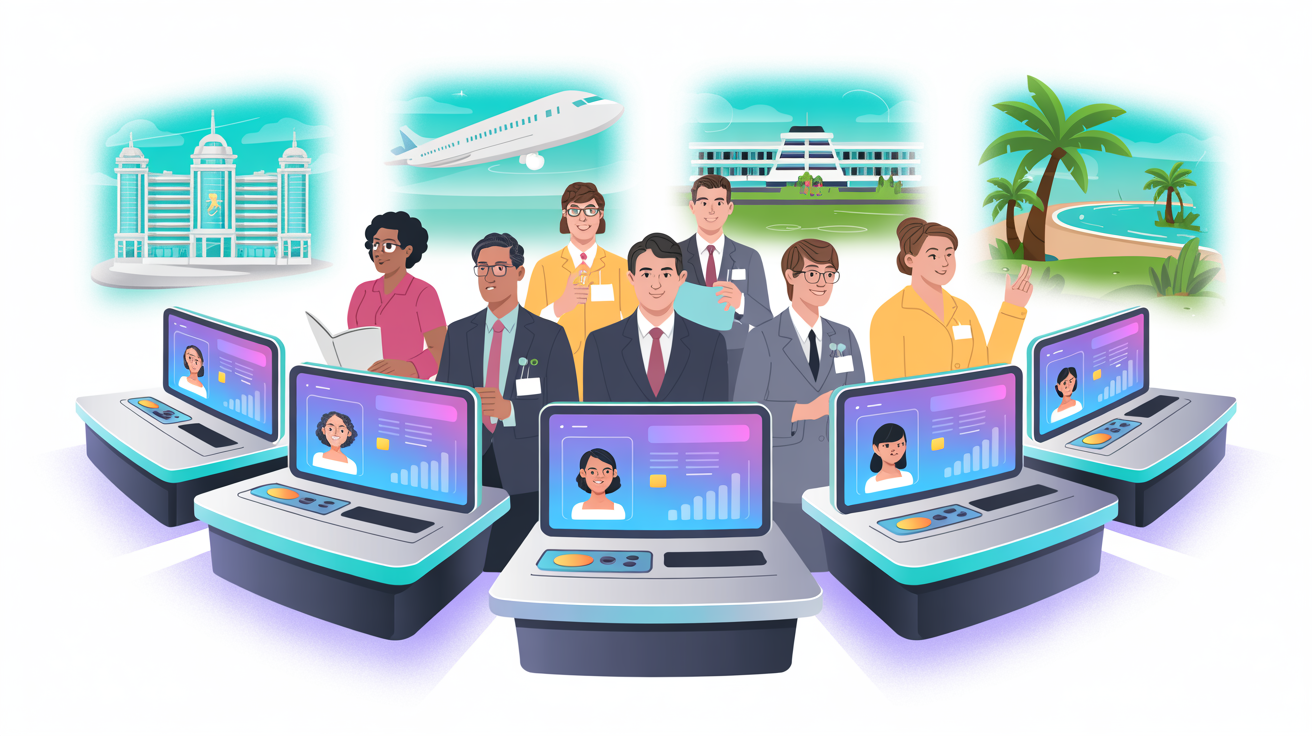
A sales playbook codifies your best selling practices into a reusable, shareable resource that helps every agent sell as effectively as your top performers. It answers the questions agents face in real conversations: "What should I recommend for this customer?" "How do I handle this objection?" "What's the best way to position this product against the competition?"
In theory, every travel business should have playbooks. In practice, most don't — and those that do often produce documents so long, generic, or disconnected from daily work that agents never open them after the initial training session.
Here's how to create playbooks that agents actually reference and apply.
Why Most Sales Playbooks Fail
The failure pattern is consistent across industries, but travel has specific pitfalls:
Too comprehensive. A 60-page playbook covering every product, every scenario, and every process is a reference manual, not a selling tool. Agents don't read reference manuals between customer calls.
Too generic. "Understand your customer's needs" and "present value, not features" are sound principles but unhelpful in the moment an agent faces a specific objection about a specific product. Agents need concrete guidance, not abstract advice.
Wrong format. A PDF sitting in a shared drive is inaccessible during a live phone conversation. A printed binder gathering dust on a shelf is equally useless. Playbooks need to be where the agent is, when they need them.
Never updated. A playbook written in January reflects January's product range, pricing, and competitive landscape. By June, it's misleading. By December, it's dangerous.
No practice integration. Knowing what the playbook says and being able to execute it under conversational pressure are different things. Playbooks without corresponding practice exercises produce agents who know the theory but can't apply it.
The Playbook Structure That Works
Effective travel sales playbooks are modular, specific, and action-oriented. Structure each playbook around a specific selling situation rather than a product category.
Playbook Type 1: Product Selling Guides
One playbook per key product (hotel, tour, cruise itinerary). Each contains:
The 30-Second Pitch (memorisable summary) "Hotel Sunrise is our best-selling family resort in Crete — direct beach access, an outstanding kids' club that takes children from 3-12 all day, and an adults-only terrace and pool for parents who want some quiet time. All-inclusive genuinely saves money compared to eating out. It's the property I recommend for families who want a hassle-free beach holiday with great facilities."
Ideal Customer Profiles (who to recommend this for)
- Families with children 3-12 (primary audience)
- Multigenerational family groups (good range of facilities)
- Couples who want beach + convenience (outside school holidays)
- NOT ideal for: young couples seeking nightlife, independent explorers, luxury seekers
Key Selling Points (the 5 reasons to recommend)
- Direct beach access — no road crossing, walk out of the hotel onto sand
- Kids' club rated #1 in the region on TripAdvisor — full day programme, genuine fun
- Adults-only pool area — parents get downtime while kids are in the club
- All-inclusive that delivers — quality restaurants, branded drinks, water sports included
- 15 minutes from Heraklion — easy transfer, more time on holiday
Objection Responses (the 3 most likely pushbacks)
| Objection | Response |
|---|---|
| "It's more expensive than Hotel Blue Bay" | "The all-inclusive at Sunrise includes everything — meals, drinks, water sports, kids' club. At Blue Bay, those are extras. When you add them up, Sunrise is actually better value for families." |
| "Crete is too touristy" | "The area around Sunrise is well-maintained but not overcrowded. There's a traditional village a 10-minute walk away with local tavernas tourists rarely find. You get resort convenience with real Cretan character nearby." |
| "We've been to Crete before" | "Which part did you visit? Crete is large enough that most visitors only see a fraction. Hotel Sunrise is on the north coast near [area] — if you've been to the south or east coast, this will feel like a different island." |
Upsell Opportunities
- Sea-view room: +£30/night — "For a family holiday, waking up to that view sets the tone for the whole day"
- Excursion package (3 trips): £150pp — "The Samaria Gorge trip and the Spinalonga boat tour are both incredible"
- Airport lounge: £25pp — "With young children, having somewhere comfortable to wait is worth every penny"
Competitive Position vs Hotel Blue Bay: Better for families (kids' club), direct beach. Blue Bay is better for couples (restaurants, spa). vs [Competitor Operator] similar property: Our price includes transfers and rep service. Theirs doesn't.
Playbook Type 2: Scenario Guides
One playbook per common selling scenario. These cover the conversation technique rather than the product detail.
Example: "The Customer Is Comparing You with an OTA"
What's happening: The customer has found a similar holiday online for the same or lower price and wants to know why they should book through you.
Key principle: Don't compete on price. Compete on value, protection, and expertise.
Talk track: "That's a fair question. The price you've found online might be similar — and for some simple holidays, booking direct is fine. Here's what you get with us that you won't get online: [1] If something goes wrong — flight cancellation, hotel overbooking, illness abroad — you have a named person to call who will sort it. Online, you have an email address and a chatbot. [2] You're financially protected under ATOL if anyone in the chain goes bust. Many online deals don't offer that. [3] I've checked that this hotel is genuinely the right one for you — the online reviews are good but they won't tell you that the building work next door starts in May, which I happen to know about."
If they push back: "I completely respect your decision either way. But before you book online, can I double-check one thing? [Review the online offer for hidden costs — transfers, luggage, room type, board basis.] Often the headline price isn't the full picture."
Practice this: Complete AI roleplay scenario: "Competing with OTAs" to practise this talk track with a realistic virtual customer.
Playbook Type 3: Seasonal Campaign Guides
Short-lived playbooks aligned to promotional campaigns, seasonal peaks, or product launches.
Example: "January Sale Campaign Guide"
Campaign dates: 2-31 January Key offers: 30% off selected Mediterranean resorts, free child places on family holidays, early booking bonuses for summer departures Target customers: Families planning summer, couples seeking inspiration, repeat customers from last year's campaigns Talk track for inbound enquiries: [Specific language for the campaign] Proactive outreach guidance: [Which customers to contact, what to say] Assessment: Complete the campaign knowledge quiz before 5 January
Making Playbooks Accessible
The best playbook in the world is worthless if agents can't access it when they need it.
Digital-First Distribution
Host playbooks on your training platform rather than in shared drives or email attachments. Benefits:
- Searchable by product, scenario, or keyword
- Accessible on any device including mobile
- Usage analytics (you can see which playbooks agents access most)
- Version-controlled (agents always see the latest version)
- Integrated with training modules and practice exercises
Micro-Format for Mobile
On a phone screen during a customer call, an agent can scan a few bullet points — not a full page. Create micro-versions of each playbook: the 30-second pitch, the top 3 selling points, and the key objection response. These micro-cards are the quick-reference layer; the full playbook provides depth when the agent has more time.
Linked to Practice
Every playbook should include a link to the corresponding roleplay practice scenario. Reading the playbook builds awareness; practising the playbook builds skill. AI coaching feedback after practice tells the agent whether they're applying the playbook effectively.
Creating Playbooks Efficiently
You don't need a team of content writers. Efficient playbook creation uses three sources:
Source 1: Your Top Performers
Interview your best-selling agents. Ask them: "How do you recommend Hotel X?" "What do you say when a customer says it's too expensive?" "What upsells do you suggest and when?" Their answers are your playbook content — proven in real conversations, not theorised in a meeting room.
Source 2: Your Supplier Partners
Suppliers know their products. Ask them for the key selling points, competitive positioning, and common objections — then translate their input into agent-friendly language. Much of this information already exists in supplier training materials and BDM presentations.
Source 3: AI-Assisted Creation
AI content tools can generate draft playbooks from source material (product fact sheets, supplier briefs, BDM presentation notes) in minutes. A human editor then refines for accuracy, adds agency-specific context, and ensures the language matches how agents actually talk. This reduces playbook creation time by 60-80%.
Measuring Playbook Effectiveness
Track two metrics:
Usage: How often are agents accessing playbooks? If usage is low, the content isn't meeting their needs or the access method is inconvenient. If usage is high for some playbooks and low for others, the high-use playbooks are well-designed and the low-use ones need improvement.
Performance correlation: Do agents who use playbooks more frequently achieve higher conversion rates and booking values? Performance analytics that cross-reference playbook access with sales data provide the answer.
If playbooks are being used but performance isn't improving, the content needs revision — the guidance isn't translating into better conversations. If playbooks are being used and performance is improving, you've proven the model and should expand the library.
Maintaining Playbooks
Playbooks decay. Build a maintenance rhythm:
- Monthly: Review for pricing and availability accuracy
- Quarterly: Update competitive positioning (competitors change their offerings)
- Seasonally: Create or update campaign-specific playbooks
- After major events: Update immediately when products change, new hotels open, or significant market shifts occur
Assign ownership. Each playbook should have a named person responsible for keeping it current. Without ownership, maintenance doesn't happen.
Create AI-powered playbooks with TravAI →
This article is part of our Sales Enablement for Travel series. Related reading: