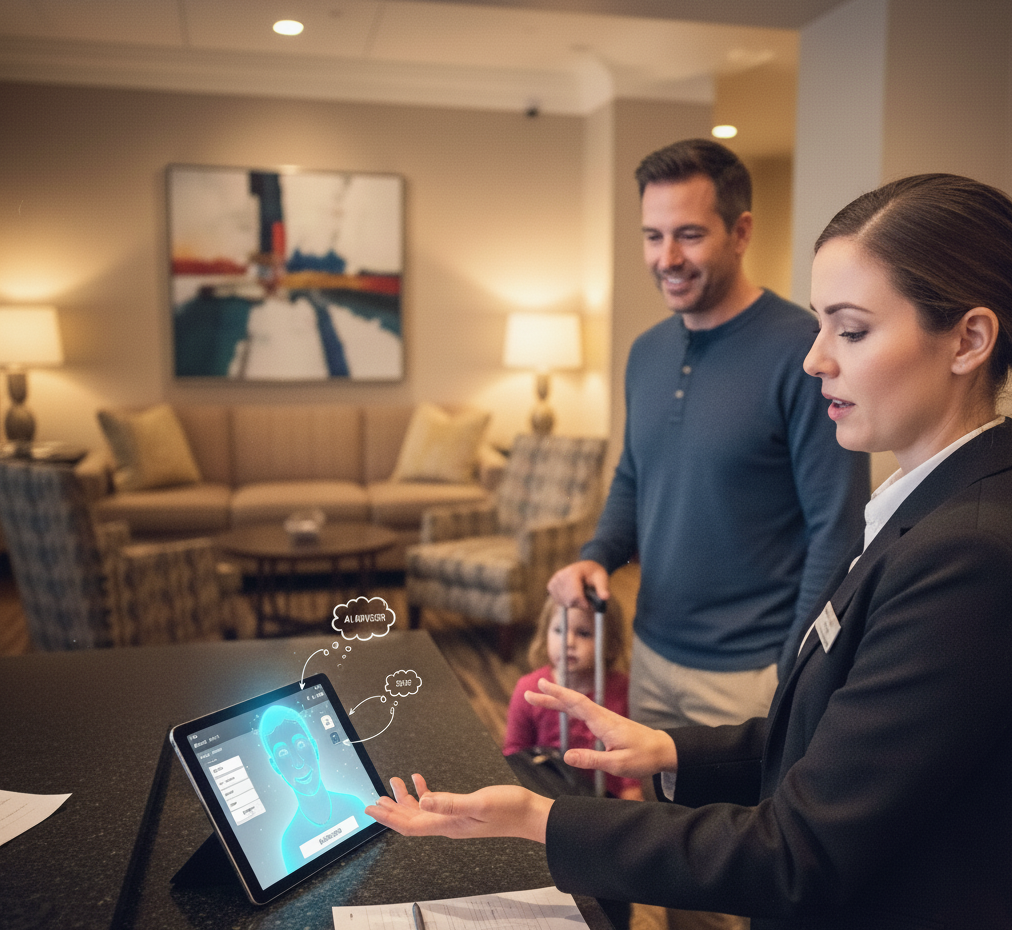
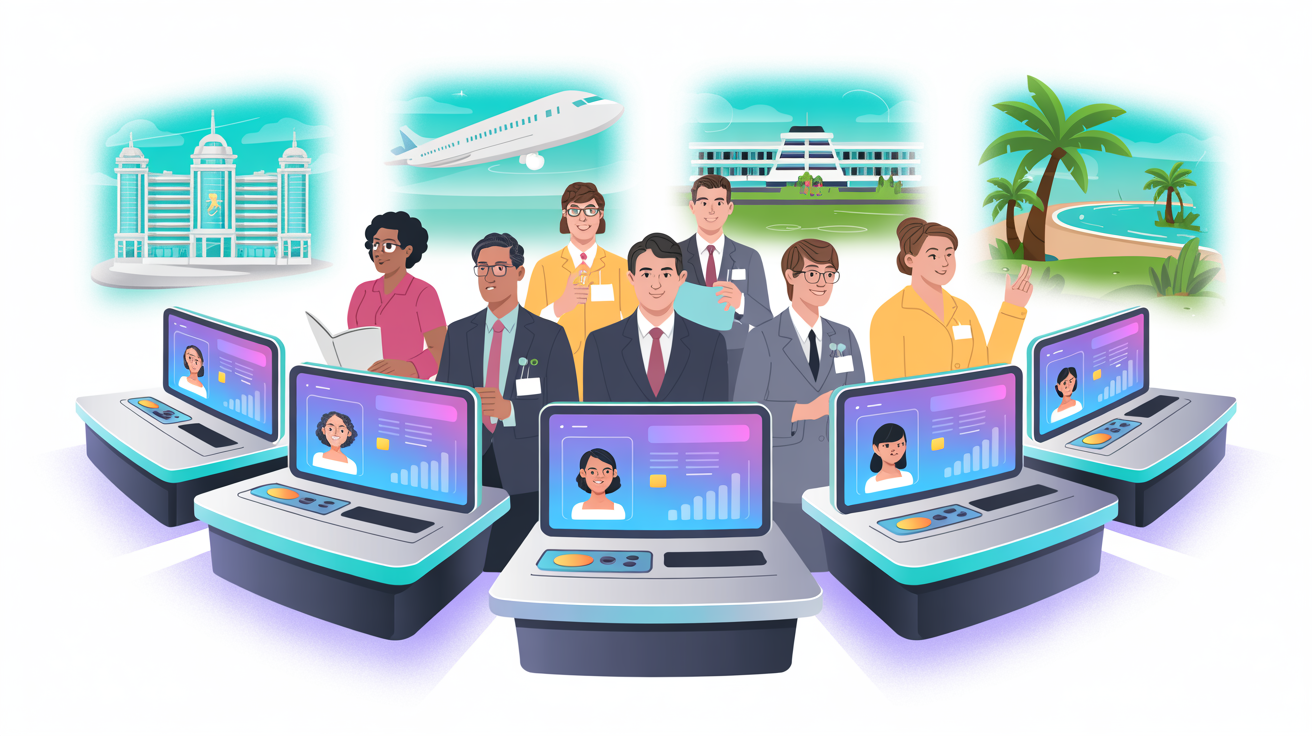
AI sales enablement is the use of artificial intelligence to equip salespeople — including travel agents, BDMs, reservations teams, and trade partners — with the knowledge, skills, content, and coaching they need to sell more effectively. It combines AI-powered training, practice, coaching, and analytics into a single, measurable system.
For travel businesses, AI sales enablement transforms the economics of agent and staff development — making comprehensive enablement feasible at any scale.
This glossary defines the key terms and concepts that travel professionals need to understand.
Core Concepts
AI Sales Enablement
The systematic use of AI technology to improve sales performance across an organisation or partner network. Unlike traditional sales training (one-off events), AI enablement is continuous, personalised, and measurable. It includes content creation, knowledge delivery, skills practice, coaching, and performance analytics — all enhanced by artificial intelligence.
In travel: A tour operator using an AI platform to train 1,000 agents on their product range, provide selling practice, deliver personalised coaching, and measure the impact on bookings.
Sales Enablement vs Sales Training
Sales training is a component of enablement — it focuses on knowledge transfer. Sales enablement encompasses everything that helps sellers sell: training, content, tools, coaching, and analytics. Training teaches. Enablement equips.
AI-Powered Training
The use of artificial intelligence to create, deliver, and optimise training content. AI generates interactive modules from product information, adapts content to individual learner levels, and updates materials automatically when information changes.
Key advantage: AI reduces content creation time from weeks to hours, making comprehensive training programmes feasible for businesses of any size.
AI Applications
Adaptive Learning
A learning approach where AI adjusts content difficulty, sequence, and focus based on each learner's performance. An experienced agent skips basics and focuses on advanced content. A new agent receives foundational material first. Each learner gets a personalised pathway.
AI Coaching
AI that provides specific, personalised feedback on selling technique. Unlike generic tips, AI coaching analyses the learner's actual performance (in roleplay or assessment) and offers targeted improvement suggestions. Example: "You described the room well but didn't ask about the customer's occasion. Knowing it's an anniversary would have allowed you to recommend the sea-view suite."
AI Roleplay
AI-simulated customer conversations where agents practise selling, objection handling, upselling, and complaint resolution with a virtual customer that responds dynamically. Unlike scripted scenarios, AI roleplay adapts to the agent's approach, creating realistic practice opportunities.
Natural Language Processing (NLP)
The AI technology that enables machines to understand and generate human language. In sales enablement, NLP powers conversational AI coaching, roleplay customer responses, and intelligent search across training content.
Machine Learning (ML)
AI that improves through experience. In sales enablement, ML analyses patterns in agent performance data to identify what training interventions produce the best commercial results, then optimises recommendations accordingly.
Generative AI
AI that creates new content — text, images, assessments, scenarios — rather than just analysing existing data. Generative AI creates training modules, quiz questions, roleplay scenarios, and selling guides from product information.
Content and Delivery
Interactive Content
Training materials that require active learner participation — embedded questions, drag-and-drop activities, scenario decisions — rather than passive reading or watching. Interactive content outperforms slides on every engagement and retention metric.
Microlearning
Training delivered in short sessions (3-7 minutes) addressing a single topic. Microlearning fits between tasks, maintains knowledge through daily repetition, and achieves higher completion rates than long-form modules.
Spaced Repetition
A learning technique where information is reviewed at increasing intervals to maintain long-term retention. AI platforms automate spaced repetition by scheduling review quizzes at optimal intervals based on forgetting curve research.
Content Personalisation
Delivering different content to different learners based on their role, experience, performance data, and learning history. A luxury travel specialist sees different training recommendations than a new generalist agent.
SCORM (Sharable Content Object Reference Model)
A legacy technical standard for eLearning content packaging. SCORM is being superseded by AI-powered platforms that don't require separate authoring, packaging, and uploading steps.
Assessment and Measurement
AI-Generated Assessments
Quiz questions and assessment scenarios created by AI from training content. AI can generate questions at multiple cognitive levels — from factual recall to complex scenario application — at a fraction of the time and cost of manual question creation.
Knowledge Score
A measurable indicator of what an agent or team knows about a product, destination, or topic. Knowledge scores from assessments can be tracked over time and correlated with booking performance.
Competency Framework
A structured map of the knowledge and skills required for a role, with defined levels (e.g., Foundation → Proficient → Expert). AI platforms enable competency frameworks to be operationalised through training, assessment, and certification.
Training ROI
The measurable return on investment from training programmes. Calculated by comparing the cost of training against the commercial value generated (increased bookings, higher average values, reduced turnover). AI platforms that connect training data to business outcomes make ROI measurement feasible.
Learning Analytics
Data generated by training platforms showing who completed what, when, how they scored, where they struggled, and how their performance trends over time. Advanced analytics connect this learning data to commercial outcomes.
Commercial Terms
Agent Activation Rate
The percentage of registered agent accounts that are actively booking. Typical ranges: 20-40% without structured enablement, 40-60% with AI-powered enablement.
Average Booking Value (ABV)
The average revenue per booking. Upselling and cross-selling training typically increases ABV by 15-25%.
Conversion Rate
The percentage of customer enquiries that become confirmed bookings. AI-coached agents typically achieve 40-55% conversion vs 25-35% for uncoached agents.
Time to First Booking
How long it takes a new agent to make their first booking after registration. Traditional: 30-60 days. With AI-powered onboarding: 7-14 days.
Cost Per Active Agent
Total enablement investment divided by the number of agents actively booking. AI platforms significantly reduce this metric by reaching more agents at lower marginal cost.
Platform Terms
LMS (Learning Management System)
A software platform for delivering and tracking training. Traditional LMS platforms are being challenged by AI-powered alternatives that offer content creation, roleplay, coaching, and deeper analytics.
SaaS (Software as a Service)
Cloud-based software accessed via subscription rather than installed locally. Most modern training platforms, including TravAI, are delivered as SaaS.
Multi-Tenant Platform
A platform where multiple organisations share the same infrastructure but each has isolated, branded experiences. Enables tour operators, DMOs, and hotel groups to provide branded training to their agent or staff networks.
API (Application Programming Interface)
A technical connection between systems. Training platform APIs enable integration with booking systems, CRM, and business intelligence tools — connecting training data to commercial performance.
White-Labelling
Customising a platform's appearance (logo, colours, branding) to match the client's brand. Agents experience training as coming from the tour operator or DMO, not the platform provider.
Why It Matters
AI sales enablement isn't a future trend — it's a current reality that's delivering measurable results for travel businesses that adopt it. The terminology may be new, but the outcomes are familiar: more knowledgeable agents, more confident sellers, more bookings, and better customer experiences.
The businesses that understand these concepts and implement them first gain competitive advantage. Those that wait until they're commonplace will be playing catch-up.
Explore AI sales enablement with TravAI →
This article is part of our Travel Industry Trends series. Related reading: