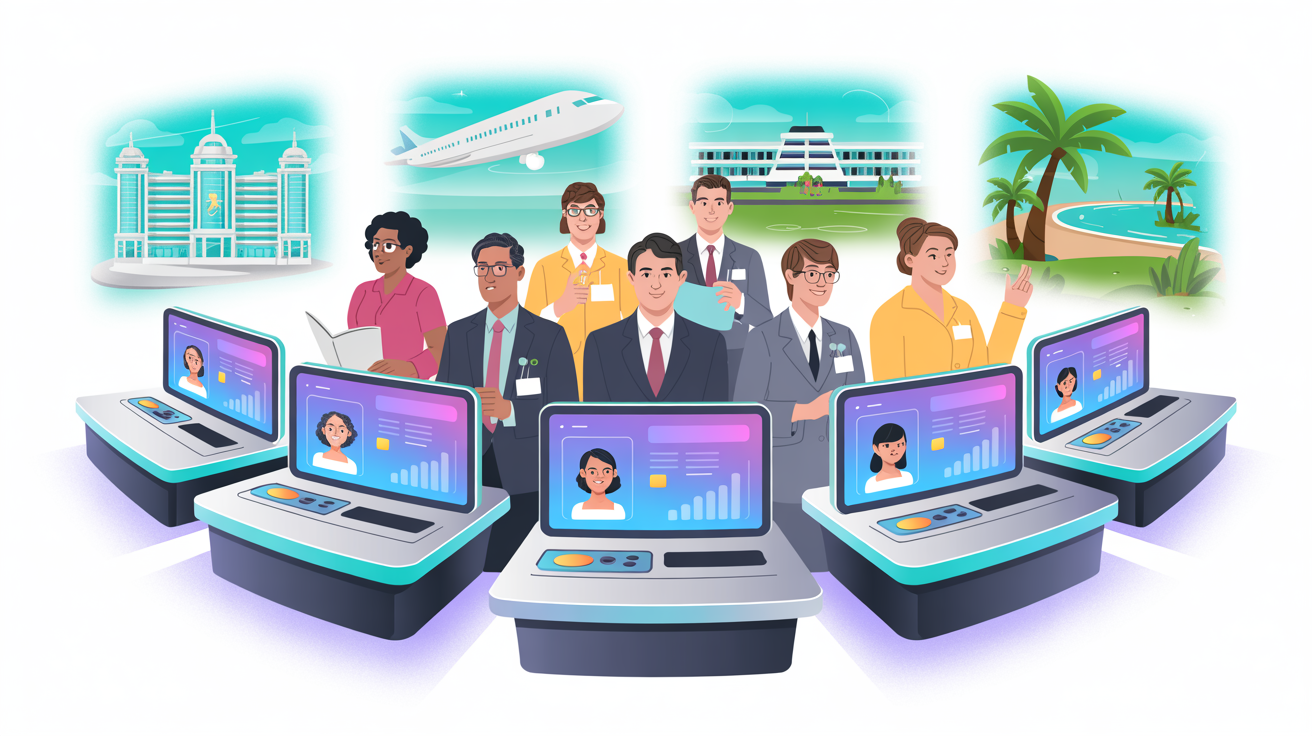
Destination management organisations face a fundamentally different training challenge from most travel businesses. Your primary training audience is not your own staff — it is the thousands of travel agents, tour operators, and other trade partners who sell your destination to their customers. Your success depends on whether these external partners have the knowledge and confidence to recommend your destination accurately, enthusiastically, and in preference to competitors.
This creates an asymmetry that traditional training methods struggle to resolve. You need to reach thousands of agents, most of whom are juggling training from dozens of competing destinations. Your training must be compelling enough to command attention, deep enough to build genuine expertise, and measurable enough to justify your investment to stakeholders and government funders.
AI-powered training fundamentally changes what is possible for DMO trade education. It delivers personalised learning that adapts to each agent's knowledge level, provides practice opportunities that build selling confidence, and generates data that demonstrates the commercial impact of your training investment. This guide explains how DMOs can implement AI training for maximum impact.
Sub-sector Training Challenges
| Challenge | Impact | Traditional Solution Limitations |
|---|---|---|
| Reaching thousands of trade agents who each represent dozens of competing destinations | Limited penetration — most agents have superficial destination knowledge at best | Webinars and online academies have low completion rates; roadshows reach a fraction of the trade |
| Competing for agent attention against other DMOs and supplier training | Agents prioritise incentive-linked training over genuine destination learning | Incentive programmes drive completion but not knowledge retention or selling confidence |
| Demonstrating training ROI to government funders and tourism boards | Difficulty justifying training budgets when impact cannot be measured beyond completion statistics | Completion certificates prove exposure, not competence; no link to actual booking data |
| Diverse trade partner needs — from cruise specialists to luxury advisors to adventure operators | One-size-fits-all training fails to address the specific knowledge each agent type needs | Creating multiple training variants is prohibitively expensive with traditional content production |
| Keeping content current as destination offerings, regulations, and conditions change | Agents relay outdated information, creating customer expectation mismatches and negative reviews | Updating static e-learning modules and PDF guides is slow and resource-intensive |
| Training internal destination specialists and visitor centre staff alongside trade partners | Internal teams need deeper knowledge but often receive the same surface-level training as trade | Separate training programmes for internal and external audiences double production costs |
Sources: European Travel Commission; VisitBritain Trade; UNWTO Tourism Education
How AI Transforms Training for DMOs
Trade Agent Education at Scale
Before AI: DMOs produce online training academies (often called "specialist programmes") where agents complete modules and earn destination expert certification. Completion rates average 20-35%. Agents who complete receive a badge but may not be able to articulate why a customer should choose your destination over a competitor, or recommend the right experiences for different traveller types.
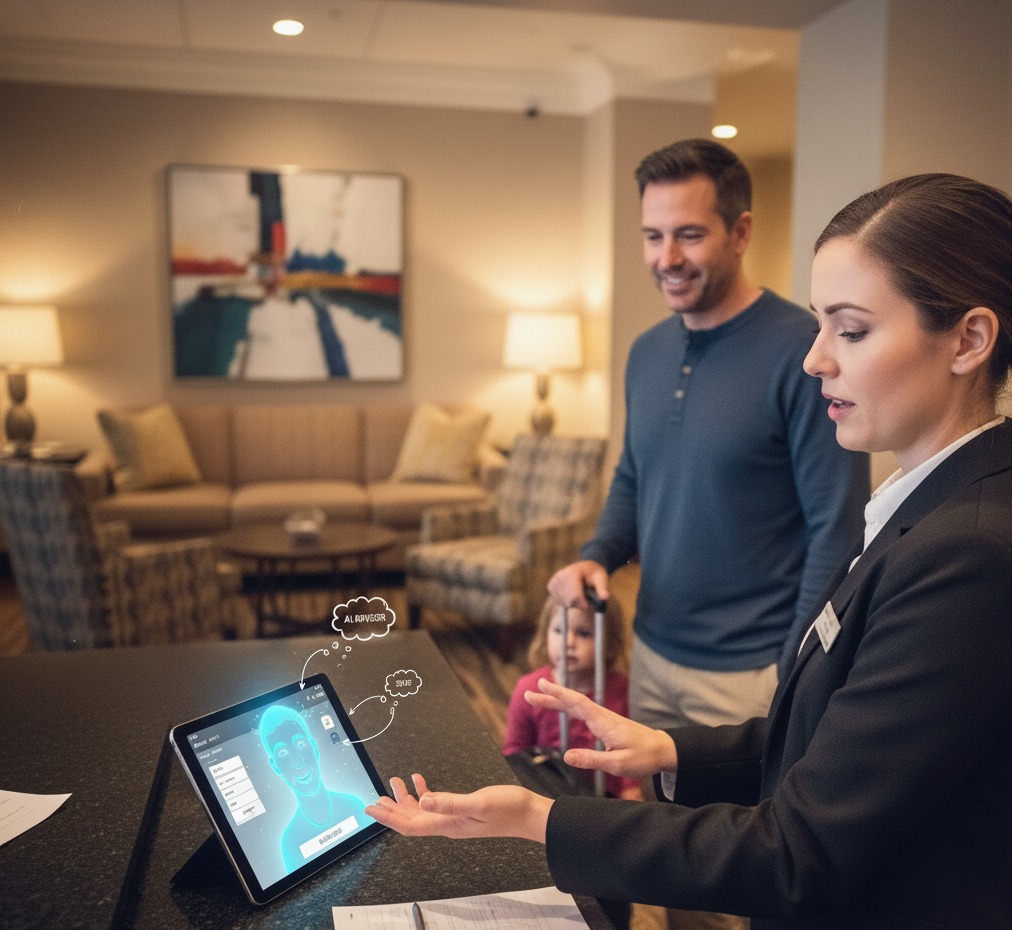
After AI: AI-powered e-learning assesses each agent's existing destination knowledge through adaptive questioning, then delivers a personalised learning path. A cruise specialist who already knows your port cities receives training on shore excursion selling points and multi-day extension opportunities. A luxury travel advisor receives high-end experience and exclusive access content. Assessments confirm whether agents can recommend your destination confidently and accurately — not just recall facts.
Destination Selling Confidence
Before AI: Agents learn about your destination but never practise selling it. There is a gap between knowing that your destination has beautiful beaches and being able to recommend it persuasively to a customer comparing three beach destinations.
After AI: AI roleplay simulations allow agents to practise recommending your destination in realistic sales conversations. The AI plays the customer — a honeymoon couple choosing between the Maldives and your destination, a family weighing your offering against an all-inclusive resort, an adventure traveller comparing your experiences to competitors. Sales coaching feedback helps agents refine their pitch and handle destination-specific objections.
Measurable Impact and ROI
Before AI: DMO training reports focus on enrolment numbers and completion rates. When stakeholders ask "did this training generate bookings?" the answer is usually "we believe so, but we cannot prove it."
After AI: AI training platforms generate detailed performance data — not just who completed training, but who achieved competence, what they can now sell confidently, and how their knowledge compares to pre-training baselines. When integrated with trade booking data, DMOs can demonstrate the correlation between training engagement and actual booking volumes to your destination.
Content Personalisation Without Production Cost
Before AI: Creating tailored training for cruise specialists, luxury advisors, adventure agents, and generalist travel agents means producing four separate content sets — multiplying costs and maintenance burden.
After AI: AI delivers personalised content from a single knowledge base. The same destination information is framed differently depending on the learner's trade segment, existing knowledge, and learning gaps. Updates to the knowledge base automatically propagate to all personalised learning paths, eliminating the content maintenance bottleneck.
AI Training Use Cases
| Use Case | AI Capability | Business Outcome |
|---|---|---|
| Destination specialist programmes | Adaptive certification with validated assessments | Higher certification quality; specialists who can genuinely sell the destination |
| Trade segment-specific training | AI personalises content for cruise, luxury, adventure, and generalist agents | Relevant training for every agent type from a single content base |
| Destination objection handling | AI roleplay practises responses to common destination concerns (safety, weather, value) | Higher conversion rates for destination-hesitant customers |
| New product and experience launches | AI generates training from destination updates and distributes to relevant agents | Faster agent awareness and selling readiness for new experiences |
| Visitor centre staff development | Deep destination knowledge training with local insight scenarios | Better visitor experience and increased local spending recommendations |
| Trade event follow-up | Post-roadshow and post-exhibition AI training converts event awareness into selling capability | Better ROI from expensive trade event participation |
| Seasonal campaign support | AI delivers campaign-aligned training to agents before and during promotional periods | Trade partners sell in line with campaign messaging and offers |
| Stakeholder reporting | AI generates detailed training impact reports with competence metrics | Stronger evidence base for funding applications and strategy decisions |
Implementation Guide
Phase 1: Pilot (Weeks 1-4)
Objective: Prove the concept with a defined trade audience and a specific campaign or programme.
- Select 100-200 trade agents across your key markets, representing different agent types (luxury, adventure, generalist)
- Focus on your core destination training programme or an upcoming seasonal campaign
- Configure the TravAI platform with your destination content, unique selling points, and trade messaging
- Establish baselines: current certification completion rates, agent knowledge scores, booking data to your destination (if available)
- Run AI training alongside your existing academy for comparison
Phase 2: Rollout (Weeks 5-12)
Objective: Expand to your full trade network.
- Deploy AI-powered training to all registered trade partners
- Add roleplay simulations for destination selling practice
- Introduce segment-specific learning paths for cruise, luxury, adventure, and group travel agents
- Train your BDMs and trade team to use performance dashboards for targeted agency engagement
- Integrate with your trade portal and any trade booking tracking systems
- Begin correlating training data with destination booking volumes
Phase 3: Optimisation (Months 4-6+)
Objective: Demonstrate ROI and expand programme scope.
- Analyse training-to-booking correlation data for stakeholder reporting
- Use AI insights to inform trade marketing — which agent segments convert best after training?
- Expand to train at scale — including new trade partners, consortium groups, and international markets
- Add internal team training for visitor centres, PR teams, and destination specialists
- Reduce costs by replacing expensive roadshows with AI-powered remote training for lower-tier partners
- Use performance data to prioritise high-value FAM trip invitations to the most engaged and capable agents
ROI Analysis
| Investment Area | Return Metrics | Expected Timeline |
|---|---|---|
| Specialist programme quality | 25-40% increase in agents achieving validated certification (vs completion-only) | Months 2-4 |
| Agent selling confidence | Measurable improvement in destination recommendation capability through roleplay scores | Months 2-4 |
| Booking correlation | 10-20% higher booking volumes to destination through trained vs untrained agents | Months 4-8 |
| Programme delivery costs | 30-50% reduction in content production and update costs; reduced roadshow dependency | Months 3-6 |
| Stakeholder reporting quality | Competence-based metrics replace vanity completion statistics in funding reports | Months 2-4 |
| Trade engagement | Higher ongoing agent engagement with destination content beyond initial certification | Months 3-6 |
Source: UNWTO World Tourism Barometer; European Travel Commission — Research
Integration with Existing Systems
Trade portals: AI training integrates seamlessly with existing DMO trade portals. Agent progress, certification status, and specialist badges sync with your trade partner database, enabling automatic recognition and reward for engaged agents.
CRM and trade relationship management: Training engagement and competence data feeds into your CRM, giving BDMs a complete view of each agency's destination expertise. This informs visit prioritisation and conversation focus.
Booking and visitor data systems: Where booking data is available (through trade partners or booking platforms), AI training impact can be correlated with actual visitor numbers — providing the ROI evidence stakeholders require.
Content management systems: Destination content updates in your CMS can trigger corresponding training updates, reducing the lag between new product availability and agent awareness.
Marketing automation: AI training engagement data can trigger targeted marketing actions — agents who complete cruise-specific training receive your cruise campaign materials; agents struggling with specific knowledge areas receive relevant resources.
For deeper insight into how DMOs are using AI to scale marketing and engagement, see our dedicated guide.
Case Study: Scenario — Caribbean DMO Transforms Trade Specialist Programme
The situation: A Caribbean destination's UK trade marketing team manages a specialist programme with 4,200 registered agents. Completion rate has declined to 22%. Despite significant investment in trade roadshows, online training, and FAM trips, the team cannot demonstrate a measurable link between training activity and booking volumes. The tourism ministry is questioning the training budget allocation for the coming year.
The AI training approach: The DMO implements TravAI to overhaul its specialist programme. The existing module content is restructured into adaptive learning paths. Agents receive personalised training based on their trade segment (luxury, mainstream, cruise, adventure) and assessed knowledge level.
For the first time, the programme includes AI roleplay simulations where agents practise recommending the destination to realistic customer profiles — a honeymooning couple comparing Caribbean islands, a family choosing between the destination and a Mediterranean option, a cruise passenger considering a pre- or post-cruise extension. Sales coaching feedback helps agents refine their recommendation approach.
The trade team receives performance dashboards showing agent engagement, competence levels, and progression by agency and region. BDMs use this data to prioritise their agency visit schedules and tailor their support to each agency's actual knowledge gaps.
The results (over 8 months):
- Validated specialist certification reached 38% of active agents (up from 22% completion-based)
- Agents achieving AI-validated certification booked 27% more holidays to the destination than uncertified agents
- The DMO presented training-to-booking correlation data to the tourism ministry, securing a 15% budget increase for the following year
- Trade roadshow costs were reduced by 40% by replacing lower-tier market visits with AI-powered remote training
- FAM trip allocations were redirected to agents with the highest AI-demonstrated engagement and competence, improving FAM trip ROI
This approach reflects the broader shift towards data-driven trade engagement in destination marketing.
Getting Started Checklist
- Audit your current specialist programme: Measure true completion rates, knowledge retention, and any available booking correlation data
- Segment your trade audience: Identify the distinct agent types (cruise, luxury, adventure, generalist) and their different knowledge needs
- Establish baselines: Current certification rates, agent knowledge scores, booking data by certified vs uncertified agents
- Select pilot participants: Choose 100-200 agents across segments and markets for an initial AI training trial
- Prepare destination content: Compile your USPs, experience guides, travel logistics, accommodation options, and seasonal information
- Brief your trade team and BDMs: Position AI training as a tool that makes their trade engagement more targeted and effective
- Plan your measurement framework: How will you connect training engagement data with booking performance? What data sources are available?
- Define success criteria: What metrics would demonstrate sufficient impact to justify full programme rollout?
- Prepare a stakeholder communication plan: How will you present AI training results to funders and board members?
- Set a realistic timeline: Allow 4 weeks for pilot, 8 weeks for rollout, and 4+ months for meaningful booking correlation data
For guidance on implementing AI without a large technical team, see how to implement AI in your travel business.