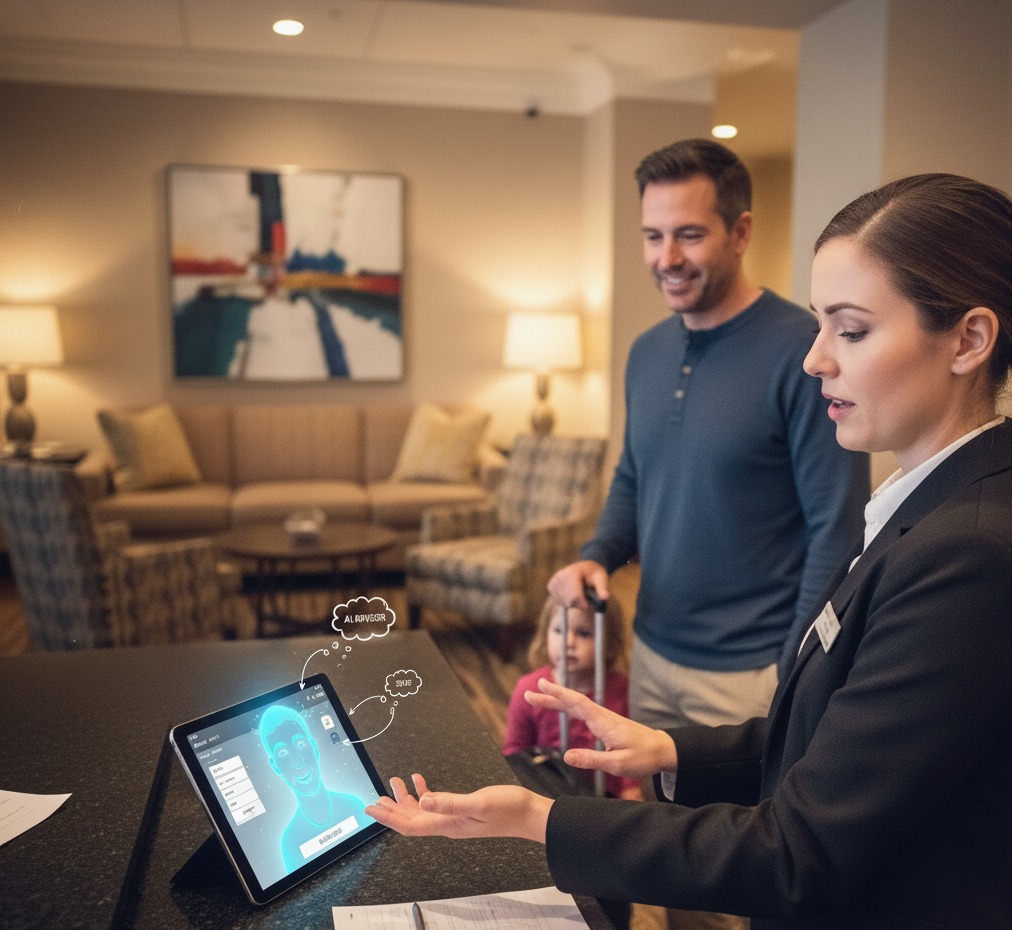
Selling attractions as part of a holiday should be straightforward — customers are already in "experience" mode. Yet agents frequently encounter resistance when recommending museums, theme parks, cultural sites, and activities. Here are the eight most common objections and proven frameworks for addressing each one.
Objection 1: "We'd Rather Just Explore On Our Own"
Why customers say this: They associate booked attractions with rigid schedules and tourist traps. They want spontaneity and authentic discovery.
Response framework:
"I completely understand — exploring freely is one of the best parts of travel. What I'd suggest is booking the must-see attractions in advance and leaving the rest of your time open for wandering. The reason is practical: [attraction] regularly has 2-hour queues for walk-ups, but a timed-entry ticket gets you straight in. You save the queuing time for exploring."
Key technique: Position advance booking as enabling spontaneity, not restricting it. Time saved at one attraction = more time for unplanned discovery elsewhere.
Objection 2: "It's Too Expensive On Top of the Holiday"
Why customers say this: They've already committed a significant sum to flights and accommodation. Adding attractions feels like scope creep.
Response framework:
"I understand the budget consideration. Let me put it in perspective — the [attraction] works out to £X per person for a full day's entertainment. Compare that to a day at the hotel pool, where you'd spend £40-£60 on poolside drinks and lunch anyway. The attraction is actually the most cost-effective day of your holiday — and the most memorable."
Alternative approach — the per-hour frame:
| Presentation | Customer Perception |
|---|---|
| "The museum is £25 per person" | Sounds expensive for a museum |
| "That's £5 per hour for a 5-hour visit" | Sounds very reasonable |
| "Less than a cup of coffee per hour" | Sounds like a bargain |
Key technique: Reframe the cost as per-hour or per-day entertainment value, and compare to money they'd spend anyway on food and drinks.
Objection 3: "The Kids Won't Enjoy It"
Why customers say this: Parents assume cultural attractions are boring for children, or worry children are too young for theme park rides.
Response framework (cultural attractions):
"Actually, [museum/attraction] has a dedicated children's trail — it's like a treasure hunt through the exhibits. Kids get a booklet with puzzles and challenges, and there's an interactive science zone that's specifically designed for under-12s. Most parents tell me their children enjoyed it more than they expected."
Response framework (theme parks):
"At [age], your children have loads of options. [Theme park] has over 20 rides suitable for that age group, plus character meets, splash zones, and shows designed for younger visitors. It's not just about the big roller coasters — there's a whole world of age-appropriate fun."
Key technique: Demonstrate specific, age-appropriate features. Parents need to hear that the attraction has thought about their children's experience, not just adults.
Objection 4: "We've Been Before"
Why customers say this: They assume the attraction is the same as their last visit — which may have been years ago.
Response framework:
"When did you last visit? Since then, they've added [specific new attraction/exhibit/experience]. They've also introduced [new feature] which completely changes the experience. Repeat visitors often say they enjoy it even more the second time because they know what to prioritise."
Supporting data points:
| Attraction Type | Typical Refresh Rate | New Content Since Last Visit |
|---|---|---|
| Major theme parks | New ride/area every 1-2 years | Almost certainly something new since last visit |
| Museums | 2-3 temporary exhibitions per year | Different exhibitions every 6 months |
| Cultural sites | Occasional refurbishment/expansion | New interpretation, technology, or access |
| Adventure activities | Regular new routes/challenges | New experiences added seasonally |
Key technique: Ask when they last visited, then highlight specific changes since then. Even a 2-year gap means significant updates at most attractions.
Objection 5: "The Queues Will Be Terrible"
Why customers say this: Horror stories about 3-hour theme park queues or tourist-site crowds put customers off.
Response framework:
"Queues can be a concern — which is exactly why I recommend booking in advance. A [timed-entry/fast-track/skip-the-line] ticket means you walk straight to the front. At [attraction], that can save you 60-90 minutes per ride or exhibit. It transforms the experience from stressful to enjoyable."
Upsell opportunity: This objection naturally leads to a fast-track or VIP upgrade:
"For £X extra per person, the express pass cuts your waiting time by 80%. On a busy summer day, that's the difference between doing 5 things and doing 15."
Key technique: Turn the objection into an upsell opportunity. The customer has identified a problem — you have the solution.
Objection 6: "We Don't Have Time"
Why customers say this: They feel their holiday is already full, or they underestimate how enjoyable a half-day visit could be.
Response framework:
"I understand your time is precious. Here's what I'd suggest — the [attraction] works brilliantly as a half-day visit. Spend the morning there, then the afternoon is free for lunch and exploring. It takes about 2-3 hours to see the highlights, and it'll be one of the most talked-about parts of your trip."
Alternative — integration approach:
"Actually, [attraction] is right next to [place they're already visiting]. Since you're in that area anyway, it makes perfect sense to pop in. A 2-hour visit fits naturally into your day."
Key technique: Offer time-efficient visit options. Show how the attraction fits into their existing plans rather than competing with them.
Objection 7: "We Can See It For Free Online"
Why customers say this: YouTube, virtual tours, and social media have made some customers feel they can experience attractions digitally.
Response framework:
"You can see photos and videos online, that's true. But being there is completely different. You can't feel the atmosphere of a 2,000-year-old building through a screen. You can't taste the food on a culinary tour through a video. You can't experience the rush of a rollercoaster from your sofa. The physical experience is the whole point of travel — and this attraction is one of the reasons people visit [destination]."
For cultural/historical attractions:
"It's like saying you can see the Mona Lisa on your phone. Technically true — but standing in front of it, seeing the real thing, understanding the scale and the setting — that's an experience you'll remember for years. A screen just can't replicate that."
Key technique: Emphasise the sensory, emotional, and physical dimensions that digital viewing cannot replicate.
Objection 8: "We'd Rather Spend the Money on Food/Shopping"
Why customers say this: They're prioritising other holiday spending over experiences.
Response framework:
"Great meals and shopping are wonderful — but let me ask you this: five years from now, will you remember that restaurant meal, or will you remember standing at the top of [landmark] watching the sunset? Experiences create the memories that last. And honestly, [attraction] at £X per person costs less than a good dinner — and you'll remember it for much longer."
Supporting angle:
Research from Cornell University consistently shows that experiential spending creates more lasting happiness than material spending. You don't need to cite the research — just use the insight:
"People always remember what they did on holiday more than what they bought. This experience will be the story you tell friends when you get home."
Key technique: Appeal to the memory-making value of experiences versus transient pleasures. Frame the attraction as the holiday's defining moment.
Practising Objection Responses
The difference between knowing these responses and delivering them naturally is practice. AI roleplay allows you to:
| Practice Element | Benefit |
|---|---|
| Hear realistic objections from AI customers | Builds familiarity; reduces surprise |
| Try different response approaches | Find what works for your selling style |
| Get coaching feedback on your responses | Targeted improvement |
| Practice with different customer personas | Adapt responses to families, couples, groups |
| Repeat until responses feel natural | Confidence in live conversations |
The Agent's Mindset Shift
The most effective attraction sellers share one belief: recommending an attraction isn't upselling — it's completing the holiday.
| Mindset | Consequence |
|---|---|
| "I shouldn't push extras" | Attractions mentioned as afterthought; low attach rate |
| "Attractions are part of the holiday experience" | Attractions recommended naturally; high attach rate; happier customers |
When a customer returns from holiday and says "That [attraction] you recommended was the highlight of the trip" — that's when you know you've sold well. And those customers come back to you for their next holiday.
Practise handling attraction objections with TravAI →
This article is part of our Attractions & Experiences Sales series. Related reading: