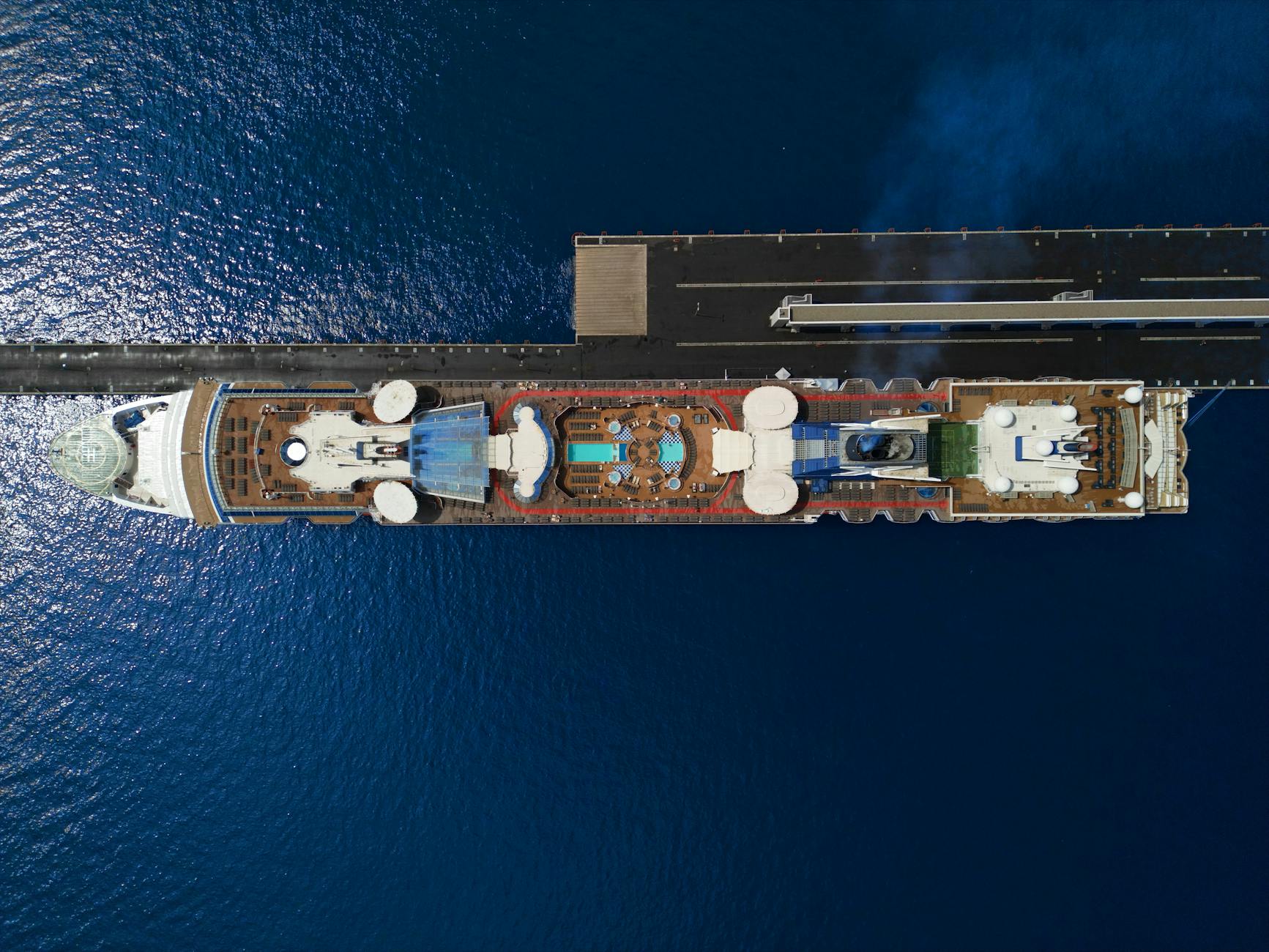
Cruise selling has its own language. Using the right terminology with customers demonstrates expertise, builds confidence, and prevents embarrassing misunderstandings. This glossary covers the 50 terms every travel agent selling cruise needs to know — from ship anatomy to booking mechanics to onboard experiences.
Ship Terminology
1. Aft
The rear (back) end of a ship. Aft cabins often have dramatic wake views but may experience more vibration from the engines. Some passengers love aft balcony cabins for their unobstructed views; others prefer midship for stability.
2. Bow
The front of the ship. Bow cabins may experience more motion in rough seas but can offer forward-facing views. Forward observation lounges — found on expedition ships and some luxury lines — provide stunning vistas.
3. Bridge
The command centre of the ship, where the captain and officers navigate. Many cruise lines offer bridge tours or have glass-fronted bridges so passengers can watch operations.
4. Beam
The width of the ship at its widest point. Wider beam generally means more stability. This matters when discussing seasickness concerns.
5. Deck
A floor or level of the ship. Cruise ships typically have 12-18 passenger decks. Higher decks offer better views; lower midship decks offer the least motion. Deck plans are essential for cabin selection advice.
6. Draft
How deep the ship sits in the water. Ships with shallow drafts can access smaller ports and rivers. Relevant when discussing river cruise options or expedition landings.
7. Gross Tonnage (GT)
A measure of a ship's internal volume, not weight. A 100,000 GT ship isn't heavier than a 70,000 GT ship — it has more enclosed space. Used to indicate ship size: under 30,000 GT is small; 100,000+ GT is mega-ship.
8. Knot
A nautical unit of speed equal to one nautical mile per hour (approximately 1.15 mph). Cruise ships typically travel at 18-22 knots. Relevant for sea day discussions — faster ships spend more time in port.
9. Lido Deck
The open-air deck, usually featuring the main pool, sun loungers, and casual dining. The lido deck is often the social hub of the ship during sea days.
10. Midship
The middle section of the ship. Midship cabins experience the least motion and are closest to main facilities. Recommended for first-time cruisers and passengers concerned about seasickness.
11. Port and Starboard
Port is the left side of the ship (facing forward); starboard is the right side. Knowing this helps when advising on cabin selection — in the Mediterranean, port-side cabins may face the coast on certain itineraries.
12. Stabilisers
Fin-like devices extending from the hull that reduce rolling motion. Modern ships have advanced stabiliser systems that significantly reduce passenger-felt movement. A key reassurance point for nervous first-timers.
13. Tender
A smaller boat used to transport passengers from ship to shore when the ship cannot dock at a port. Tendering adds time to port days and can be affected by weather. Relevant when discussing itineraries with tender ports.
Cabin Terminology
14. Inside Cabin (Interior)
A cabin with no window or balcony. The most affordable option. Modern inside cabins on some ships feature virtual balconies (LED screens showing real-time ocean views). Best for budget-conscious travellers who spend little time in the cabin.
15. Ocean View (Outside)
A cabin with a window (porthole or picture window) but no private outdoor space. A step up from inside for natural light and a sense of connection to the sea.
16. Balcony (Veranda)
A cabin with a private outdoor space accessed through sliding glass doors. The most popular cabin category. Upselling from inside to balcony is one of the most effective revenue-building conversations.
17. Suite
A larger cabin category with enhanced space, often including a separate living area, larger balcony, and premium amenities. Suites may include butler service, priority dining, and exclusive lounge access on luxury lines.
18. Guarantee Cabin
A cabin booked at a specific category (e.g., balcony) without a specific cabin number assigned. The cruise line guarantees the category or better. Often available at a discount — worth mentioning to price-sensitive customers.
19. Connecting Cabins
Adjacent cabins with an internal door between them. Essential for families and groups who want proximity with privacy. Book early — connecting cabins are limited.
20. Obstructed View
A cabin where the view from the window or balcony is partially blocked by lifeboats, structural elements, or other equipment. Usually priced lower. Important to flag during booking to avoid customer disappointment.
21. Stateroom
The cruise industry term for a cabin or room. Used interchangeably with "cabin" by most lines.
Booking and Pricing Terminology
22. Per Person, Double Occupancy (pp/do)
The standard way cruise fares are quoted — the price per person assuming two passengers share a cabin. Single travellers usually pay a single supplement. Always clarify this with customers: "That's £1,200 per person, so £2,400 for the cabin."
23. Single Supplement
The additional charge for a single passenger occupying a double cabin. Typically 50-100% of the second passenger fare. Some lines offer dedicated solo cabins (Norwegian's Studio cabins) or reduced supplements on specific sailings.
24. Port Charges and Taxes
Additional fees beyond the cruise fare covering port authority charges, government taxes, and environmental fees. Usually £100-£300 per person per cruise. Always include these in the quoted price to avoid surprises.
25. Gratuities (Service Charges)
Daily charges for onboard staff. Typically £10-£18 per person per day, added to the onboard account. Some lines (luxury, ultra-luxury) include gratuities in the fare. Clarify whether gratuities are included when quoting — it affects the total cost comparison. See cruise line knowledge for line-specific policies.
26. All-Inclusive
A fare structure that includes beverages, gratuities, and sometimes excursions and Wi-Fi. Common on luxury and ultra-luxury lines. The inclusion level varies significantly between lines — always clarify exactly what "all-inclusive" means for each product.
27. Repositioning Cruise
A one-way sailing where the ship moves between seasonal regions (e.g., Mediterranean to Caribbean). Often excellent value due to lower demand, but involves more sea days and requires separate flights. Worth suggesting to customers seeking long voyages at good prices.
28. Turnaround Day
The day a cruise ship arrives at its home port, disembarks passengers, and embarks new passengers. Can be busy at ports. Advise customers to allow buffer time in travel plans for embarkation day.
Onboard Experience Terminology
29. Muster Drill (Safety Drill)
The mandatory safety briefing all passengers must complete before or shortly after departure. Modern muster drills are often app-based (eMuster) — passengers complete a briefing on their phone and then check in at their muster station.
30. Main Dining Room (MDR)
The complimentary restaurant included in the cruise fare. Usually offers multi-course dinners with a rotating menu. Many ships offer both fixed-time dining (assigned table and time) and flexible/anytime dining.
31. Speciality Dining
Additional-cost restaurants offering specific cuisines or premium dining experiences. Typically £25-£75 per person. Selling speciality dining is a key ancillary revenue opportunity.
32. Sea Day
A day spent entirely at sea with no port call. Sea days are when passengers use the ship's facilities most — pools, spa, activities, entertainment. Position positively: "Sea days are when you really enjoy the ship."
33. Port Day
A day when the ship calls at a destination. Excursion selling is focused on port days.
34. Shore Excursion
An organised tour or activity at a port of call. Available through the cruise line (guaranteed return-to-ship) or independently. Pre-booking excursions is a significant ancillary revenue opportunity.
35. Onboard Credit (OBC)
A monetary credit applied to a passenger's onboard account, used for purchases such as speciality dining, spa treatments, and drinks. Often offered as a booking incentive or agent-negotiated perk.
36. Formal Night
An evening with a dress code requiring smart/formal attire. Frequency varies: traditional lines (Cunard) have multiple; contemporary lines have fewer or none. Norwegian Cruise Line has eliminated formal nights entirely ("Freestyle"). Address dress code concerns for first-time cruisers.
37. Freestyle Cruising
Norwegian Cruise Line's brand name for their flexible dining and activity approach — no fixed dining times, no formal dress code, and multiple restaurant options. The concept has influenced the entire industry toward greater flexibility.
38. Cruise Card (SeaPass / Medallion / Cruise ID)
The passenger's onboard identification card, used for purchases, cabin access, and port embarkation/disembarkation. Modern versions (Princess MedallionClass, Royal Caribbean's app) are increasingly smartphone-based.
Industry Terminology
39. CLIA (Cruise Lines International Association)
The world's largest cruise industry trade association, representing over 95% of global ocean-going cruise capacity. CLIA provides training, certification, and industry data.
40. Berth
A sleeping position on a ship. A cabin with 4 berths sleeps 4 (often 2 in beds + 2 in pull-downs or sofa beds). Important for family bookings.
41. Manifest
The official list of all passengers and crew onboard. Passenger details must be submitted before sailing — remind customers to complete online check-in with accurate passport information.
42. Embarkation / Disembarkation
Boarding (embarkation) and leaving (disembarkation) the ship. Embarkation day usually allows boarding from midday; disembarkation requires vacating the cabin early morning. Advise customers on timing.
43. Itinerary
The route and schedule of the cruise, including ports of call, sea days, and departure/arrival times. Itinerary comparison is central to cruise selling.
44. Inaugural Sailing (Maiden Voyage)
The first commercial voyage of a newly launched ship. Often priced at a premium and sells out quickly. Appeals to cruise enthusiasts who want to be "first."
45. Wave Season
The period (typically January-March) when cruise lines release promotions and special offers for the upcoming season. The highest-volume booking period in the cruise calendar. Agents should prepare clients in advance.
46. Deadship
A ship being towed or transported without its own power. Not relevant to selling, but agents occasionally hear the term in industry context.
Expedition Terminology
47. Zodiac
An inflatable boat used for shore landings on expedition cruises. Zodiacs enable access to beaches, glaciers, and wildlife areas inaccessible to larger vessels.
48. Expedition Leader
The senior guide on an expedition cruise, responsible for planning daily activities based on weather, wildlife sightings, and conditions. The expedition leader is often the defining personality of the voyage.
49. Ice Class
A ship classification indicating its ability to navigate ice-covered waters. Higher ice classes (e.g., PC6, 1A) allow ships to reach more remote polar destinations. Relevant when comparing expedition cruise lines.
50. Drake Passage
The body of water between South America and Antarctica. Known for potentially rough seas. A common concern for customers considering Antarctic cruises — address with information about modern stabiliser technology and crossing duration.
Using This Glossary
This glossary is a reference tool — review it before cruise selling conversations, and consult it when unfamiliar terms arise. The more naturally you use cruise terminology, the more confident your customers will feel in your expertise.
For deeper product knowledge across all major cruise lines, see our Cruise Ship Knowledge guide. For selling techniques that put this knowledge into practice, explore our 15 Cruise Selling Techniques.
Build your cruise knowledge with TravAI →
This article is part of our Cruise Industry Sales series. Related reading:


