Practise the sales call before the real one
Your agents and reservations team take a live call from an AI client. The client talks, pushes back on price and hangs up when they've heard enough. Then the call is scored on whether it won the booking.
Written for: Heads of sales, reservations managers, contact centre managers and trade sales managers at tour operators, cruise lines, hotel groups and tourist boards.
What is AI voice role-play?
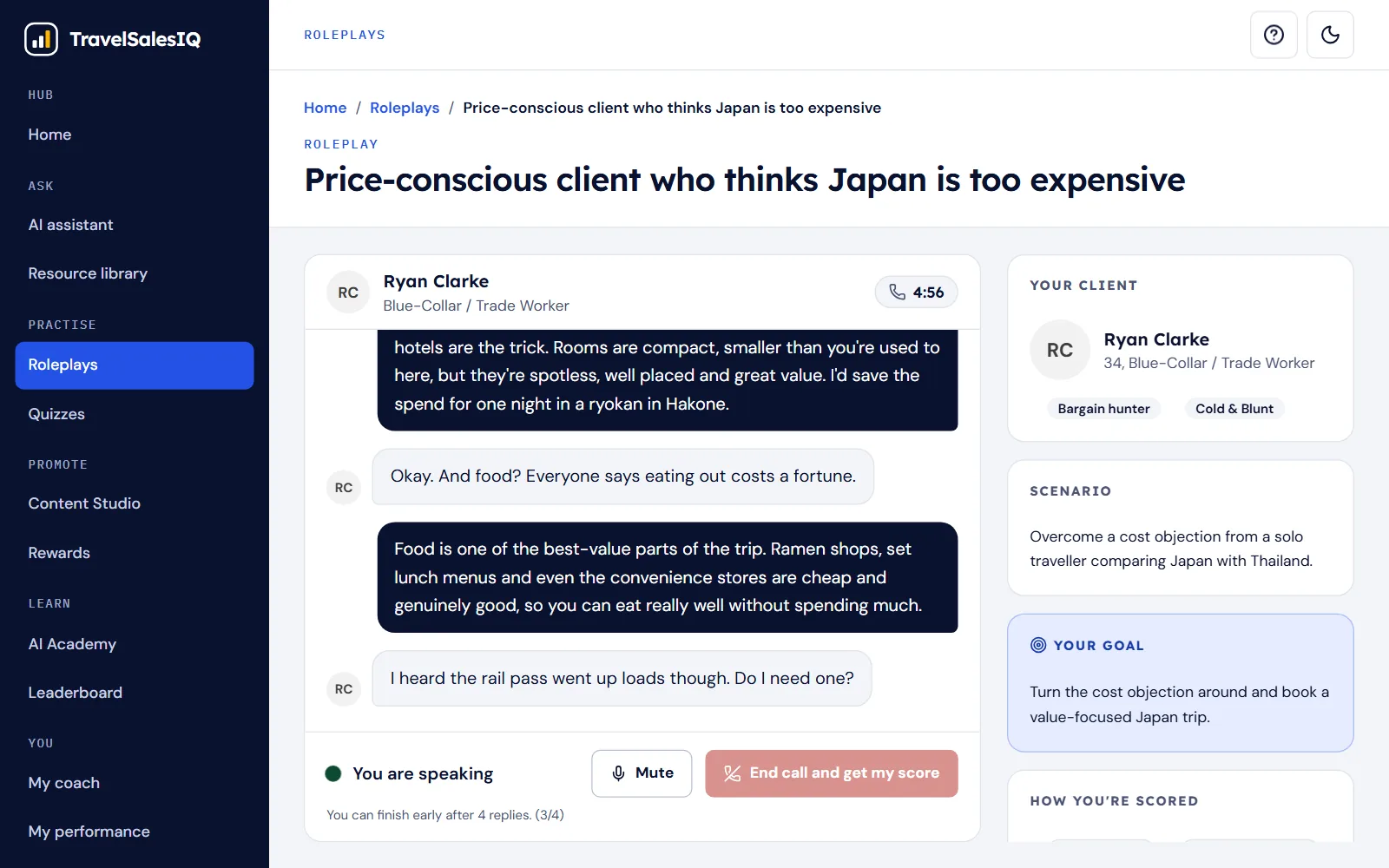
AI voice role-play turns any sales role-play into a live call in the browser, with an AI client who talks back and a score at the end.
- Where
- In the browser, with a microphone. No phone line or app.
- The client
- Speaks first, in a voice you choose, and hangs up when done
- Scored on
- Accurate facts and whether the client commits to book
- Pricing
- Credits: one per minute, shared across your hub. See pricing
Most travel sales are won by talking
Reservations teams sell on the phone. Agents ring suppliers mid-quote, then ring the client back. Typing a good answer to a price objection is one thing. Saying it out loud, with a sceptical client waiting and no time to look anything up, is harder, and that's where bookings are won or lost.
Voice role-play lets people practise that moment as often as they need, without a real client on the line. Your sales managers get a written transcript and a score for every call.
A friendly chat is not a pass
The call is scored like a sales manager would score it. Being pleasant and well informed is not enough if the client puts the phone down without committing.
- Did the client commit? Every role-play has a goal, such as "turn the cost objection around and book a value-focused trip". If the client doesn't agree to it, the call doesn't pass.
- Were the facts right? Answers should come from your approved product content. Claims that aren't in it count against the caller.
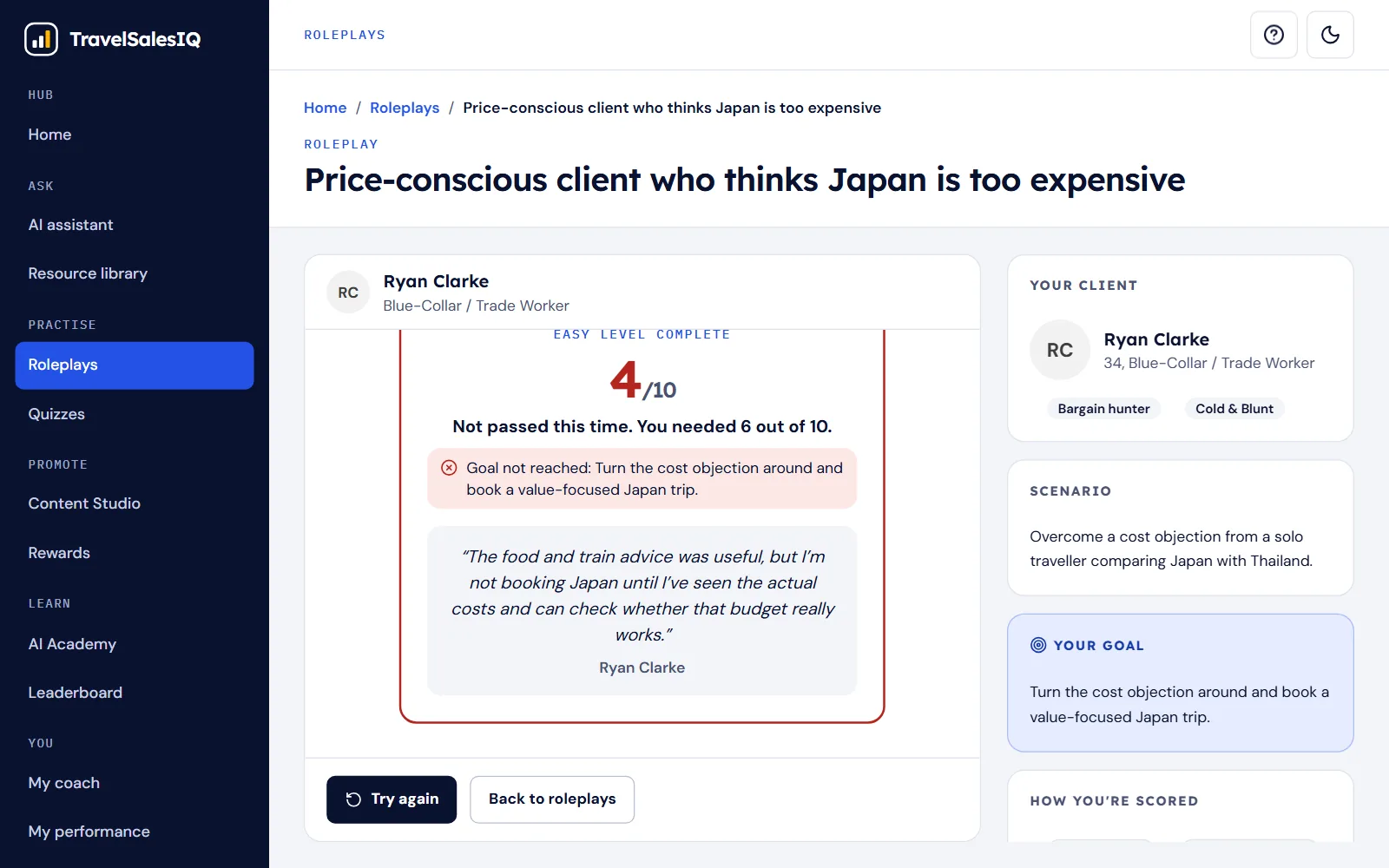
- What did the client think? The result includes the client's own verdict in a sentence, such as "the food and train advice was useful, but I'm not booking until I've seen the actual costs".
- What next? The learner can try again straight away, and the attempt is in their history for their manager and their AI coach.
Sales coaching, selling support and trade marketing in one hub
Training gives people product knowledge. TravelSalesIQ helps them turn it into bookings, whether they are partner travel agents or your own sales, reservations and front-line teams: AI sales coaching that sharpens how they sell you, answers at the moment of sale, marketing that puts your product in front of clients, and insight that shows your sales team where to focus. One approved knowledge base powers every part of it.
Coach everyone who sells you
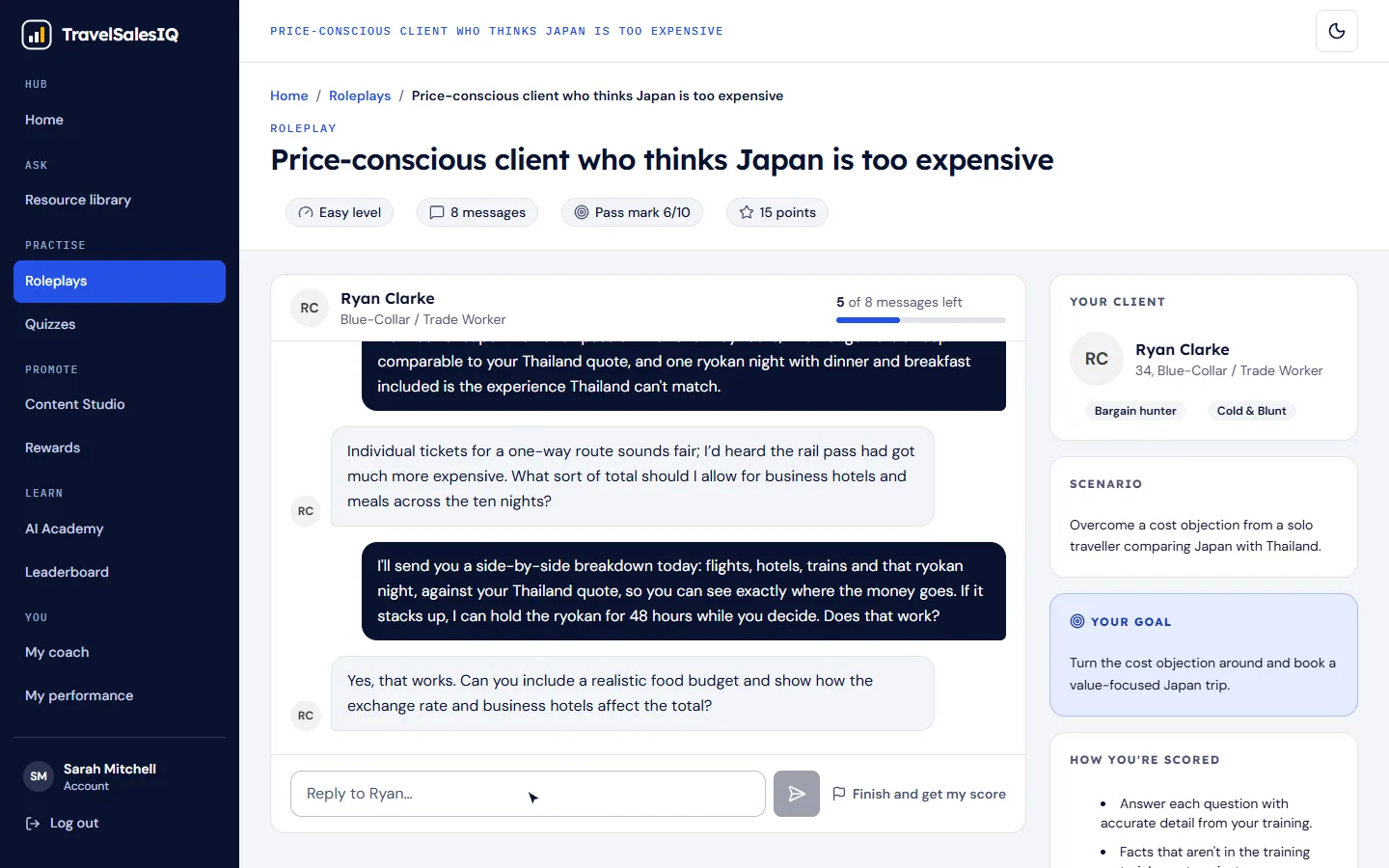
Agents and your own teams rehearse real sales conversations with AI customer personas at three difficulty levels, handle objections, and get a scored transcript with coaching on their approach.
AI Sales Coaching →Confident answers while the client is listening
An AI assistant answers product questions from agents and staff at any time, drawing only on your approved content, so they quote you accurately and close the booking.
AI Knowledge Hub →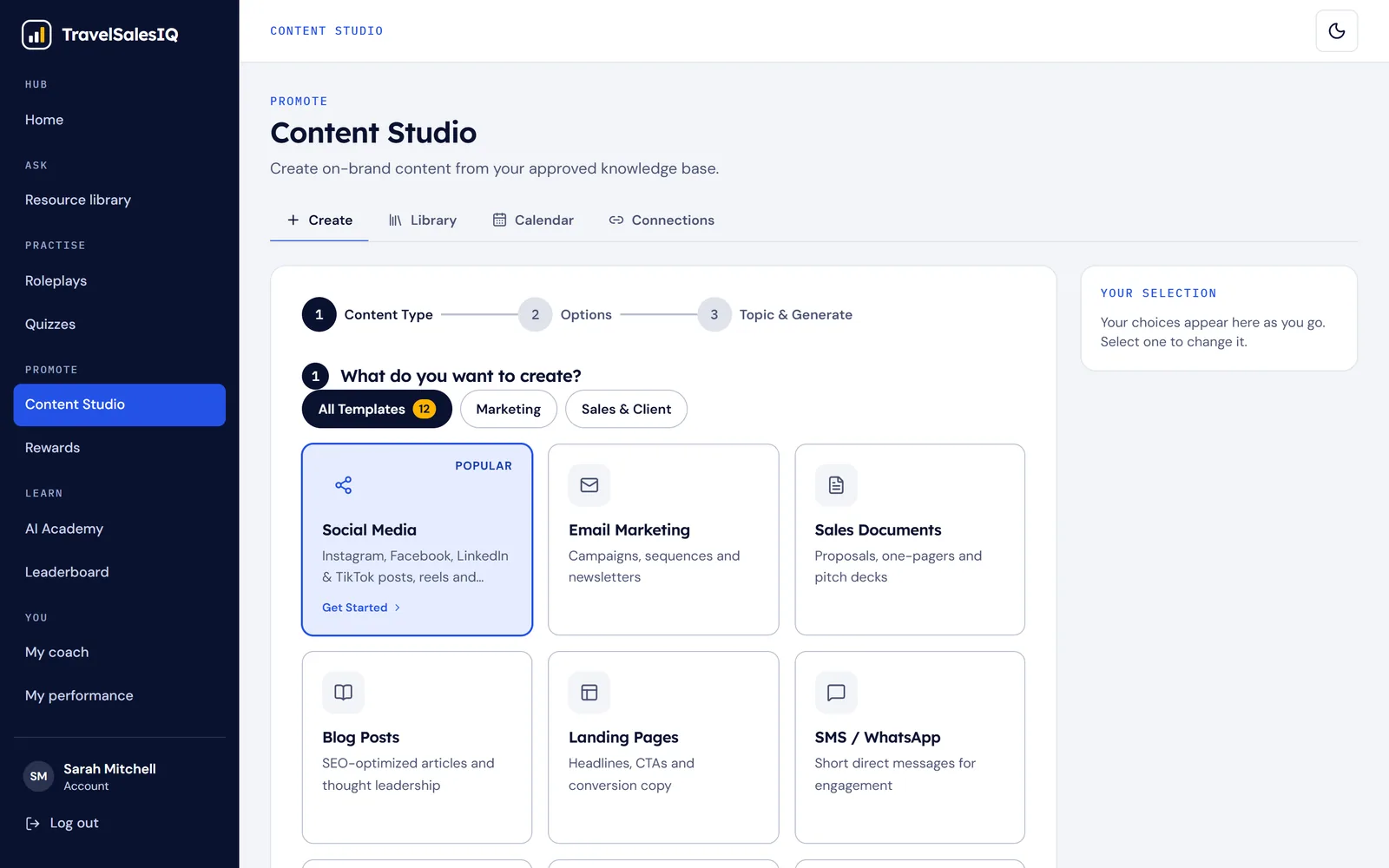
Trade marketing that drives bookings
On-brand marketing copy generated from your knowledge base, a resource library agents use with clients, partner emails targeted by activity, and a rewards catalogue that motivates your best sellers.
Trade Marketing →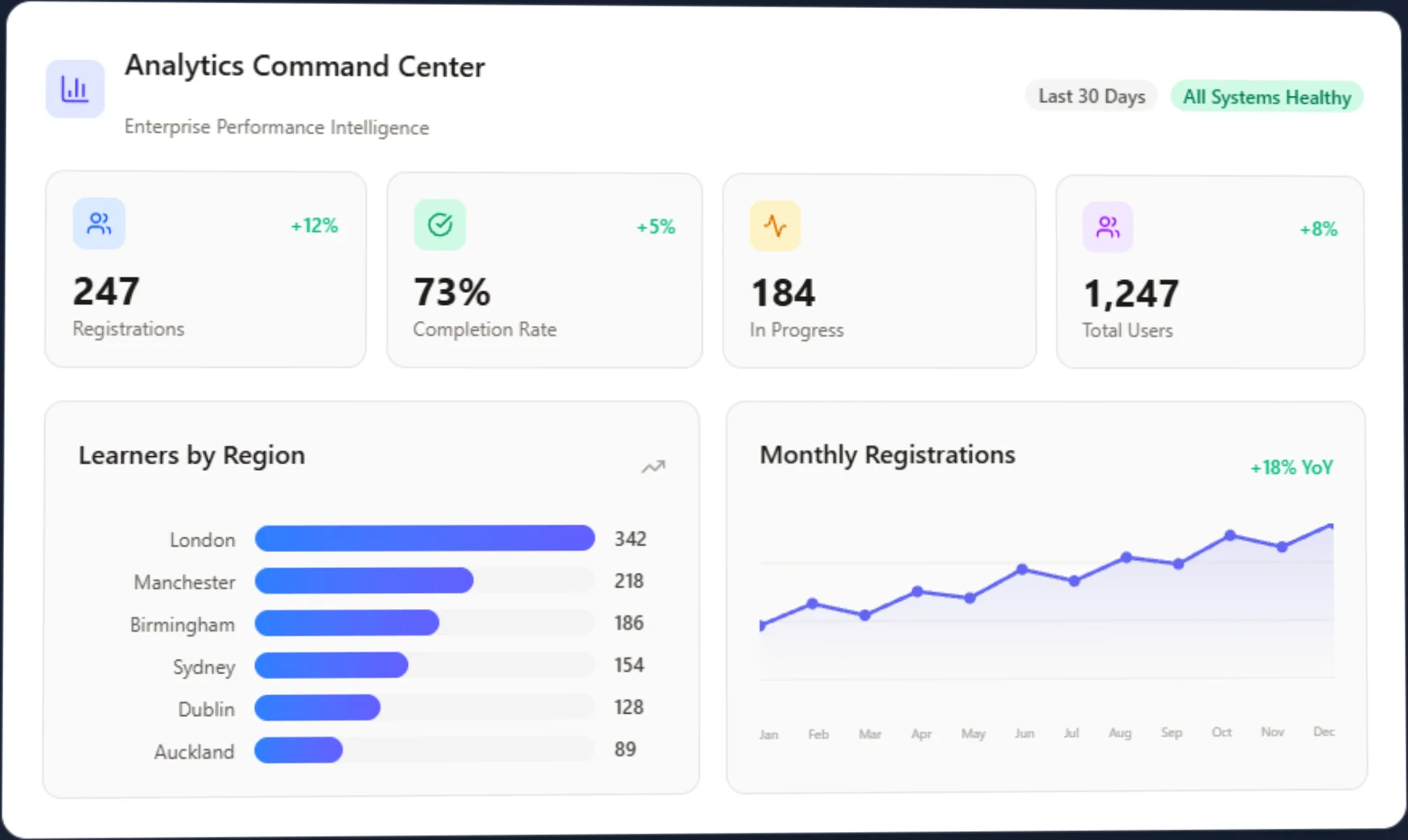
Know which agencies to work with
Engagement, progress and performance by region and agency, so your sales team focuses on the partners and teams most ready to sell you.
Analytics →See the whole platform, or how the hub works as a travel sales enablement platform.
An AI client that behaves like a caller
Rings you first
The client says hello, gives their name and says why they're calling. Your learner has to take it from there.
Talks like a person
Short turns, one question at a time. If the learner talks over them, they stop and listen. If the line goes quiet, they ask if you're still there.
Has a personality
Each client has an age, a job, a travel history, a tone (warm, rushed, blunt, confused or angry) and things they wrongly believe about your product.
Gets harder
Easy clients are happy with the basics. Hard clients question every answer and get openly annoyed by vague ones.
Hangs up
When every worry has been dealt with and they've heard a concrete proposal, they say yes and goodbye. If the learner keeps getting it wrong, they say they'll look elsewhere.
Stays in character
The client never gives travel advice or plays the adviser, and ignores attempts to talk them out of their role.
How a call works
-
Read the brief
The learner sees who the client is, the scenario, the goal and how they'll be scored. They choose to type or start a voice call.
-
Take the call
The client rings in. The conversation is written out on screen as it happens, with a timer, a mute button and the option to end the call once enough has been said.
-
Get the score
When the client hangs up, or the learner ends the call, the transcript is scored against the pass mark and the goal. The learner can try again, or move to the next level.
Type it or say it, from the same role-play
Who it's for
Your own sales and reservations teams
- New starters taking practice calls before live ones
- Experienced staff rehearsing a price rise or a new product
- Managers reviewing scored transcripts instead of listening in
Travel agents who sell you
- Agents rehearsing the objections clients raise about your product
- Practice in private, at any hour, as often as they like
- Part of a specialist programme, alongside courses and quizzes
What voice role-play includes
Live voice calls
Voices
Same scoring as typed role-play
Written transcript
AI coaching
Call time limit
See these working with your own content.
Request a demoFrequently asked questions
What do learners need?
A browser and a microphone. Headphones work best. There's nothing to install and no phone line involved.
Is the call recorded?
The audio isn't stored. The conversation is written out as it happens, and that written transcript is what's scored and kept in the learner's history.
Can we choose the client's voice?
Yes. Each client persona has a voice, chosen from ten standard voices or a set of British voices with regional accents, alongside their personality, tone and what they believe about your product.
Is it scored differently from typed role-play?
No. Both are scored by the same marker, against the same pass mark and goal, so you can compare results whichever way a learner practised.
Which languages does it speak?
English. TravelSalesIQ is currently an English-language platform.
How is it priced?
Typed role-play is included in the Close and Grow packages. Voice calls use credits: one credit is one minute of a live call, bought in bundles and shared by everyone in your hub, and you can top up at any time. We'll recommend a bundle in your proposal. TravelSalesIQ annual packages start from £6,000 (Sell), £9,000 (Close) and £15,000 (Grow), most hubs cost between £6,000 and £25,000 a year, and each proposal is priced to its scope. See pricing.
Related
Hear a client call your team
Tell us the objection your team finds hardest. We'll set up a client who raises it and let you take the call in a demonstration.
Page last reviewed 27 November 2026. Published by TravelSalesIQ (Techhound Limited).