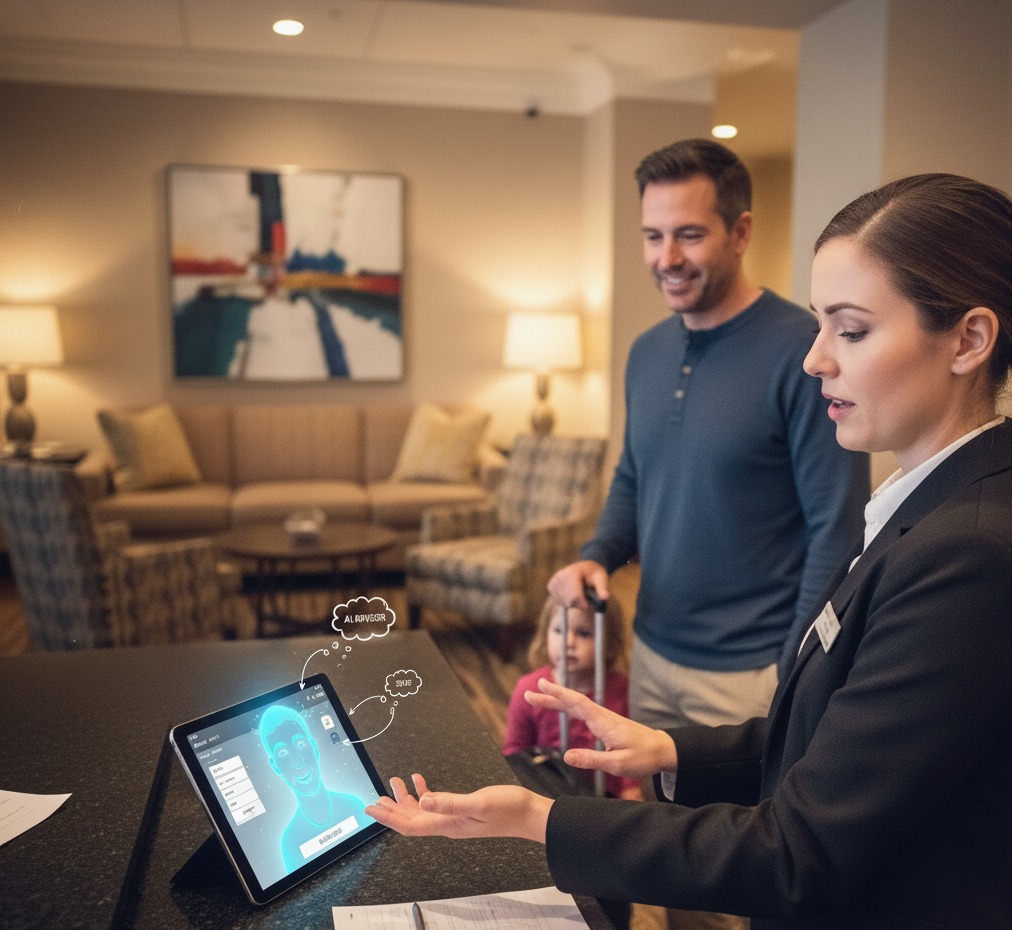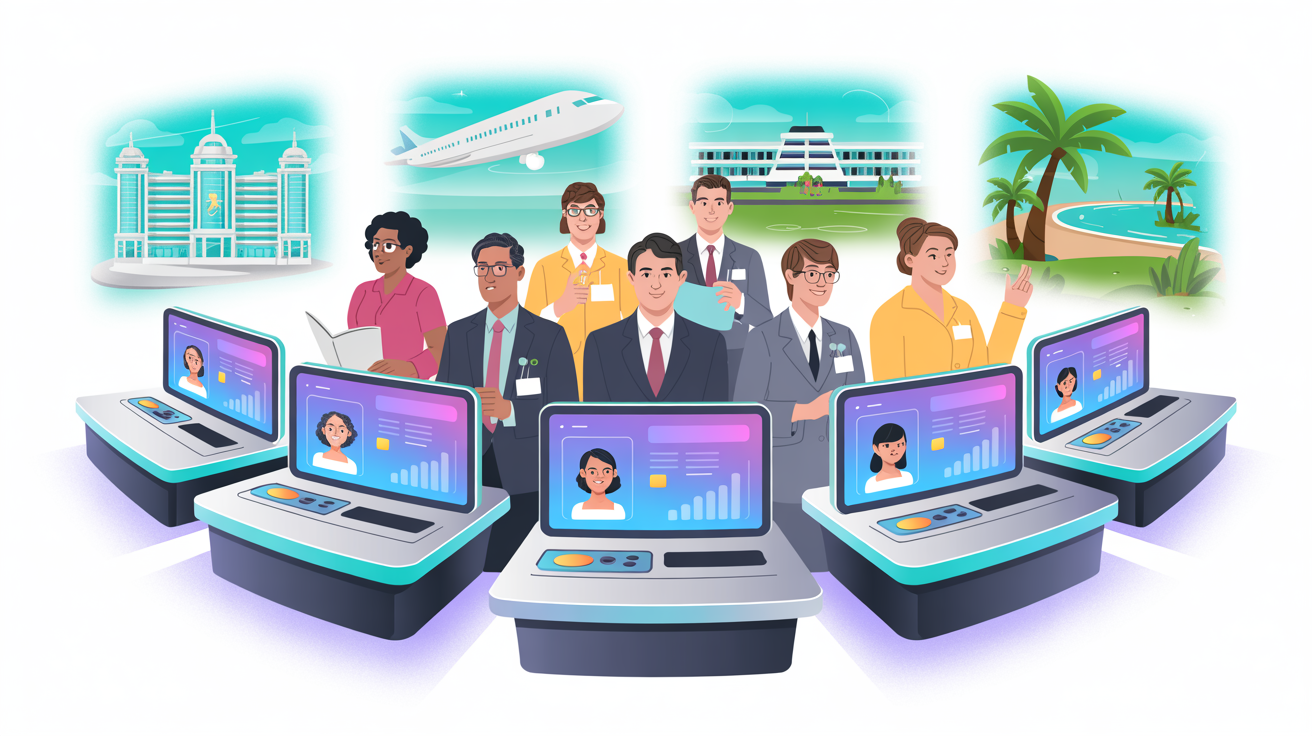
Hotel AI conversations typically focus on guest-facing applications — chatbots, mobile check-in, voice-controlled rooms. These get the headlines, but the AI applications generating the most significant returns for hotels operate behind the scenes: in staff training, revenue management, operations, and strategic decision-making.
This article maps the full spectrum of AI applications in hospitality — from high-profile guest-facing features to the back-of-house systems that are quietly transforming hotel profitability.
Staff Training and Development
AI-Powered Staff Training
The hospitality industry's training challenge is acute. High turnover (industry average 30-40% annually), seasonal staffing fluctuations, and multi-property consistency requirements create a constant demand for effective, scalable training.
AI-powered training platforms address this by:
- Personalising onboarding for each new hire based on their role, experience, and the specific property where they'll work. A new front desk agent at a luxury resort receives different training from a front desk agent at a budget city-centre hotel, even within the same brand.
- Adapting to knowledge levels — an experienced housekeeper who transfers between properties skips basic content and focuses on the new property's specific standards and procedures.
- Delivering training on mobile — essential for staff who don't sit at desks. Mobile-optimised microlearning fits between shifts and during breaks.
- Generating content rapidly — when a new service standard, menu item, or procedure is introduced, AI generates training content within hours rather than weeks.
Impact: Hotel groups using AI training report 65-70% faster onboarding, 40-50% higher training completion, and measurable improvements in guest satisfaction scores within 90 days of deployment.
AI Coaching for Upselling
Hotels leave significant revenue on the table through missed upselling opportunities. Every guest interaction — check-in, restaurant seating, concierge request, room service order — is a potential upsell moment.
AI coaching trains staff to recognise and act on these opportunities:
- Front desk: Roleplay scenarios practising room upgrade conversations: "I see you're celebrating your anniversary — we have a junior suite available with a harbour view. It's £45 more per night and includes a bottle of champagne on arrival."
- Restaurant: Training on menu upselling — recommending the premium wine pairing, the tasting menu, the speciality dessert — with natural, value-focused framing.
- Spa: Training on treatment upgrades and add-ons that match the guest's stated reason for their visit.
Impact: Hotels implementing AI upselling training report 15-25% increases in ancillary revenue per guest. For a 200-room hotel at 75% occupancy, a £12 average increase in ancillary revenue per guest stay generates approximately £650,000 in additional annual revenue.
Revenue Management
Dynamic Pricing
The most mature AI application in hospitality. Revenue management systems (RMS) use machine learning to analyse demand patterns, competitor pricing, booking pace, and market conditions to set optimal room rates.
Modern AI-powered RMS goes beyond basic supply-demand pricing:
- Event awareness: Automatically adjusts pricing around local events, conferences, and seasonal patterns
- Channel optimisation: Sets different rates for different distribution channels based on cost-of-sale and demand elasticity
- Segment pricing: Offers different rates to different guest segments based on predicted willingness to pay
- Length-of-stay optimisation: Adjusts pricing to encourage optimal stay lengths that maximise total revenue
STR data shows that hotels using AI revenue management achieve 5-12% higher RevPAR than comparable properties using manual pricing. For a 200-room hotel with £100 average rate, that's £365,000-£876,000 in additional annual revenue.
Demand Forecasting
Machine learning predicts demand with greater accuracy than traditional methods by processing more data sources: historical booking patterns, search engine trends, airline capacity data, event calendars, weather forecasts, and economic indicators.
Accurate forecasting enables:
- Better staffing decisions (right number of staff for predicted occupancy)
- Inventory management (holding rooms for predicted direct bookings vs releasing to wholesale)
- Marketing spend optimisation (investing in markets with emerging demand)
Guest Experience Personalisation
Pre-Arrival Personalisation
AI analyses guest data — booking details, loyalty history, stated preferences, past feedback — to personalise the experience before arrival:
- Room assignment based on historical preferences (high floor, quiet location, specific view)
- Pre-arrival communications with relevant local information based on the guest's interests
- Minibar and room amenity customisation based on past consumption patterns
- Activity recommendations matching the guest's likely interests
In-Stay Personalisation
During the stay, AI continuously optimises:
- F&B recommendations based on dietary preferences, past orders, and current menu availability
- Activity suggestions based on weather, guest interests, and availability
- Service timing — predicting when a guest will need housekeeping, when they'll want breakfast, when they're likely to check out
- Issue prediction — identifying guests likely to experience dissatisfaction based on behavioural patterns and proactively addressing concerns
Post-Stay Engagement
AI determines the optimal timing, channel, and content for post-stay communication:
- Satisfaction survey timing based on predicted response likelihood
- Review requests directed to guests predicted to leave positive feedback
- Rebooking offers personalised to the guest's travel patterns and preferences
- Loyalty programme communications highlighting relevant benefits
Phocuswright research shows that personalised post-stay engagement increases repeat booking rates by 20-35% compared to generic communications.
Operational Efficiency
Housekeeping Optimisation
AI analyses check-out patterns, flight schedules, and guest behaviour to predict room turnover timing — enabling housekeeping supervisors to prioritise rooms and allocate staff more efficiently.
- Priority sequencing: Clean rooms for early arrivals first
- Staffing prediction: Forecast housekeeping demand based on occupancy patterns
- Quality management: Random inspection scheduling optimised by predicted risk areas
Energy Management
AI controls heating, cooling, and lighting based on occupancy predictions, weather forecasts, and guest patterns:
- Pre-cool or pre-heat rooms before predicted arrivals
- Reduce energy consumption in unoccupied areas
- Optimise lighting based on natural light and occupancy
Hotels implementing AI energy management report 15-25% reductions in energy costs — significant for properties where energy is a major operating expense.
Maintenance Prediction
AI analyses equipment data to predict maintenance needs before failures occur:
- HVAC systems monitored for performance degradation
- Elevator usage patterns analysed for maintenance scheduling
- Plumbing systems monitored for leak indicators
Predictive maintenance reduces emergency repair costs (typically 3-5x more expensive than planned maintenance) and eliminates guest-impact failures.
Marketing and Distribution
Marketing Spend Optimisation
AI analyses the return on investment for each marketing channel, campaign, and market segment, automatically reallocating budget toward the highest-performing combinations:
- Which channels deliver the highest-value guests (not just the most bookings)?
- Which markets show emerging demand that warrants increased investment?
- Which campaigns generate direct bookings versus which generate OTA displacement?
Review and Reputation Management
AI analyses guest reviews across all platforms (TripAdvisor, Google, Booking.com, social media) to identify:
- Themes: What do guests consistently praise or criticise?
- Trends: Is sentiment improving or declining?
- Competitive position: How does guest sentiment compare to competitors?
- Response priorities: Which reviews require urgent management attention?
Content Generation
AI generates property descriptions, room type descriptions, and experience content for multiple channels and markets — maintaining consistency while adapting tone and emphasis for each platform.
Food and Beverage
Menu Optimisation
AI analyses dish-level profitability, popularity, and seasonal patterns to optimise menu composition:
- Which dishes have the highest profit margin and customer satisfaction?
- Which ingredients can be used across multiple dishes to reduce waste?
- What menu mix maximises revenue per cover?
Waste Reduction
AI predicts food demand based on occupancy, guest profiles, weather, and event schedules — enabling kitchens to prepare appropriate quantities and reduce waste.
Hotels implementing AI food waste management report 20-35% reductions in food waste — improving both profitability and sustainability credentials.
Inventory Management
AI optimises beverage and ingredient ordering based on predicted demand, delivery schedules, and seasonal availability — reducing both stockouts and excess inventory.
Implementation Priorities for Hotels
Not every hotel needs every AI application. Prioritise based on your biggest challenges:
| Hotel Challenge | Priority AI Application | Expected Impact |
|---|---|---|
| High staff turnover | AI-powered training | Faster onboarding, better retention |
| Low ancillary revenue | AI upselling training + coaching | 15-25% ancillary revenue increase |
| Revenue not optimised | AI revenue management | 5-12% RevPAR improvement |
| Inconsistent service quality | AI training and assessment | Standardised service delivery |
| High energy costs | AI energy management | 15-25% energy cost reduction |
| Guest satisfaction declining | AI personalisation + sentiment analysis | Improved NPS and review scores |
For most hotels, the combination of AI staff training and AI revenue management delivers the highest combined ROI — improving both the revenue generation capability of staff and the pricing optimisation of inventory.
Explore AI-powered hotel training with TravAI →
This article is part of our AI in Travel & Tourism series. Related reading: