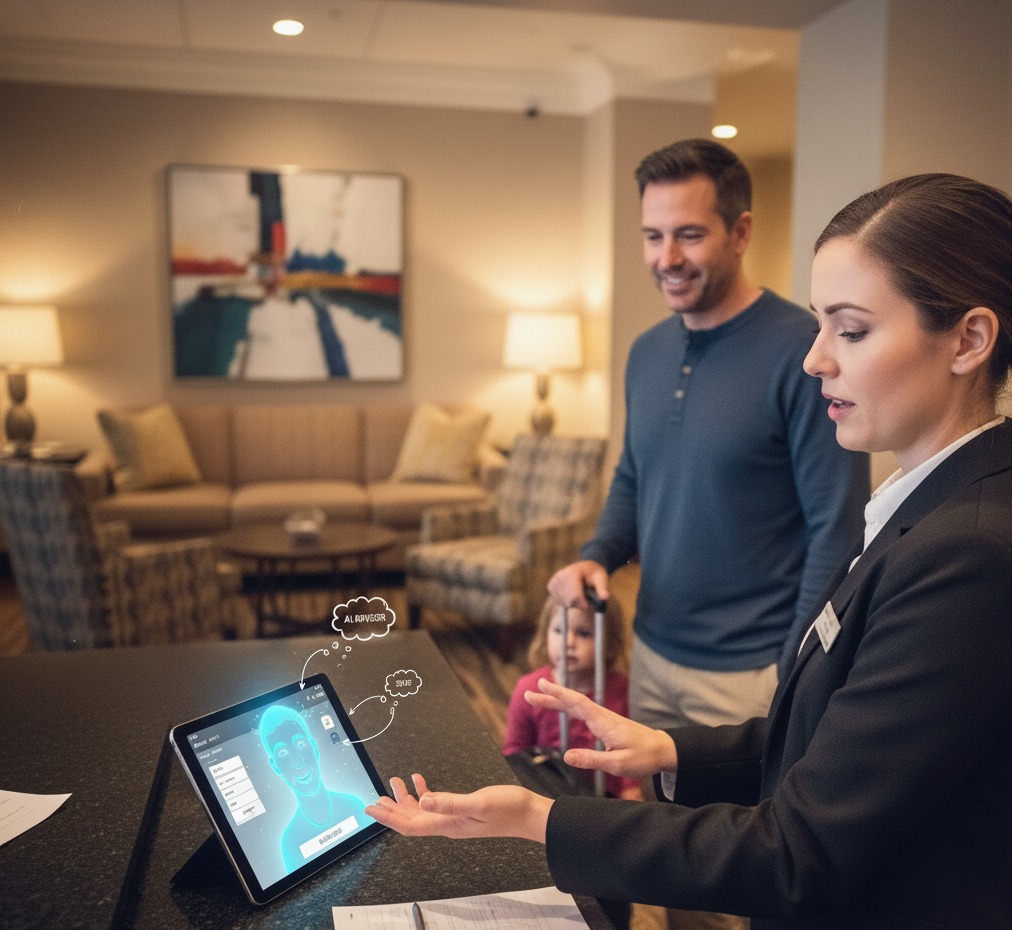
The hotel reservations agent is one of the most commercially important yet consistently undertrained roles in hospitality. Every inbound call and email represents revenue that will either be captured, upgraded, or lost — often permanently. A guest who calls to book a standard room and encounters a skilled reservations agent may leave with a suite upgrade, a dinner reservation, and a spa package. That same guest handled by an untrained agent may book at the lowest available rate or, worse, hang up and book through an OTA.
Research from HSMAI consistently shows that hotels with structured reservations training programmes achieve 20-35% higher conversion rates and 15-25% higher average booking values compared to hotels relying on unstructured on-the-job learning. For a 200-room hotel, that difference can represent hundreds of thousands of pounds in annual revenue.
This guide provides a comprehensive hotel reservations agent training programme that builds the product knowledge, sales technique, system proficiency, and guest service skills needed to maximise revenue from every interaction.
Role Overview
Core Responsibilities
The hotel reservations agent role combines sales, guest service, revenue optimisation, and operational accuracy:
- Inbound enquiry handling — managing calls, emails, and online chat from direct guests, travel agents, and corporate bookers
- Needs assessment — understanding guest requirements, occasion, preferences, and budget
- Room and rate recommendation — matching guest needs to the most suitable room type and rate plan
- Upselling and cross-selling — recommending room upgrades, packages, dining, spa, and experiences
- Rate management — understanding rate strategies, availability, and restrictions; protecting rate integrity
- Group and event enquiries — handling meeting, conference, and group accommodation requests
- Travel agent and corporate support — managing bookings from trade partners and corporate accounts
- Booking management — processing amendments, cancellations, and special requests accurately
- Payment handling — managing deposits, prepayments, and payment guarantees
- PMS and channel management — maintaining accurate records across property management and distribution systems
A Typical Day
A hotel reservations agent's day begins with reviewing overnight booking requests, email enquiries, and any rate or availability changes communicated by revenue management. Morning and early afternoon are typically the busiest call periods. Between calls, agents process email bookings, follow up on pending enquiries, and handle amendments. Mid-afternoon may include a briefing from revenue management on rate changes or a training session on a new package. Late afternoon involves clearing the enquiry backlog, setting follow-up tasks, and updating CRM notes.
Key Challenges
| Challenge | Impact |
|---|---|
| Rate and availability complexity | Multiple room types, rate plans, restrictions, and seasonal pricing create genuine complexity |
| OTA price comparison | Guests frequently reference OTA prices during calls; agents must demonstrate direct booking value |
| Upselling without being pushy | The line between helpful recommendation and aggressive selling is delicate |
| System proficiency | PMS, CRM, channel manager, and payment systems all require competent operation |
| Balancing volume and quality | High call volumes during peak periods pressure agents to rush interactions |
| Emotional significance | Guests booking for special occasions (anniversaries, honeymoons) bring high emotional expectations |
Required Knowledge and Skills
| Skill Area | Proficiency Needed | How to Develop |
|---|---|---|
| Property and room knowledge | Advanced — must describe rooms, facilities, and USPs vividly and accurately | Property tours; TravAI e-learning modules on property content; regular familiarisation updates |
| Consultative selling | Advanced — must uncover guest needs and recommend the ideal room, rate, and package | TravAI sales coaching; consultative selling workshops; roleplay practice |
| Revenue management awareness | Intermediate — must understand rate strategy, yield, and restriction logic | HSMAI revenue fundamentals; cross-training with revenue management team |
| Upselling and cross-selling | Advanced — must present upgrades as value-enhancing rather than cost-adding | Upselling technique training; TravAI roleplay scenarios; best-practice call listening |
| PMS and system proficiency | Advanced — must navigate PMS, CRM, and payment systems efficiently and accurately | System-specific training; hands-on practice; TravAI assessment modules |
| Guest service excellence | Advanced — must create warm, personalised interactions that build trust and loyalty | Service standards training; empathy workshops; TravAI e-learning on guest experience |
| Local area knowledge | Intermediate — must recommend restaurants, attractions, transport, and local experiences | Local area training; TravAI destination modules; personal exploration |
| Objection handling | Advanced — must address price, competitor, and hesitation concerns persuasively | Objection framework training; TravAI AI roleplay; call analysis sessions |
Competency Framework
| Competency | Beginner | Intermediate | Advanced |
|---|---|---|---|
| Property knowledge | Knows room types, basic facilities, and standard rates | Describes rooms vividly; knows all packages and seasonal offers; recommends based on guest profile | Expert knowledge of every room, view, and experience; creates bespoke proposals for complex enquiries |
| Sales technique | Follows basic booking process; answers questions accurately | Uses consultative approach; uncovers needs; makes tailored recommendations; closes confidently | Achieves top-quartile conversion and ADR; every interaction is a revenue opportunity |
| Upselling | Mentions room upgrades when availability exists | Proactively identifies upsell opportunities; frames upgrades as value | Consistently achieves highest average booking value; upselling feels like concierge-level advice |
| Rate and revenue awareness | Understands basic rate plans and restrictions | Navigates complex availability and restriction scenarios; protects rate integrity | Collaborates with revenue management; understands yield implications; makes commercially optimal decisions |
| System proficiency | Creates standard bookings in PMS with support | Handles all booking types independently; manages groups and packages in system | Power user; troubleshoots issues; trains others; uses system data to support selling |
| Guest experience | Professional and courteous; follows service standards | Creates personalised, memorable interactions; manages special occasions expertly | Generates unsolicited praise; builds guest loyalty through exceptional pre-arrival experience |
Training Programme Structure
| Week/Phase | Focus Area | Activities | Assessment |
|---|---|---|---|
| Week 1-2: Foundation | Property knowledge, brand standards, and systems | Property tour; room type familiarisation; facilities walkthrough; PMS basics; brand standards immersion; TravAI e-learning on property and local area | Property knowledge assessment with 85%+ pass; PMS navigation test |
| Week 3-4: Sales Skills | Consultative selling and needs assessment | Consultative selling workshop; needs assessment practice; call listening programme; TravAI roleplay with simulated guest scenarios; recommendation matching exercises | Sales technique roleplay assessment; recommendation accuracy evaluation |
| Week 5-6: Revenue & Upselling | Rate strategy, upselling, and cross-selling | Revenue management overview session; rate plan and restriction training; upselling technique workshops; TravAI roleplay with upgrade scenarios; sales coaching sessions | Upselling roleplay assessment; rate knowledge test via TravAI |
| Week 7-8: Complex Bookings & Objections | Groups, events, trade, and objection handling | Group booking training; corporate and travel agent procedures; objection handling masterclass; TravAI AI roleplay with price-sensitive callers; complaint handling | Complex booking creation test; objection handling evaluation |
| Week 9-10: Supervised Live | Handling real enquiries with support | Take live calls with supervisor listening; process real bookings with quality review; handle email enquiries; daily debrief and coaching | Conversion rate tracking; booking accuracy review; guest feedback collection |
| Week 11-12: Independence | Full independent operation | Handle all enquiry types independently; manage own pipeline; meet conversion and revenue targets | Conversion rate assessment; average booking value; guest satisfaction score; TravAI comprehensive assessment |
AI Training Recommendations
Hotel reservations teams benefit enormously from AI-powered training tools that provide consistent skills development at scale — particularly for properties with multiple locations or high seasonal turnover.
How TravAI Tools Address Each Skill Gap
Sales and upselling practice — TravAI's AI roleplay simulates realistic guest conversations across every scenario: honeymoon enquiries, corporate bookings, price-sensitive callers, group requests, and complaint calls. Agents practise consultative selling, upselling, and objection handling with immediate scored feedback. This is dramatically more effective than traditional call listening. Learn more about hotel roleplay training for reservations.
Property knowledge consistency — E-learning modules ensure every reservations agent receives identical property, room, and local area training. For hotel groups managing multiple properties, this delivers consistency at scale that is impossible through classroom training alone.
Assessment before going live — Assessment tools verify property knowledge, rate understanding, and sales competence before agents handle real guest enquiries. This protects conversion rates, ADR, and guest experience by ensuring readiness.
Performance tracking and coaching — Analytics dashboards give reservations managers visibility into each agent's training progress, knowledge gaps, and competency development. Combined with live performance data, this enables targeted coaching interventions.
Continuous development — TravAI's sales coaching features provide ongoing skills development beyond initial onboarding. Agents receive AI-powered feedback that helps them continuously improve conversion rates and booking values.
Common Skill Gaps
| Skill Gap | Impact on Business | Training Solution |
|---|---|---|
| Needs assessment depth | Agents jump to quoting prices before understanding guest needs; wrong room recommended | Consultative selling training; TravAI roleplay practice; call listening analysis |
| Upselling confidence | Standard rooms sold without offering upgrades; ADR below potential | Upselling technique workshops; TravAI sales coaching; value-framing practice |
| Rate strategy understanding | Agents discount unnecessarily or cannot explain rate restrictions to guests | Revenue management fundamentals; HSMAI training; rate strategy briefings |
| Property storytelling | Agents describe rooms with facts rather than creating desire; bookings lost to competitors | Property immersion; storytelling workshops; TravAI e-learning with vivid property content |
| Objection handling | Price objections conceded; OTA comparison not countered; direct bookings lost | Objection handling masterclass; TravAI roleplay; response framework development |
| System speed and accuracy | Slow booking creation; errors in rates or room types; guest frustration | PMS training; practice environment; TravAI system competency assessment |
| Follow-up discipline | Pending enquiries not followed up; warm leads go cold | Pipeline management training; CRM follow-up discipline; performance tracking |
Onboarding Milestones
| Timeframe | Milestone | Measurable Outcome |
|---|---|---|
| End of Week 1 | Property knowledge foundation | Passes property knowledge assessment with 85%+; can describe all room types and key facilities accurately |
| End of Week 2 | PMS and system basics | Can navigate PMS, search availability, create standard booking, and process payment |
| End of Month 1 | Sales fundamentals and core competence | Demonstrates consultative selling in roleplay; passes rate knowledge assessment; creates bookings independently |
| End of Month 2 | Supervised live operation | Handling live calls with supervisor support; conversion rate tracked; booking accuracy above 95%; upselling attempted on 50%+ of calls |
| End of Month 3 | Independent operation | Handling all standard enquiry types independently; meeting minimum conversion and ADR targets; guest satisfaction above 4/5 |
| End of Month 4 | Revenue contribution established | Conversion rate within 10% of team average; average booking value meeting targets; upsell success rate above 25% |
| End of Month 6 | Full performance | Meeting or exceeding all KPIs; handling complex bookings independently; TravAI competency scores at intermediate level; ADR contribution positive |
Measuring Training Effectiveness
| KPI | Baseline Measurement | Target Improvement | Measurement Method |
|---|---|---|---|
| Call-to-booking conversion rate | % of inbound calls resulting in confirmed bookings | 15-20 percentage point improvement within 6 months | PMS/CRM booking reports |
| Average daily rate (ADR) | Average rate achieved on agent-booked reservations | 10-15% increase through upselling and rate protection | PMS rate reports |
| Upsell success rate | % of bookings including at least one upgrade | 30%+ upsell rate within 6 months | Booking system upgrade tracking |
| Training completion rate | % of modules and assessments completed on time | 95%+ within programme timeline | TravAI analytics |
| Booking accuracy | % of bookings created without errors | 98%+ accuracy | Quality audit programme |
| Guest satisfaction (pre-arrival) | Satisfaction rating from booking experience | 4.5/5 or above | Post-booking surveys |
| Email response time | Average response time to email enquiries | Under 2 hours during business hours | Email system tracking |
| Revenue per agent | Total room revenue generated per agent per month | 20% improvement within 6 months | PMS revenue reports by agent |
| Direct booking ratio contribution | Impact on overall direct vs. OTA booking split | Measurable shift toward direct bookings | Channel distribution reporting; STR data |
| Competency assessment scores | Performance across core skill areas | 85%+ across all competencies within 6 months | TravAI assessment platform |
Next Steps
A well-trained reservations team directly impacts a hotel's most important financial metrics: ADR, conversion rate, direct booking ratio, and guest satisfaction. Structured training pays for itself many times over in captured revenue that would otherwise leak to OTAs, competitors, or simple non-conversion.
For more on hotel team development, explore the complete hotel staff training guide, learn about hotel roleplay training for reservations and sales, or see how upselling training drives hotel revenue.