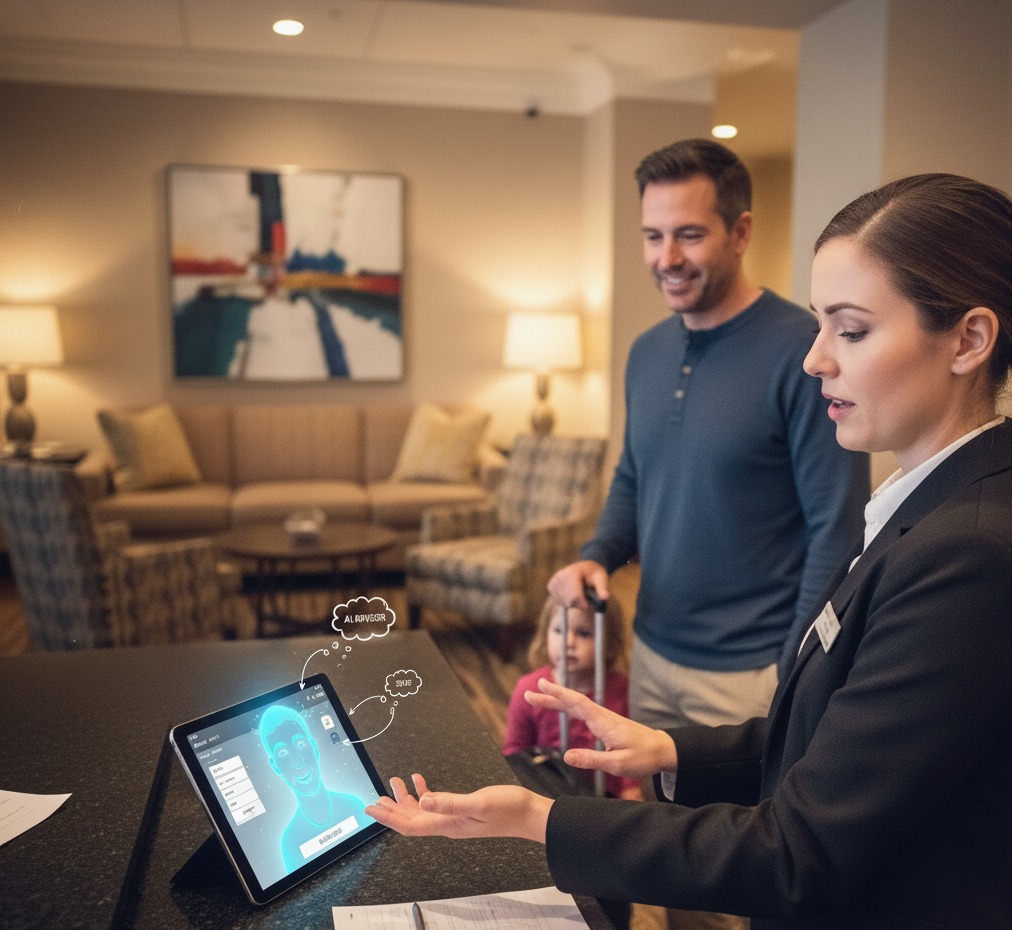
The reservations agent is the revenue engine of a tour operator. Every phone call, email, and live chat is a commercial opportunity — a chance to convert an enquiry into a booking, upgrade a standard package into a premium experience, and turn a first-time customer into a loyal repeat traveller. Yet most tour operator reservations teams receive minimal structured training, relying instead on shadowing colleagues and learning on the job.
According to ABTA workforce research, well-trained reservations agents convert 25-40% more enquiries into bookings than untrained ones. The financial impact is enormous: for a mid-size tour operator handling 50,000 enquiries per year, a 10-percentage-point improvement in conversion represents millions of pounds in additional revenue.
This guide provides a structured tour operator reservations agent training programme that builds product knowledge, sales technique, systems proficiency, and the customer service skills that drive conversion, upselling, and customer loyalty.
Role Overview
Core Responsibilities
The tour operator reservations agent role combines sales, service, product expertise, and operational precision:
- Enquiry handling — managing inbound calls, emails, and live chat from direct customers and travel agent partners
- Needs assessment — understanding customer requirements, preferences, budget, and travel motivations
- Product recommendation — matching customer needs to the most suitable holiday package, destination, and extras
- Booking creation — accurately building complex bookings including flights, accommodation, transfers, and extras
- Upselling and cross-selling — identifying opportunities to enhance the booking with upgrades, excursions, and insurance
- Trade partner support — assisting travel agents with bookings, availability checks, and product queries
- Amendment and cancellation handling — managing booking changes efficiently and in accordance with terms
- Payment processing — handling deposits, balances, and payment schedules accurately
- Post-booking service — managing post-booking queries, documentation, and pre-departure communications
A Typical Day
A reservations agent's day starts with reviewing overnight email enquiries and any booking alerts. Peak call times are typically mid-morning and early afternoon. Between calls, agents follow up on pending enquiries, chase option deadlines, and process amendments. The day involves constant switching between phone, email, and chat channels while navigating the booking system. Afternoon may include team briefings on new product launches, promotional updates, or system changes. End of day involves clearing the inbox and setting follow-up reminders for the next morning.
Key Challenges
| Challenge | Impact |
|---|---|
| Complex product portfolio | Dozens of destinations, hundreds of hotels, multiple flight options, and seasonal variations |
| System complexity | Booking systems, GDS, CRM, and payment platforms require proficiency |
| Price sensitivity and competition | Customers often compare prices with OTAs and competitors in real time |
| Seasonal pressure | Peak booking periods create intense workload with high expectations |
| Balancing speed and quality | Customers expect fast responses, but complex bookings require accuracy |
| Emotional customers | Holidays are emotionally significant; customers can be anxious, excited, or demanding |
Required Knowledge and Skills
| Skill Area | Proficiency Needed | How to Develop |
|---|---|---|
| Product and destination knowledge | Advanced — must know the full portfolio to make accurate recommendations | TravAI e-learning modules on destinations and products; fam trip programme; supplier training |
| Consultative selling | Advanced — must uncover needs and recommend solutions rather than just quoting prices | TravAI sales coaching; consultative selling workshops; roleplay practice |
| Booking system proficiency | Advanced — must create, amend, and manage complex multi-element bookings accurately | System-specific training; hands-on practice; TravAI assessment modules |
| Upselling and cross-selling | Intermediate to Advanced — must identify and present upgrade opportunities naturally | Upselling frameworks; TravAI roleplay scenarios; product knowledge training |
| Objection handling | Advanced — must overcome price, competitor, and hesitation objections persuasively | Objection handling training; TravAI AI roleplay; ABTA sales skills resources |
| Customer service excellence | Advanced — must create positive experiences that build trust and loyalty | Service standards training; empathy and communication workshops; TravAI e-learning |
| Geography and travel logistics | Intermediate to Advanced — must understand flight routing, visa requirements, and destination practicalities | ABTA Travel Foundation course; destination specialist training |
| Compliance and regulations | Intermediate — must understand ATOL, Package Travel Regulations, and booking terms | ABTA compliance training; TravAI compliance modules |
Competency Framework
| Competency | Beginner | Intermediate | Advanced |
|---|---|---|---|
| Product knowledge | Knows core destinations and best-selling products; can make basic recommendations | Confidently recommends across full portfolio; matches products to customer profiles; knows alternatives | Expert product knowledge across all destinations; creates bespoke itineraries; advises on complex multi-centre bookings |
| Sales technique | Follows basic sales process; asks standard qualifying questions | Uses consultative selling; builds rapport; handles objections; closes confidently | Achieves top-quartile conversion; increases average booking value through natural upselling; generates repeat customers |
| System proficiency | Creates standard bookings with support; processes basic amendments | Handles complex multi-element bookings independently; manages amendments and cancellations efficiently | System power user; troubleshoots issues; trains others; uses system data for commercial advantage |
| Customer service | Polite and professional; follows service scripts | Creates warm, personalised interactions; manages emotional customers empathetically; resolves complaints | Delivers experiences that generate unsolicited positive feedback; builds personal client relationships |
| Upselling | Mentions available upgrades when prompted | Identifies upsell opportunities proactively; presents upgrades as value enhancements | Consistently achieves above-average booking values; upselling feels like genuine advice, not sales pressure |
| Trade partner management | Processes agent bookings accurately; answers basic product queries | Proactively supports agent partners; provides selling tips; builds working relationships | Becomes preferred contact for top-producing agents; enables agent success through expert support |
Training Programme Structure
| Week/Phase | Focus Area | Activities | Assessment |
|---|---|---|---|
| Week 1-2: Foundation | Company, product portfolio, and systems | Company orientation; product portfolio overview via TravAI e-learning; booking system basics; compliance and regulations introduction; observe experienced agents | Product knowledge assessment with 80%+ pass; system navigation competence test |
| Week 3-4: Sales Skills | Consultative selling, needs assessment, and recommendation | Consultative selling workshop; needs assessment practice; TravAI roleplay with simulated customers; call listening and analysis; recommendation matching exercises | Sales technique roleplay assessment; recommendation accuracy evaluation |
| Week 5-6: Product Deep-Dive | Destination knowledge and complex bookings | Destination-specific e-learning modules; complex booking practice (multi-centre, group, special occasions); supplier product training | Destination knowledge assessment; complex booking creation test |
| Week 7-8: Upselling & Objections | Revenue enhancement and objection handling | Upselling technique workshops; objection handling masterclass; TravAI AI roleplay with price-sensitive and hesitant customers; sales coaching sessions | Upselling roleplay assessment; objection handling evaluation |
| Week 9-10: Supervised Live | Handling real enquiries with support | Take live calls with supervisor listening; process real bookings with review; handle email enquiries independently; daily debrief | Conversion rate tracking; booking accuracy review; customer feedback |
| Week 11-12: Independence | Full independent operation | Handle all enquiry types independently; manage own pipeline; meet conversion and revenue targets; TravAI comprehensive assessment | Conversion rate assessment; average booking value; customer satisfaction score; compliance check |
AI Training Recommendations
Tour operator reservations teams benefit enormously from AI-powered training that provides consistent, scalable skills development — particularly for seasonal recruitment and remote teams.
How TravAI Tools Address Each Skill Gap
Sales technique development — TravAI's AI roleplay simulates realistic customer conversations covering enquiry types from honeymoon planning to family holidays, budget concerns to luxury upgrades. Agents practise consultative selling, objection handling, and closing techniques, receiving immediate scored feedback on their approach. This is far more effective than traditional call listening alone.
Product knowledge at scale — E-learning modules deliver consistent destination and product training across the entire reservations team. New starters complete modules on core destinations before taking their first call, while experienced agents access advanced content on new products and destinations. The result is training that scales with seasonal hiring.
Assessment and certification — Assessment tools verify product knowledge and sales competence before agents go live. This protects conversion rates by ensuring no agent handles real enquiries before demonstrating competency.
Performance tracking and coaching — Analytics dashboards give team leaders visibility into each agent's development, identifying who needs coaching and which skill areas require attention across the team. This enables targeted, data-driven coaching rather than generic training.
Ongoing sales coaching — TravAI's sales coaching features provide continuous development beyond initial training. Agents receive AI-powered feedback on their selling approach, helping them continuously improve conversion rates and booking values.
Common Skill Gaps
| Skill Gap | Impact on Business | Training Solution |
|---|---|---|
| Needs assessment depth | Agents quote before understanding; wrong product recommended; low conversion | Consultative selling workshops; TravAI roleplay practice; call listening programmes |
| Product knowledge breadth | Agents only sell what they know; portfolio underutilised; opportunities missed | TravAI e-learning modules across full portfolio; fam trips; supplier webinars |
| Upselling confidence | Standard bookings go out without upgrades; average booking value stagnates | Upselling technique training; TravAI sales coaching; value-framing practice |
| Objection handling | Price objections conceded too quickly; competitors cited without response; deals lost | Objection handling masterclass; TravAI roleplay with challenging scenarios; response frameworks |
| System proficiency | Slow booking creation; errors requiring correction; customer frustration | Structured system training; practice environment; TravAI assessment on system competence |
| Follow-up discipline | Warm enquiries go cold; pending customers not chased; revenue leaked | Pipeline management training; CRM discipline; performance tracking |
| Compliance awareness | Booking terms not communicated; ATOL requirements missed; regulatory risk | ABTA compliance training; TravAI compliance modules; regular refreshers |
Onboarding Milestones
| Timeframe | Milestone | Measurable Outcome |
|---|---|---|
| End of Week 1 | Company and product orientation complete | Passes product overview assessment with 80%+; understands company values and service standards |
| End of Week 2 | Booking system basics demonstrated | Can navigate system, search availability, and create a standard booking with support |
| End of Month 1 | Core destination knowledge and basic sales | Passes destination knowledge assessments for top 5 destinations; demonstrates consultative selling in roleplay |
| End of Month 2 | Supervised live enquiry handling | Handling live calls with supervisor support; conversion rate tracked; booking accuracy above 95% |
| End of Month 3 | Independent operation | Handling all standard enquiry types independently; meeting minimum conversion targets; customer satisfaction above 4/5 |
| End of Month 4 | Revenue targets engagement | Consistently meeting conversion targets; average booking value within 10% of team average; upselling on 30%+ of bookings |
| End of Month 6 | Full performance | Meeting or exceeding all KPIs; handling complex bookings independently; TravAI competency scores at intermediate level across all areas |
Measuring Training Effectiveness
| KPI | Baseline Measurement | Target Improvement | Measurement Method |
|---|---|---|---|
| Enquiry-to-booking conversion rate | % of enquiries converted to bookings | 10-15 percentage point improvement within 6 months | CRM/booking system reports |
| Average booking value | Average revenue per booking | 10-15% increase through effective upselling | Booking system revenue reports |
| Training completion rate | % of modules and assessments completed on time | 95%+ completion within programme timeline | TravAI analytics |
| Booking accuracy | % of bookings created without errors requiring correction | 98%+ accuracy rate | Quality audit; error tracking |
| Customer satisfaction score | Post-interaction satisfaction rating | 4.5/5 or above | Post-booking surveys |
| First-call resolution | % of enquiries resolved in first interaction | 70%+ first-call resolution | CRM interaction data |
| Upsell rate | % of bookings including at least one upgrade or add-on | 40%+ upsell rate within 6 months | Booking system add-on reports |
| Revenue per agent | Total revenue generated per agent per month | 20% improvement within 6 months | Revenue reporting by agent |
| Time to competence | Weeks from start to independent operation | Reduction by 1-2 weeks through structured programme | Training records; competence sign-off dates |
| Agent knowledge scores | Assessment performance across product portfolio | 85%+ across all core destinations | TravAI assessment platform |
Next Steps
A well-trained reservations team is the single most impactful revenue investment a tour operator can make. The difference between a trained and untrained agent compounds across every enquiry, every booking, and every season.
For more on tour operator team development, explore the tour operator use case, learn about AI-powered sales coaching for travel, or see how training agents on upselling and cross-selling drives revenue.