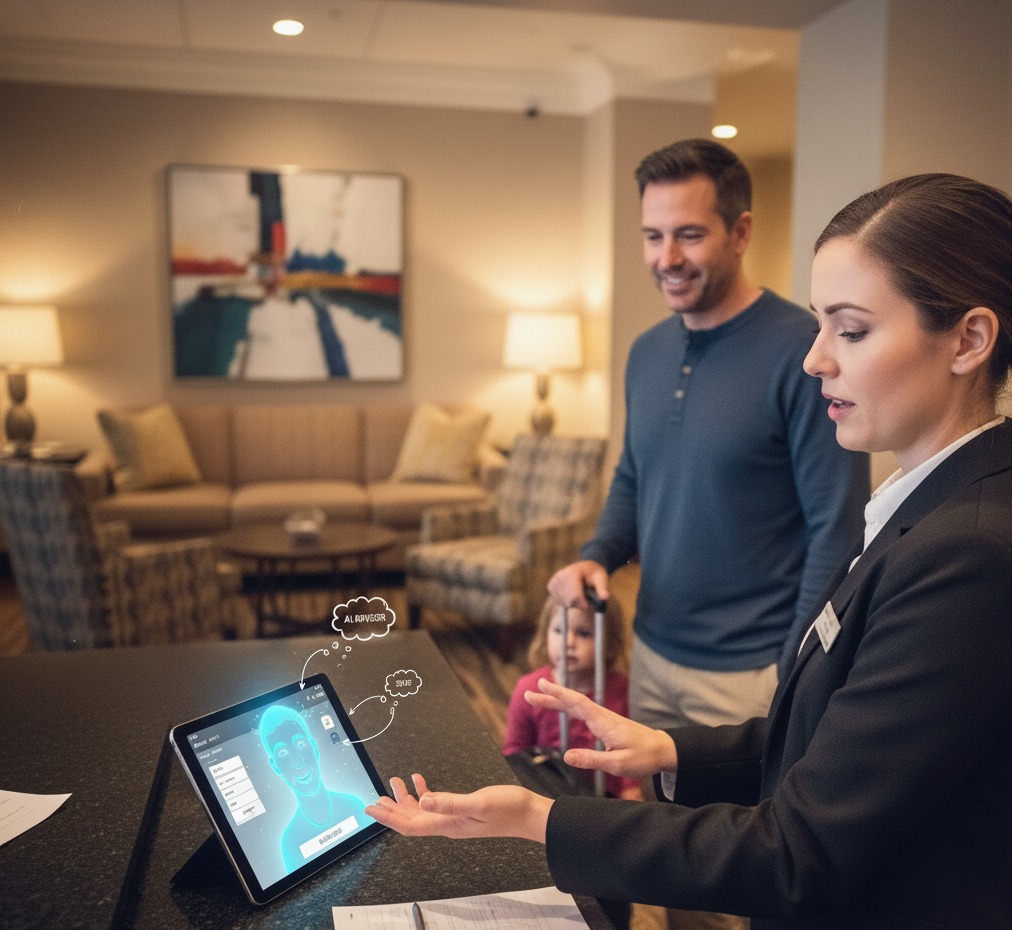
The difference between a £1,200 booking and a £1,800 booking often comes down to a single conversation. Not a hard sell — a well-informed recommendation at the right moment, from an agent who genuinely understands what would make the customer's holiday better.
Upselling and cross-selling are the highest-leverage skills in travel sales. Industry data from Phocuswright shows that increasing average booking value by just 15% delivers more profit than acquiring the same percentage of new customers — because the cost of serving an existing enquiry is already sunk.
Yet most travel agents either avoid upselling entirely (afraid of seeming pushy) or do it so clumsily that customers feel pressured. The problem isn't motivation — it's training. Agents haven't been taught how to recommend upgrades and extras in a way that feels helpful rather than salesy.
Here's how to fix that.
Why Agents Resist Upselling
Before designing training, understand the psychological barriers. Research from the Institute of Sales Professionals identifies three core reasons sales professionals avoid upselling:
Fear of rejection. Suggesting a more expensive option risks the customer saying no — or worse, becoming annoyed. Many agents would rather secure the safe booking than risk the relationship.
Lack of product knowledge. You can't recommend a suite upgrade if you don't know what makes the suite worth the extra cost. Insufficient product training is the most common root cause of weak upselling.
No framework for the conversation. Even confident agents struggle without a mental model for when and how to introduce an upgrade. Training needs to provide structure, not just encouragement.
The Value-First Upselling Framework
Effective upselling training teaches agents to follow a three-step framework that keeps the customer's interests central.
Step 1: Understand What They Value
Before recommending anything, the agent needs to understand what the customer values most about their holiday. A couple celebrating an anniversary values romance and exclusivity. A family with young children values convenience and entertainment. A group of friends values fun and flexibility.
The discovery conversation — asking the right questions, listening actively, identifying priorities — is where upselling begins. Consultative selling training builds this foundation.
Training exercise: Give agents three customer profiles with different priorities. Ask them to identify the top two upsell opportunities for each profile. The exercise teaches agents that upselling isn't about pushing the most expensive option — it's about matching the right enhancement to the right customer.
Step 2: Connect the Upgrade to Their Priorities
The upgrade recommendation must directly reference what the customer has told you they care about.
Weak approach: "Would you like to upgrade to a sea-view room? It's only £30 per night more."
Strong approach: "You mentioned wanting to wake up feeling completely relaxed on holiday. The sea-view room has a private balcony — guests say they start every morning with coffee watching the sunrise. It's £30 per night more, which over your 7-night stay adds around £210, but for an anniversary trip it could be the detail that makes it really special."
The difference is context. The strong approach connects the upgrade to the customer's stated desire, quantifies the cost honestly, and frames it within the occasion. It feels like advice, not a sales pitch.
Step 3: Make It Easy to Say Yes (or No)
Always present the recommendation as a genuine option, not a pressure tactic. Give the customer space to accept or decline without awkwardness.
"I'd suggest the sea-view for your trip — shall I check availability and show you the price difference?"
This approach works because it asks permission to explore rather than demanding a decision. If the customer says no, the agent moves on without tension.
Cross-Selling: The Art of Completing the Experience
Cross-selling — recommending complementary products alongside the main booking — follows similar principles but requires a different knowledge base.
The most valuable cross-sell opportunities in travel include:
| Add-On | Typical Value | Attachment Rate (Untrained) | Attachment Rate (Trained) |
|---|---|---|---|
| Travel insurance | £40-£120 | 45% | 75% |
| Airport transfers | £50-£150 | 25% | 55% |
| Excursions/activities | £30-£200 per person | 15% | 40% |
| Airport lounge access | £25-£40 per person | 5% | 20% |
| Car hire | £150-£500 | 10% | 25% |
| Room/cabin upgrades | £100-£1,000+ | 8% | 22% |
Data from ABTA indicates that trained agents attach an average of 2.3 ancillary products per booking compared to 0.8 for untrained agents — nearly three times the rate.
The key training insight: cross-selling should happen naturally throughout the booking conversation, not as an afterthought at the end.
Poor timing: "OK, your holiday is booked. Did you want insurance, transfers, or car hire with that?"
Good timing: When discussing the destination, mention excursions. When confirming flight times, suggest transfers. When talking about the resort area, mention car hire for exploring. Each recommendation flows from the conversation topic.
Training Methods That Build Real Skills
AI Roleplay Practice
The most effective way to develop upselling skills is through practice — but practising on real customers is risky. AI-powered roleplay simulations solve this by letting agents practise upselling conversations with virtual customers who respond realistically.
Effective roleplay scenarios for upselling training include:
- The price-conscious family: The customer has a budget but hasn't considered that the all-inclusive option would save money compared to paying for meals separately. The agent needs to demonstrate value, not just price.
- The undecided couple: They're torn between two room categories. The agent needs to identify what matters most and make a confident recommendation.
- The group booking: Six friends want different things. The agent needs to upsell selectively — the right add-ons for the right people, not a blanket recommendation.
- The repeat customer: They've booked with the agency before and had a standard experience. The agent needs to introduce upgrades they haven't tried.
Each roleplay provides AI coaching feedback after the conversation — specific, actionable advice on what the agent did well and where they could improve their technique.
Microlearning Product Knowledge
Agents can't upsell what they don't understand. Short, focused product modules should cover the specific details that make upgrades worth recommending:
- What's the actual difference between room categories? (Not just size — the experience difference)
- What excursions do guests rate highest and why?
- When does all-inclusive genuinely save money versus when it doesn't?
- Which transfer options provide the best customer experience?
Each module should take 5-7 minutes and include at least one practice scenario where the agent applies the knowledge to a customer situation.
Real-World Coaching
Performance analytics can identify which agents have strong product knowledge (from assessment scores) but low upsell rates (from booking data). These agents likely have the knowledge but lack confidence — targeted coaching on conversation technique can unlock significant revenue.
Conversely, agents with high confidence but poor product knowledge need different support: deeper training on the products they're trying to sell.
Measuring Upselling Training Impact
Track these metrics to evaluate whether your upselling training is working:
Average booking value. The primary metric. Compare pre-training and post-training averages, controlling for seasonal variation. TravAI clients typically see 15-25% increases in average booking value within 90 days of upselling training deployment.
Ancillary attachment rate. What percentage of bookings include at least one add-on? What's the average number of add-ons per booking?
Upgrade acceptance rate. When agents recommend an upgrade, how often does the customer accept? This measures the quality of the recommendation, not just whether it was made.
Customer satisfaction. Critically, monitor whether upselling training affects customer satisfaction scores. Done well, upselling improves satisfaction (customers get a better holiday). Done poorly, it damages satisfaction. If NPS drops after training, the approach needs refinement.
Common Upselling Training Mistakes
Teaching scripts instead of principles. Scripted upselling sounds scripted. Customers detect it immediately and resist. Train agents on the underlying principles (understand value, connect to priorities, make it easy) and let them find their own words.
Focusing only on high-value upsells. A £25 airport lounge pass is an easy yes that builds the customer's trust. Start small, build confidence, then progress to larger recommendations. The CIPD calls this "scaffolded skill development."
Not addressing the fear of rejection. Acknowledge that customers will sometimes say no — and that's completely fine. A declined upsell isn't a failure; it's a normal part of the conversation. The failure is never making the recommendation at all.
Ignoring the timing. The same recommendation can feel helpful or pushy depending on when it's made. Training must cover not just what to recommend but when in the conversation to introduce it.
Building Upselling Into Your Training Programme
Upselling shouldn't be a standalone training event. It should be woven into every aspect of your training programme:
- Product training should always include "how to sell this" alongside "what this is"
- Assessment questions should include scenario-based upselling challenges, not just factual recall
- Roleplay practice should be available continuously, not as a one-off exercise
- Performance data should feed back into targeted coaching for agents who need it
The agents who consistently achieve the highest booking values aren't the pushiest. They're the most knowledgeable, the most attentive to customer needs, and the most practised at making recommendations that genuinely improve the customer's experience.
Training builds all three capabilities. AI-powered training builds them faster, more consistently, and at scale.
See how TravAI's sales coaching transforms upselling performance →
This article is part of our Travel Agent Training series. Related reading: