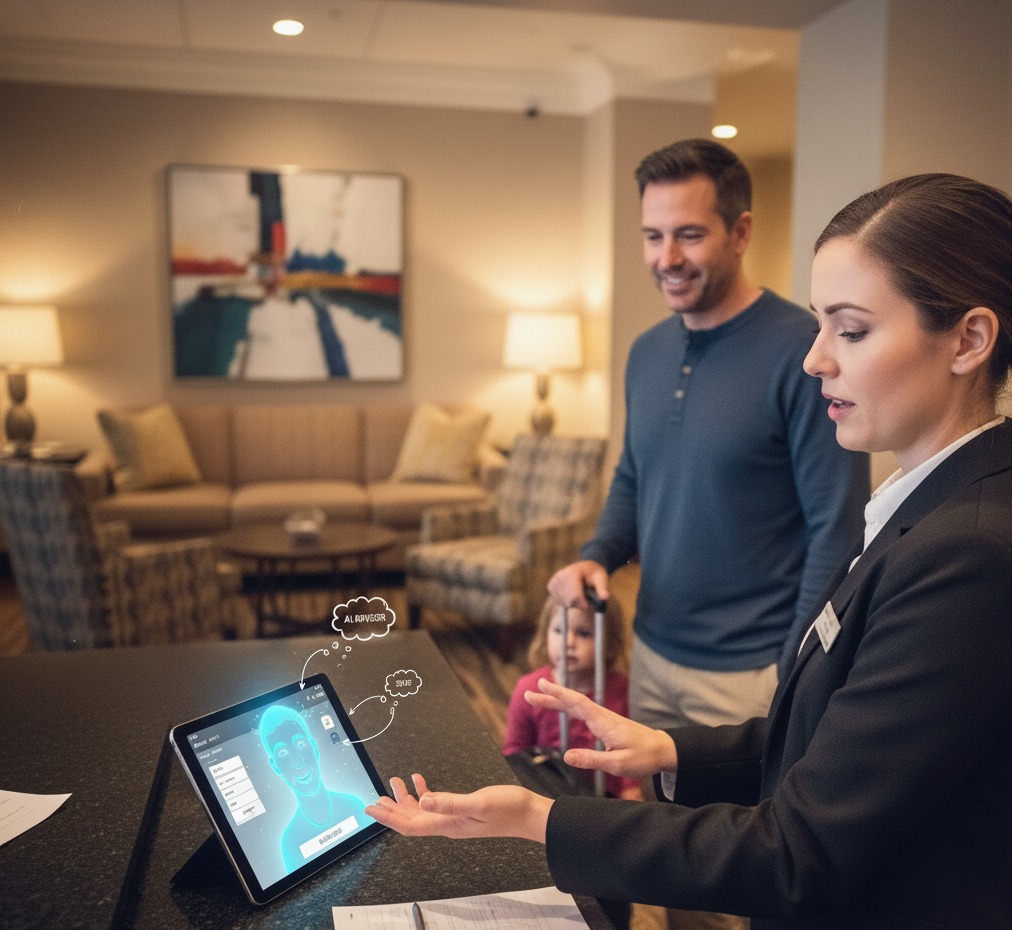
Travel sales is fundamentally different from other retail sectors. Customers are spending significant sums on intangible experiences they can't try before buying. The emotional stakes are high — a holiday is often the highlight of someone's year. And the product complexity is enormous — thousands of destinations, hotels, airlines, cruise lines, and experiences, each with seasonal variations, pricing structures, and customer suitability.
This guide covers the core selling skills that drive revenue in travel, how to develop them through AI-powered coaching, and how to measure the impact on commercial performance.
The Travel Sales Landscape
Why Sales Skills Matter More Than Ever
| Market Force | Impact on Sales Skills |
|---|---|
| OTA competition | Customers have unlimited self-service options — agents must add value beyond booking |
| Information abundance | Customers arrive informed — agents need to be better informed |
| Price transparency | Price alone doesn't win — selling experience, security, and expertise does |
| Product complexity | More destinations, more products, more options — agents must simplify and recommend |
| Customer expectations | Post-pandemic travellers expect personalised, expert advice |
| AI disruption | AI handles transactions; human selling skill becomes the differentiator |
Source: Phocuswright Travel Sales Report; ABTA Holiday Habits Survey
The Revenue Impact of Sales Skills
| Agent Skill Level | Close Rate | Average Booking Value | Annual Revenue | Commission |
|---|---|---|---|---|
| Untrained | 15-20% | £1,800 per booking | £180,000-£240,000 | £9,000-£12,000 |
| Product-trained only | 22-28% | £2,200 per booking | £290,000-£370,000 | £14,500-£18,500 |
| Sales-skilled | 30-38% | £2,800 per booking | £500,000-£640,000 | £25,000-£32,000 |
| Expert (sales + product) | 35-45% | £3,400 per booking | £700,000-£920,000 | £35,000-£46,000 |
Expert agents generate 3-4x the revenue of untrained agents. The difference is not customer quality or market conditions — it's selling skill.
Core Travel Sales Skills
Skill 1: Needs Analysis
The foundation of consultative selling — understanding what the customer actually wants before recommending anything.
| Component | What to Ask | Why It Matters |
|---|---|---|
| Travel purpose | Holiday, celebration, adventure, relaxation, cultural | Determines product match |
| Who's travelling | Couple, family, solo, group, multigenerational | Affects accommodation, activities, logistics |
| Previous experience | Where they've been; what they loved/disliked | Reveals preferences and expectations |
| Budget reality | Total budget; flexibility; value vs cost priority | Frames recommendations appropriately |
| Non-negotiables | Direct flight, pool, specific dates, dietary needs | Eliminates options that won't work |
| Aspirations | Dream destination, bucket list item, experience goal | Opens upselling opportunities |
Detailed needs analysis guide →
The DISCOVER framework:
| Letter | Question | Purpose |
|---|---|---|
| D | Destination preferences or open-minded? | Narrows geography |
| I | Interests — beach, culture, adventure, food? | Identifies experience priorities |
| S | Special occasion or reason for travel? | Unlocks premium and celebration opportunities |
| C | Companions — who's going? | Determines group dynamics and needs |
| O | Obstacles — dates, budget, restrictions? | Identifies constraints early |
| V | Values — what matters most? | Prioritises recommendations |
| E | Experience expectations — what would make it perfect? | Sets the standard for your recommendation |
| R | Revisit — summarise and confirm | Ensures you've understood correctly |
Skill 2: Upselling and Cross-Selling
Increasing booking value by recommending higher-value products and complementary additions.
| Technique | Application | Revenue Impact |
|---|---|---|
| Room/cabin upgrade | Present 3 options — standard, mid-tier, premium | Average +£300-£800 per booking |
| Experience additions | Excursions, dining, transfers, spa | Average +£200-£500 per booking |
| Insurance and protection | Travel insurance, cancellation cover | Average +£80-£200 per booking |
| Flight upgrade | Premium cabin options | Average +£500-£2,500 per booking |
| Date optimisation | Suggest dates with better value or availability | Protects booking value and customer satisfaction |
| Duration extension | "For 2 extra nights, you could also visit…" | Average +£400-£1,000 per booking |
Skill 3: Objection Handling
Converting hesitation into commitment through understanding and addressing customer concerns.
| Objection Category | Customer Says | What They Mean | Agent Approach |
|---|---|---|---|
| Price | "It's more than we expected" | Need to understand the value | Value framing — per person per night; inclusion breakdown |
| Timing | "We need to think about it" | Not yet convinced; fear of commitment | Identify specific concern; address it; create urgency with availability |
| Comparison | "We found it cheaper online" | Want validation or genuinely checking | Match if possible; articulate agent value (ATOL, advice, support) |
| Trust | "How do we know it's good?" | Need social proof and reassurance | Reviews, personal experience, customer feedback |
| Complexity | "It sounds complicated" | Overwhelmed by options | Simplify; recommend one clear option with reasoning |
Detailed objection handling guide →
Skill 4: Closing Techniques
Moving the conversation from discussion to commitment without being pushy.
| Technique | Script | Best Used When |
|---|---|---|
| Assumptive close | "Shall I go ahead and secure those dates for you?" | Customer has shown clear preference |
| Alternative close | "Would you prefer the sea-view room or the garden suite?" | Customer is choosing between options |
| Urgency close | "There are only 3 rooms left at this rate — shall I hold one?" | Genuine availability constraint |
| Summary close | "So that's [hotel], [dates], [room], [transfers] — everything looks perfect. Shall I confirm?" | All details are agreed |
| Trial close | "How does that sound so far?" | Mid-conversation to gauge interest |
| Next step close | "I'll put together a detailed quote and call you tomorrow — what time works?" | Customer needs time but is interested |
Skill 5: Building Rapport and Trust
Creating the relationship foundation that turns enquiries into bookings and first-time customers into repeat clients.
| Rapport Element | Action | Impact |
|---|---|---|
| Active listening | Reflect back what the customer says; ask follow-up questions | Customer feels heard and understood |
| Personalisation | Use their name; reference their specific situation | Creates connection |
| Expert positioning | Share relevant knowledge naturally — "I was there last month" | Builds confidence in your advice |
| Honesty | If something isn't right for them, say so | Builds long-term trust |
| Follow-through | Do what you say; follow up when promised | Demonstrates reliability |
| Storytelling | Share customer stories and personal experiences | Creates emotional connection to the destination |
Developing Sales Skills with AI
Why AI Coaching Works
| Traditional Sales Training | AI-Powered Coaching |
|---|---|
| Annual workshop (1-2 days) | Continuous practice (5-10 min daily) |
| Generic scenarios | Personalised to agent's skill gaps |
| Role-play with manager (limited) | Unlimited AI roleplay practice |
| Feedback once (in-session) | Real-time feedback on every interaction |
| One language | 25+ languages |
| Expensive (£200-£500 per agent per day) | Cost-effective (£5-£15 per agent) |
| Difficult to scale | Unlimited concurrent users |
AI Coaching Capabilities
| Capability | How It Works | Agent Benefit |
|---|---|---|
| Roleplay scenarios | AI simulates realistic customer conversations | Practice in a safe environment |
| Real-time coaching | AI provides selling suggestions during practice | Immediate technique improvement |
| Performance scoring | AI evaluates selling technique, product knowledge, and rapport | Objective skill measurement |
| Gap identification | AI identifies specific skill weaknesses | Focused improvement plan |
| Adaptive difficulty | Scenarios adjust based on agent performance | Always challenging, never overwhelming |
| Best practice modelling | AI demonstrates expert-level selling approaches | Learn from ideal examples |
Building a Sales Skills Programme
| Phase | Content | Duration | Outcome |
|---|---|---|---|
| Foundation | Needs analysis, active listening, rapport building | 2 hours (self-paced) | Core communication skills |
| Product knowledge | Destination, airline, hotel, cruise modules | 4-8 hours (self-paced) | Expert product knowledge |
| Selling skills | Upselling, cross-selling, value framing | 3 hours (self-paced) | Revenue-driving techniques |
| Objection handling | Price, timing, comparison, trust objections | 2 hours including roleplay | Confidence with objections |
| Closing | 6 closing techniques with practice scenarios | 2 hours including roleplay | Higher conversion rates |
| Advanced | Consultative selling, storytelling, complex bookings | 3 hours including roleplay | Expert-level selling |
| Ongoing | Weekly AI roleplay practice; monthly skills focus | 30 min per week | Continuous improvement |
Sales Performance Management
Key Performance Indicators
| KPI | Definition | Benchmark | Top Performer |
|---|---|---|---|
| Enquiry-to-booking ratio | Bookings ÷ enquiries received | 25-30% | 40-50% |
| Average booking value | Total revenue ÷ number of bookings | £2,000-£2,500 | £3,200-£4,000+ |
| Upsell rate | Bookings with upgrade/addition ÷ total bookings | 15-20% | 35-50% |
| Cross-sell rate | Bookings with ancillary attached ÷ total bookings | 25-35% | 55-70% |
| First-call resolution | Bookings confirmed on first interaction ÷ total bookings | 20-30% | 35-45% |
| Customer satisfaction | Post-booking satisfaction score | 4.0/5.0 | 4.5/5.0+ |
| Repeat booking rate | Returning customers ÷ total customers | 25-35% | 50-65% |
| Revenue per enquiry | Total revenue ÷ total enquiries | £500-£750 | £1,200-£1,800 |
Detailed performance measurement guide →
Using Data to Coach
| Data Pattern | Diagnosis | Coaching Action |
|---|---|---|
| High enquiries, low conversion | Not closing effectively | Focus on closing techniques and objection handling |
| Good conversion, low booking value | Not upselling | Practise upselling and premium product knowledge |
| High conversion, low repeat rate | Transactional relationship | Develop rapport building and follow-up skills |
| Low enquiries overall | Marketing or visibility issue | Not a sales skill problem — address lead generation |
| High value but slow process | Detailed but inefficient | Streamline needs analysis; practise time management |
| Good initial but loses to "think about it" | Objection handling gap | Practise handling timing objections and creating urgency |
The 90-Day Performance Plan
| Period | Focus | Target | Review |
|---|---|---|---|
| Days 1-30 | Foundation skills + product knowledge | Complete core training; shadow 10 calls | Weekly with manager |
| Days 31-60 | Active selling with AI coaching support | Handle 20 enquiries; achieve 20% close rate | Weekly with manager |
| Days 61-90 | Independent selling with performance targets | Handle 30+ enquiries; achieve 25%+ close rate | Bi-weekly with manager |
| Month 4+ | Continuous improvement with ongoing roleplay | Meet full performance targets | Monthly performance review |
Sales Skills by Channel
Telephone Sales
| Skill | Why It Matters | Technique |
|---|---|---|
| Voice tone | Phone removes visual cues — tone carries 80% of communication | Warm, enthusiastic, professional — match the customer's energy |
| Structured questions | Can't see customer reaction; must guide systematically | Follow DISCOVER framework verbally |
| Active confirmation | Customer can't nod; need verbal agreement | "Does that sound right?" after each key point |
| Time management | Calls should be focused, not rambling | 15-20 minutes for needs analysis; quote within 24 hours |
| Call-to-action | Can't hand over a brochure; must close verbally | Clear next step at end of every call |
Email Sales
| Skill | Why It Matters | Technique |
|---|---|---|
| Subject line | Determines whether the email gets opened | Personalised, specific: "Sarah — your Maldives options (3 perfect hotels)" |
| Structure | Easy to scan; key information visible | Lead with recommendation; support with details |
| Personalisation | Demonstrates you listened to their needs | Reference their specific requirements throughout |
| Call-to-action | Must drive a response or booking | One clear action: "Reply to confirm" or "Call me at…" |
| Follow-up | Most bookings require 2-3 follow-ups | Systematic follow-up schedule: 24h, 72h, 7 days |
Social Media and Digital
| Skill | Why It Matters | Technique |
|---|---|---|
| Content creation | Builds authority and attracts enquiries | Share destination knowledge, travel tips, customer stories |
| Engagement | Converts followers into leads | Respond to comments; ask questions; create conversations |
| Lead conversion | Moving social enquiry to booking conversation | Quick response; move to phone or email for detailed discussion |
| Personal brand | Position as a travel expert worth paying for | Consistent, knowledgeable, authentic presence |
Building a Sales Culture
What Sales Culture Means
| Element | Implementation |
|---|---|
| Clear targets | Every agent knows their weekly/monthly revenue and conversion targets |
| Coaching, not monitoring | Managers coach technique, not police activity |
| Celebration | Big bookings, great feedback, and personal bests celebrated publicly |
| Learning | Time allocated for training, roleplay, and skill development |
| Data transparency | Performance data visible; used for improvement, not punishment |
| Customer focus | Selling defined as helping customers make better decisions |
For Agency Owners and Managers
| Action | Impact |
|---|---|
| Invest in AI coaching tools | Scalable, consistent, cost-effective skill development |
| Set and track performance KPIs | What gets measured gets improved |
| Dedicate time for training | 30 minutes per week minimum for roleplay practice |
| Lead by example | Managers who sell demonstrate that selling is valued |
| Reward improvement, not just results | Encourages development in all agents, not just top performers |
The Future of Travel Sales
| Trend | Impact on Sales Skills |
|---|---|
| AI handles transactions | Agents must sell experiences, not process bookings |
| Customer AI preparation | Customers arrive with AI-generated options — agents must add value beyond what ChatGPT can provide |
| Personalisation expectations | Generic recommendations become unacceptable — deep needs analysis essential |
| Omnichannel buying | Customers switch between phone, email, social, and in-person — agents must sell across all |
| Value-based pricing | Service fees require agents to articulate and demonstrate their value |
The agents who thrive will be those who combine deep product knowledge with refined selling skills — the expertise that makes them genuinely worth paying for.
Develop your travel sales skills with TravAI →
This article is part of our Travel Sales Skills & Coaching series. Related reading: