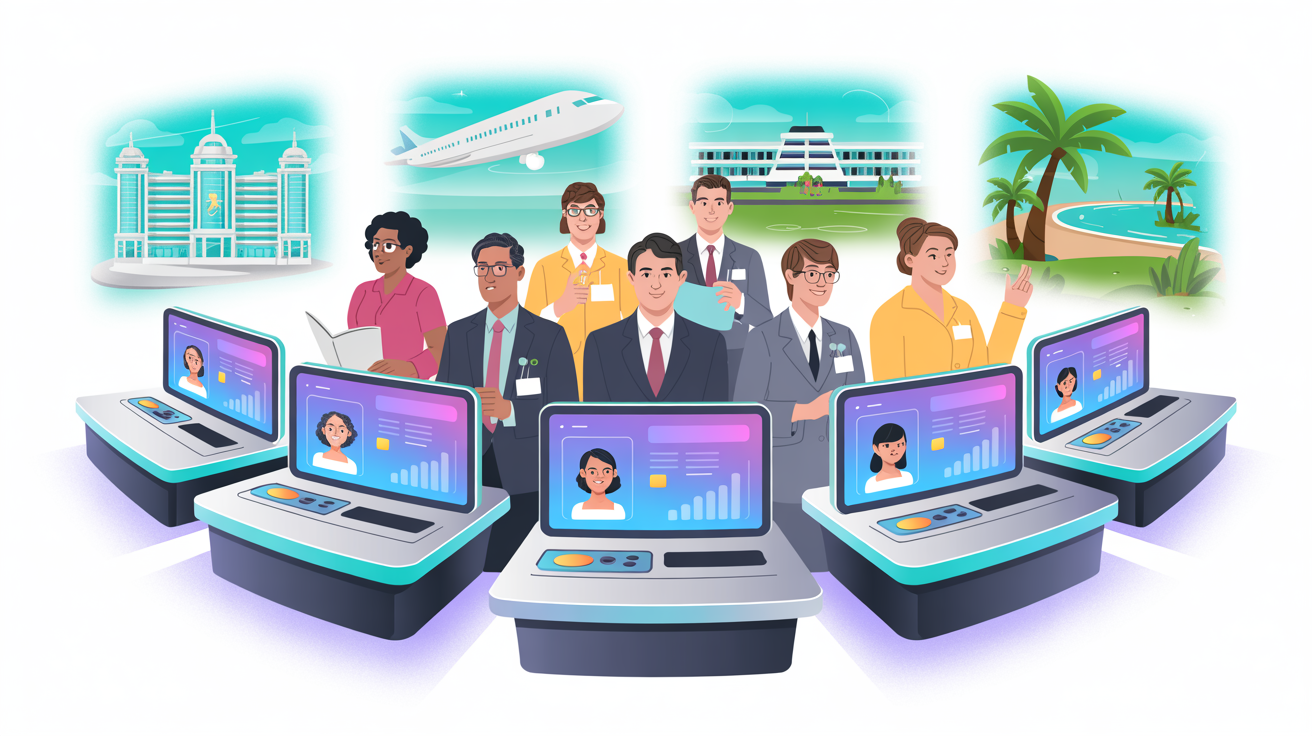
The travel trade remains a critical distribution channel for airlines, accounting for 30-55% of revenue for full-service carriers and 10-25% for low-cost airlines. Yet most airlines invest a fraction of their marketing budget in trade training — relying on BDM visits, webinars, and PDF fact sheets that reach a small percentage of their agent network. This guide provides the complete framework for building an airline trade training programme that drives measurable revenue growth.
The Airline Trade Landscape
Why the Trade Channel Matters
| Metric | Industry Average | Top Performers |
|---|---|---|
| Trade channel revenue share (full-service) | 35-45% | 50-55% |
| Trade channel revenue share (LCC) | 10-15% | 20-25% |
| Agent-influenced premium cabin sales | 25-35% | 45-55% |
| Ancillary attach rate via trade | 22-30% | 45-60% |
| Average booking value (trade vs direct) | Trade 15-25% higher | Trade 30%+ higher |
Source: IATA Distribution Intelligence; OAG Analytics; Phocuswright airline distribution data
Agents consistently deliver higher-value bookings than direct channels because they match customers to the right product, recommend ancillaries, and upsell premium cabins. The airline's challenge is ensuring enough agents have the knowledge to sell effectively.
The Knowledge Gap
| Agent Knowledge Area | Confident | Somewhat Confident | Not Confident |
|---|---|---|---|
| Booking a simple economy fare | 92% | 6% | 2% |
| Fare classes and restrictions | 35% | 40% | 25% |
| Ancillary products (bags, seats, lounges) | 28% | 38% | 34% |
| Premium cabin selling | 22% | 30% | 48% |
| Loyalty programme benefits | 18% | 32% | 50% |
| NDC and modern retailing | 12% | 25% | 63% |
| Codeshare and alliance selling | 20% | 35% | 45% |
Source: Aggregated from ABTA agent surveys and airline trade training feedback
The confidence gap is most pronounced in precisely the product areas that generate the highest revenue — premium cabins, ancillaries, and loyalty programme benefits. This represents a significant revenue opportunity that training directly addresses.
The Cost of Untrained Agents
Revenue Impact
| Scenario | Untrained Agent | Trained Agent | Difference |
|---|---|---|---|
| 100 airline bookings | |||
| Economy-only bookings | 85 | 65 | -20 |
| Premium economy/business | 15 | 35 | +20 |
| Average ticket value | £450 | £680 | +51% |
| Ancillary attach rate | 25% | 55% | +30 pts |
| Ancillary revenue per booking | £35 | £85 | +143% |
| Total revenue per 100 bookings | £48,500 | £76,500 | +58% |
An airline with 5,000 active agents where each makes 50 bookings per year: the difference between trained and untrained performance across the network is £70M+ in additional annual revenue.
The Multiplier Effect
Every trained agent creates a cascade of benefits:
| Effect | Mechanism | Revenue Impact |
|---|---|---|
| Higher booking values | Agent recommends appropriate fare class and cabin | +15-30% per booking |
| Ancillary revenue | Agent sells bags, seats, lounges, Wi-Fi | +£50-£150 per booking |
| Customer satisfaction | Better product matching reduces complaints and changes | -20% service costs |
| Loyalty programme enrolment | Agent explains FFP benefits at point of sale | +15-25% programme enrolment |
| Route promotion | Agent recommends new routes they've been trained on | +20-40% new route fill |
| Competitive preference | Agent defaults to the airline they know best | +10-25% share of wallet |
Building an Airline Trade Training Programme
Programme Architecture
An effective airline training programme operates across three levels:
Level 1: Product Knowledge Foundation
| Module | Content | Duration | Assessment |
|---|---|---|---|
| Airline overview | Brand positioning, route network, fleet, USPs | 8 min | Quiz |
| Fare classes | Economy, premium economy, business, first; fare rules | 10 min | Matching exercise |
| Cabin products | Seat specifications, dining, IFE, amenities per cabin | 10 min | Visual quiz |
| Ancillary products | Baggage, seats, lounges, Wi-Fi, meals, fast-track | 8 min | Product knowledge test |
| Route network | Key routes, frequencies, connection options | 8 min | Route matching quiz |
| Booking process | System-specific booking procedures; trade portal navigation | 10 min | Process walkthrough |
Level 2: Selling Skills
| Module | Content | Duration | Assessment |
|---|---|---|---|
| Customer matching | Which customer suits which product; needs analysis | 10 min | Scenario exercises |
| Premium selling | How to position and sell premium cabins | 10 min | Roleplay |
| Ancillary selling | How to recommend and bundle ancillary products | 8 min | Roleplay |
| Objection handling | Top 10 airline-specific objections with responses | 10 min | Roleplay |
| Loyalty selling | Positioning FFP benefits; tier matching; earning potential | 8 min | Quiz + roleplay |
| Competitive positioning | How to position against key competitors | 10 min | Comparison exercise |
Level 3: Specialist Knowledge
| Module | Content | Duration | Assessment |
|---|---|---|---|
| NDC and retailing | Modern distribution; offer and order; rich content | 10 min | Knowledge quiz |
| Codeshare and alliances | Partnership selling; through-fares; alliance benefits | 8 min | Scenario quiz |
| Sustainable aviation | Carbon offsetting; SAF; sustainability messaging | 8 min | Knowledge quiz |
| GDS in the AI era | GDS evolution; NDC integration; future distribution | 10 min | Knowledge quiz |
| Business development | Maximising airline commission through product knowledge | 8 min | Action plan |
Content Creation
AI-assisted content creation transforms the economics and speed of airline training content:
| Content Element | Traditional | AI-Powered |
|---|---|---|
| Training module | External agency: 3-4 weeks, £3,000-£5,000 | AI-assisted: 2-3 days, internal review |
| Assessment questions | Manual: 1-2 days per module | AI-generated: hours |
| Roleplay scenarios | Workshop design: 2-3 days | AI roleplay: configured in hours |
| Route launch update | 4-6 weeks (often too late) | 1-3 days (ready before launch) |
| Fleet change update | Rewrite full module: 2-3 weeks | AI-assisted update: 1 day |
| Multi-language | Translation: £3,000-£5,000 per language | AI translation: included |
Certification Programme
Tiered certification drives completion and creates measurable engagement:
| Level | Requirement | Agent Reward | Airline Benefit |
|---|---|---|---|
| Bronze: Product Aware | Complete Level 1 modules; pass assessment 70%+ | Digital certificate; listed on preferred agent directory | Agents can book basic products correctly |
| Silver: Sales Specialist | Bronze + Level 2; pass 75%+ | Enhanced commission (+0.5-1%); priority fares access | Agents actively sell premium products and ancillaries |
| Gold: Expert | Silver + Level 3; 50+ bookings/year | Highest commission tier; FAM trip priority; advisory panel | Agents are brand advocates generating maximum revenue |
Agent Engagement Strategy
Reaching Your Agent Network
| Channel | Best For | Expected Engagement |
|---|---|---|
| AI training platform | Structured learning, certification, assessment | 40-60% completion (highest) |
| BDM visits | Relationship building; addressing specific agency needs | High per-visit; limited scale |
| Webinars | Product launches; seasonal updates | 15-25% live attendance |
| Email campaigns | News, promotions, training reminders | 20-30% open rate |
| Trade events | Brand awareness; relationship initiation | Variable |
| Social media | Quick updates; trade community engagement | Low-moderate |
The BDM-AI Partnership
The most effective programmes integrate BDM activity with AI training:
| BDM Role (Before AI) | BDM Role (With AI) |
|---|---|
| Deliver product information in agency visits | Focus on relationship building; address specific agency challenges |
| Run ad hoc training sessions | Use training analytics to identify which agents need support |
| Distribute brochures and fact sheets | Help agents navigate the training platform; answer specific questions |
| Limited data on agent knowledge | Real-time data on every agent's knowledge level and booking behaviour |
"Before the platform, I'd spend 30 minutes in an agency explaining our cabin products. Now, agents have already completed the training — I spend that time helping them win specific bookings." — Airline BDM
Ancillary Revenue Opportunity
The Ancillary Gap
Airlines have built extensive ancillary product portfolios — but the trade channel significantly underperforms direct channels in ancillary sales:
| Ancillary Product | Direct Channel Attach Rate | Trade Channel Attach Rate | Revenue Opportunity |
|---|---|---|---|
| Seat selection | 42% | 18% | High |
| Extra baggage | 35% | 22% | High |
| Lounge access | 15% | 5% | Medium |
| Meal upgrades | 12% | 3% | Medium |
| Fast-track security | 18% | 6% | Medium |
| Wi-Fi packages | 25% | 8% | High |
| Travel insurance | 30% | 20% | Low (agents often sell own) |
Source: IdeaWorksCompany Ancillary Revenue Guide; CarTrawler Ancillary Revenue Study
The gap represents billions in unearned revenue globally. Training agents on ancillary products is the fastest path to closing this gap.
Premium Cabin Selling
The Revenue Multiplier
| Cabin | Average Fare (London-New York) | Revenue vs Economy |
|---|---|---|
| Economy | £450 | 1x |
| Premium Economy | £850 | 1.9x |
| Business | £2,800 | 6.2x |
| First | £6,500 | 14.4x |
A single economy-to-business upsell generates the revenue of 5+ economy bookings. Training agents to identify and convert premium opportunities is the highest-ROI investment an airline can make in trade training.
Why Agents Don't Sell Premium
| Barrier | Training Solution |
|---|---|
| "My customers can't afford it" | Customer identification training — not all premium buyers look "wealthy" |
| "I don't know enough about the product" | Detailed cabin product training with virtual tours |
| "The commission isn't worth it" | Show the revenue calculation — premium commission far exceeds economy |
| "They can upgrade at the airport" | Positioning: advance booking guarantees the cabin; availability is limited |
| "I'm not comfortable suggesting expensive options" | Roleplay practice builds confidence |
Measuring Training Impact
Engagement Metrics
| Metric | Benchmark | Target | Measurement |
|---|---|---|---|
| Training registration rate | 30-40% of agents | 55-65% | Platform analytics |
| Level 1 completion | 50-60% of registrants | 70-80% | Platform analytics |
| Level 2 completion | 30-40% of Level 1 | 50-60% | Platform analytics |
| Level 3 completion | 25-35% of Level 2 | 40-50% | Platform analytics |
| Average assessment score | 70-75% | 80%+ | Platform analytics |
Commercial Metrics
| Metric | Benchmark | Target | Measurement |
|---|---|---|---|
| Active agents (1+ booking/year) | 20-30% of registered | 35-45% | Booking system |
| Average bookings per active agent | 30-50/year | 50-80/year | Booking system |
| Average booking value | £400-£600 | £600-£900 | Revenue data |
| Ancillary attach rate | 22-30% | 45-60% | Ancillary reporting |
| Premium cabin share | 8-15% of trade bookings | 18-25% | Booking analysis |
| Training-booking correlation | Not measured | Trained agents book 40-80% more | Correlation analysis |
ROI Calculation
| Component | Typical Values |
|---|---|
| Investment | |
| AI platform licence | £25,000-£60,000/year |
| Content creation (staff time) | £10,000-£20,000 |
| Incentive budget | £10,000-£25,000 |
| Marketing | £5,000-£10,000 |
| Total investment | £50,000-£115,000 |
| Returns | |
| Additional booking value (premium + ancillary uplift) | £2M-£15M+ |
| New route support (faster fill rates) | £500K-£5M+ |
| Reduced agent support costs | £50,000-£200,000 |
| Total return | £2.5M-£20M+ |
| ROI | 2,000-17,000%+ |
Even conservative estimates show airline trade training generating returns 20-100x the investment.
Implementation Roadmap
| Phase | Timeline | Actions |
|---|---|---|
| Foundation | Month 1-2 | Platform setup; Level 1 modules created; pilot with 500 agents |
| Selling skills | Month 3-4 | Level 2 modules launched; roleplay scenarios configured |
| Scale | Month 5-6 | Full network rollout; certification programme live |
| Specialist | Month 7-9 | Level 3 modules; route-specific content; advanced coaching |
| Optimisation | Month 10-12 | Content refined based on analytics; seasonal campaigns |
Common Mistakes to Avoid
| Mistake | Better Approach |
|---|---|
| Creating content for agents who already sell you | Focus on activating dormant agents — the growth opportunity is in the 70% who rarely book |
| Training only on product features | Include selling skills, objection handling, and customer matching |
| Separate training from booking data | Connect training analytics to booking systems to prove ROI |
| Annual content refresh only | Use AI-assisted updates for route launches, schedule changes, and promotions |
| Relying solely on BDMs | AI training reaches the agents BDMs can't visit; BDMs focus on high-value relationships |
The airlines that invest in structured, measurable, AI-powered trade training don't just improve agent knowledge — they transform their trade channel into a high-performing revenue engine that consistently outperforms direct distribution on booking value, ancillary sales, and customer satisfaction.
Transform your airline trade training with TravAI →
This is the pillar page for our Airline Sales & Trade Engagement series. Explore the complete series: