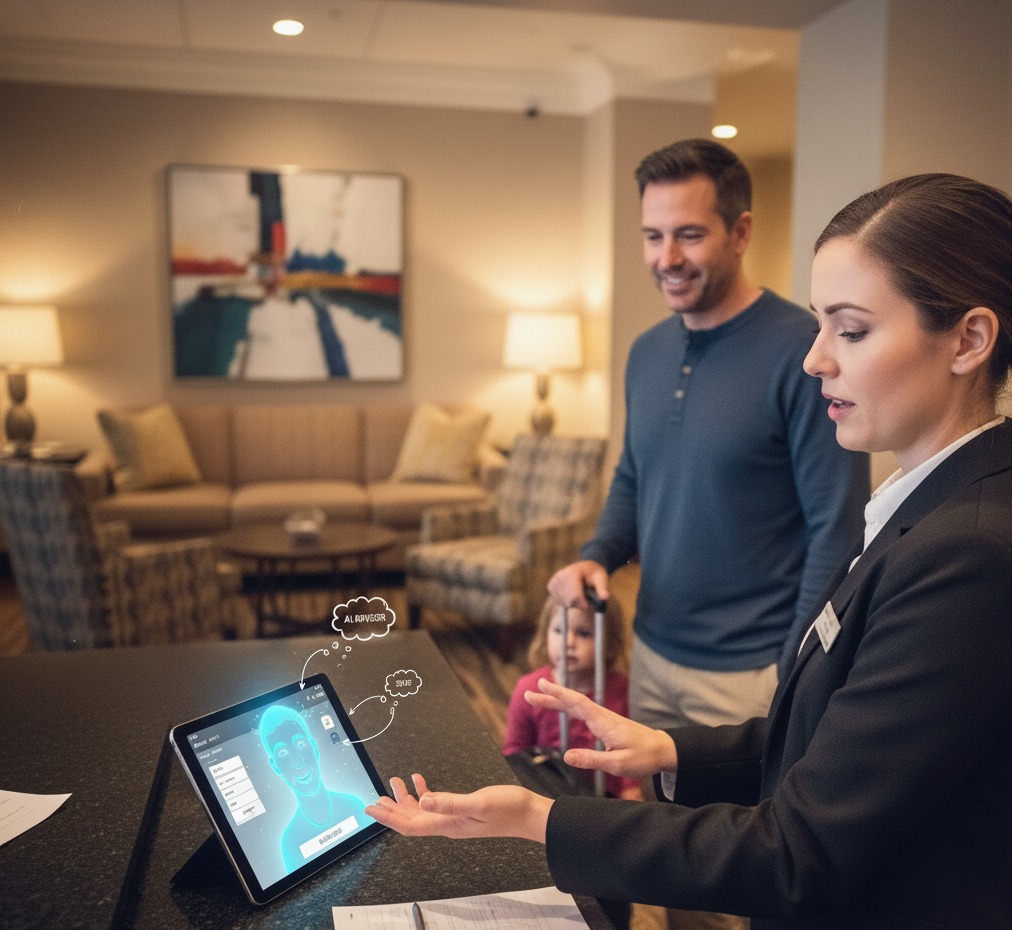
"It's more than we expected." Every travel agent hears this — and how you respond determines whether the enquiry becomes a booking or a lost sale. Price objections are rarely about the actual price. They're about perceived value, uncertainty, comparison anxiety, or simply not yet being convinced. This framework gives you the tools to handle every price objection confidently and convert more enquiries into bookings.
Why Customers Object on Price
What "Too Expensive" Actually Means
| What They Say | What They Often Mean | Your Approach |
|---|---|---|
| "It's more than we expected" | "I didn't know holidays to [destination] cost this much" | Educate on realistic pricing; compare to alternatives |
| "We can't afford that" | "We could afford it, but we're not convinced it's worth it" | Build value; show what they're getting |
| "I found it cheaper online" | "I want to make sure I'm not overpaying" | Match if possible; articulate agent value |
| "That's a lot of money" | "I need help justifying this spend" | Reframe the cost; per person, per night breakdown |
| "We were hoping to spend less" | "Is there a way to get something similar for less?" | Offer alternatives without reducing perceived value |
| "Let me check with my partner" | "I'm interested but need to process the price" | Summarise value; create urgency; schedule follow-up |
Source: Phocuswright Buyer Behaviour Study; ABTA Consumer Research
The Price Objection Reality
| Fact | Data |
|---|---|
| Percentage of customers who raise price objections | 65-75% |
| Percentage of price objections that are genuine budget constraints | 15-20% |
| Percentage that are value/confidence objections in disguise | 50-60% |
| Percentage of agents who reduce price as first response | 45% |
| Revenue lost to unnecessary discounting | Estimated 8-15% of total revenue |
| Conversion improvement from effective objection handling | +25-40% |
Nearly half of agents immediately discount when they encounter a price objection — leaving significant revenue on the table.
The PRICE Framework
P — Pause and Acknowledge
Don't immediately respond with a justification or discount. Do acknowledge the customer's concern.
| Script | Tone |
|---|---|
| "I completely understand — it's a significant amount, and you want to make sure it's right" | Empathetic |
| "That's a fair reaction. Let me walk you through what's included so you can see where the value is" | Helpful |
| "I appreciate you telling me that. Can I ask — is it the total price, or is there a specific element that feels high?" | Curious |
Why it works: Customers expect you to defend the price immediately. Pausing and acknowledging shows you're on their side, not against them.
R — Reframe the Cost
Transform the total price into something more digestible.
| Reframing Technique | Example | When to Use |
|---|---|---|
| Per person, per night | "That's £85 per person per night for a 5-star resort — less than a nice dinner out" | All-inclusive, resort, hotel bookings |
| Per day | "That works out at £150 per day for your entire family — flights, hotel, food, everything" | Package holidays |
| Per hour (flights) | "Business Class is £25 per hour more — for a flat bed, gourmet food, and lounge access" | Premium cabin upselling |
| Comparison | "That's less than you'd pay for a weekend at [comparable UK hotel]" | Premium holidays competing with domestic |
| Inclusion value | "Your £4,500 includes flights, transfers, 4-star hotel, breakfast, and all excursions. Booked separately, that's easily £5,200+" | Packaged or bundled bookings |
| Total holiday proportion | "The upgrade is 12% more for 100% better experience" | Upgrades and add-ons |
I — Investigate the Concern
Find out what's really driving the objection.
| Question | What It Reveals |
|---|---|
| "Is it the total budget, or is there a specific part that feels high?" | Whether it's a genuine constraint or a value question |
| "What were you expecting to pay for this type of holiday?" | Their reference point — may be realistic or outdated |
| "If the price were right, is this the holiday you'd want?" | Whether price is the only barrier |
| "What would you be comparing this against?" | Their alternatives — OTA, competitor, different destination |
| "Is there something you'd be willing to adjust to bring the price down?" | Their flexibility and priorities |
C — Counter with Value
Once you understand the concern, address it with specific value.
| Concern Type | Value Response |
|---|---|
| "It's more than the OTA" | "My price includes ATOL protection, 24/7 support if anything goes wrong, and my personal expertise. Last month I saved a family £800 when their flight was cancelled — because they'd booked through me, not a website" |
| "Cheaper at another agent" | "Let me check I'm comparing like-for-like — same room category, same flights, same transfers? Often the 'cheaper' option has different room types or less convenient flights" |
| "More than we budgeted" | "I understand. Let me show you what the £[X] includes — and then we can look at where to adjust if needed. Sometimes when people see the full value, the budget stretches" |
| "We can do it cheaper ourselves" | "You might find individual elements cheaper — but my package includes [list inclusions], saves you 8-10 hours of booking time, and gives you full protection if anything changes" |
E — Enable the Decision
Make it easy for them to say yes.
| Enabling Technique | Script |
|---|---|
| Instalment options | "You don't need to pay everything now — a £[X] deposit secures the booking, and the balance isn't due until [date]" |
| Availability urgency | "This particular room/rate is available now, but I've seen availability change quickly on this hotel. Shall I hold it while you decide?" |
| Risk reduction | "The booking is fully amendable until [date] — so if circumstances change, you're protected" |
| Recommendation confidence | "Based on everything you've told me, this is genuinely the best option for your family. I wouldn't recommend it if I wasn't confident" |
| Social proof | "I sent a couple to this hotel last month — they messaged me on day two saying it was the best holiday they'd had" |
Handling Specific Price Objections
"I Found It Cheaper Online"
| Step | Script |
|---|---|
| 1. Don't panic | "Thanks for checking — let me take a look at what you've found" |
| 2. Compare like-for-like | "Is that the same room type? Same flight times? Same transfer included?" |
| 3. If genuinely cheaper | "If I can match that price, would you prefer to book through me? You'll get [ATOL protection, my support, etc.]" |
| 4. If different product | "The price difference is because [different room, no transfers, basic fare]. The version I've quoted includes [list additions]" |
| 5. Articulate agent value | "Either way, booking through me means you've got someone to call if anything goes wrong — that's worth a lot when you're on holiday" |
"That's More Than Our Budget"
| Step | Script |
|---|---|
| 1. Acknowledge | "Understood. Let's look at options that work for you" |
| 2. Explore flexibility | "If I could save £200-£300, which would you prefer to adjust — the hotel category, the flight times, or the duration?" |
| 3. Offer alternatives | "There's a [alternative] for £[lower price] — it's slightly different but still excellent for what you want" |
| 4. Protect value | "I'd suggest keeping the hotel quality and adjusting the dates — shifting by 3 days saves £[X] without changing the experience" |
| 5. Don't undermine | Never say "I can do it cheaper" — instead say "Let me find you the best value within your budget" |
"We Need to Think About It"
| Step | Script |
|---|---|
| 1. Acknowledge | "Of course — it's a big decision and you should feel completely comfortable" |
| 2. Identify the hesitation | "Is there anything specific you're unsure about? Sometimes talking it through helps" |
| 3. Summarise value | "Just to recap — you're getting [key elements] for £[X], which works out at £[per night]. The [hotel/destination] is ideal for [their specific needs]" |
| 4. Create soft urgency | "I should mention that this rate is available now but I can't guarantee it long-term. Shall I hold it for 48 hours while you decide?" |
| 5. Schedule follow-up | "Would it help if I called you tomorrow evening? That gives you time to discuss and I can answer any questions" |
Practising Objection Handling
AI Roleplay Scenarios
AI-powered roleplay lets you practise these conversations before they happen live:
| Scenario | Difficulty | Focus |
|---|---|---|
| Couple comparing your quote to Booking.com | Medium | Like-for-like comparison; agent value articulation |
| Family with a fixed budget that doesn't match their expectations | Medium | Creative alternatives; value protection |
| Business traveller who questions premium cabin pricing | Hard | Per-hour reframing; productivity value |
| Customer who's already decided but is using you for a price check | Hard | Speed; matching; value articulation |
| Multigenerational group where one person objects to cost | Hard | Addressing multiple stakeholders; per-person value |
Practice Schedule
| Frequency | Duration | Focus |
|---|---|---|
| Daily (5 min) | One objection scenario | Build reflex responses |
| Weekly (15 min) | Two scenarios with AI coaching feedback | Technique refinement |
| Monthly (30 min) | Complex multi-objection scenario | Advanced confidence building |
Measuring Your Objection Handling
| Metric | Before Training | After Training | Target |
|---|---|---|---|
| Enquiry-to-booking rate | 22% | 32% | 35%+ |
| Bookings lost to "too expensive" | 35% of losses | 18% of losses | <15% |
| Average booking value | £2,100 | £2,700 | £2,800+ |
| Discount rate (when offered) | 8% average discount | 3% average discount | <3% |
| Follow-up conversion | 15% of "think about it" | 35% of "think about it" | 40%+ |
| Customer satisfaction | 3.8/5.0 | 4.3/5.0 | 4.5+ |
The most important metric is not how many objections you overcome — it's how many times you protect the booking value while still making the customer feel heard and valued. The best agents don't "win" objections — they help customers see value they hadn't recognised.
Practise objection handling with TravAI roleplay →
This article is part of our Travel Sales Skills & Coaching series. Related reading: