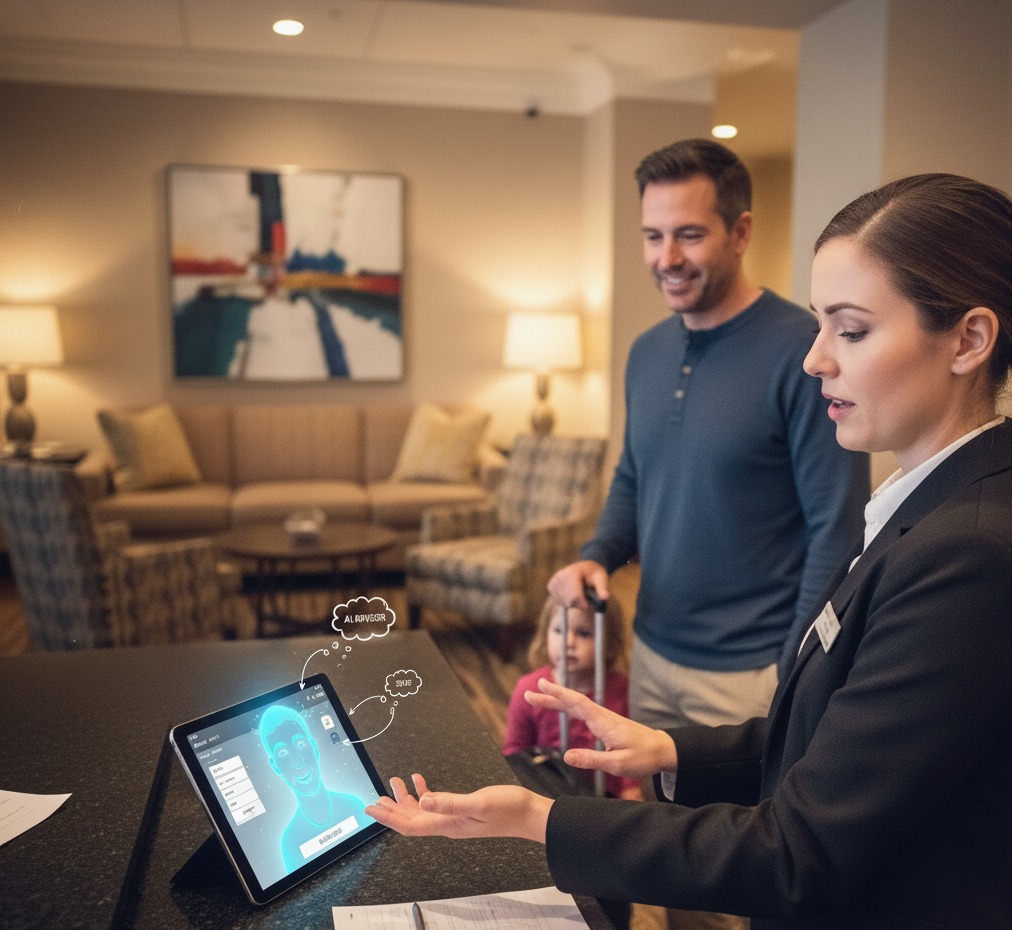
The difference between a good travel agent and a great one rarely comes down to product knowledge alone. It comes down to how confidently and naturally they handle the conversations that determine whether a customer books or walks away. Roleplay practice is the single most effective way to build that confidence before real money is on the line.
According to CIPD research, practice-based learning improves skill retention by up to 75% compared with passive training methods. In travel sales, where every customer interaction involves emotion, complexity, and high-value decisions, structured roleplay practice transforms hesitant advisors into confident closers.
This guide presents 10 essential scenarios that cover the full range of situations travel agents face daily. Each scenario includes a setup, customer profile, practice points, key moments to master, and assessment criteria you can use for self-evaluation or coaching sessions.
For a complete overview of the skills underpinning these scenarios, see our Travel Sales Skills Complete Guide.
Why Roleplay Training Works
| Training Method | Skill Retention After 30 Days | Confidence Improvement | Time to Competency |
|---|---|---|---|
| Classroom lecture | 10-20% | Low | 6-12 months |
| E-learning modules | 25-35% | Moderate | 4-8 months |
| Roleplay with feedback | 65-75% | High | 2-4 months |
| AI-powered roleplay (repeated) | 70-80% | Very high | 1-3 months |
Source: CIPD Learning Methods Research; McKinsey Capability Building Report
Roleplay works because it activates the same neural pathways used in real customer conversations. Unlike reading a script, you must think on your feet, respond to unexpected objections, and manage your tone in real time. TravAI's AI-powered roleplay platform lets agents practise these scenarios repeatedly without needing a manager or colleague to play the customer role.
Scenario 1: The Honeymoon Booking
Setup
A couple has just got engaged and wants to book a honeymoon. They have a rough budget but are open to suggestions. They want "somewhere special" but haven't narrowed down a destination. One partner is more adventurous; the other prefers relaxation.
Customer Profile
| Detail | Information |
|---|---|
| Customer type | Couple, late 20s |
| Budget | GBP 4,000-6,000 |
| Travel dates | Flexible, within 6-8 months |
| Experience level | Moderate (beach holidays previously) |
| Emotional state | Excited, celebratory, slightly overwhelmed by options |
Practice Points
- Open with warmth and genuine congratulations before discussing logistics
- Use open questions to uncover what "special" means to each partner
- Present 2-3 curated options rather than overwhelming with choices
- Upsell with experiences (spa treatments, private dinners, excursions) that enhance the honeymoon narrative
- Frame price in terms of once-in-a-lifetime value, not cost per night
Key Moments
- The transition from congratulations to needs discovery
- Managing differing preferences between partners without taking sides
- Presenting the premium option first and anchoring high
- Closing with emotional language: "Imagine starting married life with..."
Assessment Criteria
| Criterion | Excellent | Needs Improvement |
|---|---|---|
| Emotional engagement | Genuine warmth, personal connection | Transactional, jumped to logistics |
| Needs discovery | Uncovered preferences of both partners | Asked only about budget and dates |
| Recommendation quality | Tailored, 2-3 distinct options | Generic, too many or too few options |
| Upsell technique | Natural add-ons tied to occasion | Pushy or absent |
| Close attempt | Confident, emotionally resonant | Weak or missing |
Scenario 2: The Family Budget Discussion
Setup
A family of four wants a summer holiday but is working with a tight budget. The parents want value for money; the children (aged 8 and 12) want a pool and activities. The customer has already looked online and has a benchmark price in mind.
Customer Profile
| Detail | Information |
|---|---|
| Customer type | Family of four |
| Budget | GBP 2,500 maximum |
| Travel dates | School summer holidays (fixed) |
| Experience level | Regular family holiday bookers |
| Emotional state | Price-conscious, slightly defensive |
Practice Points
- Acknowledge the budget respectfully without making them feel restricted
- Demonstrate value beyond price: convenience, ATOL protection, kids' clubs, transfers included
- Use price objection handling techniques to reframe cost
- Show total cost comparison vs. booking separately online
- Identify non-negotiables vs. nice-to-haves to build a package within budget
Key Moments
- When the customer says "I've seen it cheaper on [OTA name]"
- Presenting an option slightly above budget that delivers significantly more value
- Breaking down the price to show what is included vs. the online comparison
- Securing a deposit commitment before the customer leaves to "think about it"
Assessment Criteria
| Criterion | Excellent | Needs Improvement |
|---|---|---|
| Budget sensitivity | Respectful, value-focused | Dismissive or apologetic |
| Value articulation | Clear breakdown of inclusions | Focused only on price matching |
| Objection handling | Confident reframe with evidence | Defensive or conceded too quickly |
| Family focus | Addressed needs of parents and children | Ignored children's preferences |
| Closing | Secured commitment or clear next step | Let customer leave without follow-up plan |
Scenario 3: The OTA Price Comparison
Setup
A walk-in customer has a screenshot from an OTA showing a package holiday at a specific price. They ask: "Can you match this?" This scenario tests your ability to sell value over price without being defensive.
Customer Profile
| Detail | Information |
|---|---|
| Customer type | Solo or couple, mid-30s |
| Budget | Anchored to OTA price |
| Emotional state | Challenging but open (otherwise they would have booked online) |
Practice Points
- Do not dismiss the OTA price or become defensive
- Ask what brought them into the shop when they could have booked online
- Investigate what the OTA price includes (and what it omits)
- Build a like-for-like comparison that highlights hidden costs and missing elements
- Emphasise your expertise, ABTA/ATOL protection, and after-sales support
- Use techniques from closing strategies to convert
Key Moments
- The opening response when the customer presents the screenshot
- Revealing what the OTA price does not include
- Offering a genuinely better package at a similar or slightly higher price
- Handling "I'll go away and think about it"
Assessment Criteria
| Criterion | Excellent | Needs Improvement |
|---|---|---|
| Composure | Calm, confident, welcoming | Flustered or dismissive |
| Investigation | Thorough analysis of OTA offering | Accepted OTA price at face value |
| Value comparison | Clear, structured, honest | Vague or overly aggressive |
| Differentiation | Articulated unique agent value | Tried to compete on price alone |
Scenario 4: The Reluctant Buyer
Setup
A customer is interested in a holiday but keeps finding reasons not to commit. "I need to check with my partner," "I'll think about it," "Maybe next month." The customer is genuinely interested but anxious about committing to a large purchase.
Customer Profile
| Detail | Information |
|---|---|
| Customer type | Individual, any age |
| Budget | Adequate but guarded |
| Emotional state | Interested but fearful of commitment |
Practice Points
- Identify the real objection behind the stalling language
- Apply psychology of travel buying principles
- Use trial closes to test readiness throughout the conversation
- Create urgency without pressure: availability, pricing windows, seasonal demand
- Offer a low-risk commitment: refundable deposit, free hold period
Key Moments
- Recognising that "I'll think about it" is not a no but an unresolved concern
- Asking: "What would need to be true for you to feel confident booking today?"
- Offering a concrete next step that keeps momentum
- Knowing when to step back and set a follow-up rather than push
Assessment Criteria
| Criterion | Excellent | Needs Improvement |
|---|---|---|
| Objection identification | Uncovered the real concern | Accepted stall at face value |
| Empathy | Acknowledged anxiety without being patronising | Ignored or dismissed hesitation |
| Urgency creation | Genuine, evidence-based | Fabricated or pressuring |
| Follow-up plan | Clear next step agreed | Customer left without commitment |
Scenario 5: The Luxury Upsell
Setup
A customer has enquired about a standard all-inclusive resort. Based on your needs discovery, you believe they would have a significantly better experience at a premium property that costs 40% more.
Customer Profile
| Detail | Information |
|---|---|
| Customer type | Couple, 40s-50s, celebrating anniversary |
| Budget | Has stated a figure but has not set a hard ceiling |
| Emotional state | Wants to treat themselves but cautious with money |
Practice Points
- Use the upselling framework to position the upgrade naturally
- Present the premium option in terms of experience, not price difference
- Use anchoring: show the per-night or per-person price increase, not the total
- Reference reviews, personal experience, or expert recommendations
- Link the upgrade to their occasion: "For your anniversary, you deserve..."
Key Moments
- The transition from the standard option to introducing the premium alternative
- Describing the upgraded experience in vivid, sensory language
- Handling "That's more than we wanted to spend"
- Closing with a choice between two good options (not between booking and not booking)
Assessment Criteria
| Criterion | Excellent | Needs Improvement |
|---|---|---|
| Transition | Smooth, natural, linked to customer needs | Abrupt, felt like a sales push |
| Experience selling | Vivid, emotional, customer-focused | Feature list without feeling |
| Price handling | Minimised with anchoring and framing | Apologetic or avoided price discussion |
| Close | Choice-based, confident | Single option or no close attempt |
Scenario 6: The Group Booking
Setup
A customer is organising a group trip for 12 people (a milestone birthday). They need to coordinate preferences, budgets, and travel dates across the group. Only two people have committed so far.
Customer Profile
| Detail | Information |
|---|---|
| Customer type | Group organiser, mid-30s |
| Budget | Varies across group (GBP 800-2,000 per person) |
| Emotional state | Enthusiastic but stressed about logistics |
Practice Points
- Position yourself as the coordinator who takes the stress away
- Discuss group booking policies, deposit structures, and payment plans
- Offer a system for collecting individual payments and preferences
- Present options at different price points that accommodate varied budgets
- Secure the organiser's commitment first, then help them recruit the group
Key Moments
- Establishing yourself as the single point of contact for the group
- Presenting a tiered option structure (budget, mid-range, premium room categories)
- Creating a deadline for group commitment to secure availability
- Handling "Some people might drop out"
Assessment Criteria
| Criterion | Excellent | Needs Improvement |
|---|---|---|
| Organisation | Clear process for managing group logistics | Ad hoc, reactive |
| Budget handling | Tiered options accommodating all budgets | One-size-fits-all approach |
| Commitment strategy | Secured organiser with clear next steps | Left open-ended |
| Confidence | Positioned as expert coordinator | Seemed overwhelmed by complexity |
Scenario 7: The Insurance Objection
Setup
A customer has just agreed to book a GBP 5,000 holiday but refuses travel insurance, saying "I've never needed it before" or "My bank account covers me." This scenario tests your ability to sell protection without fearmongering.
Customer Profile
| Detail | Information |
|---|---|
| Customer type | Any age, has just committed to booking |
| Budget | Has committed to holiday spend |
| Emotional state | Committed to the holiday, resistant to extra cost |
Practice Points
- Do not use scare tactics; use real examples and logical risk assessment
- Explain what bank account or credit card cover typically excludes
- Frame insurance cost as a percentage of total holiday investment
- Reference ABTA guidance on travel insurance
- Use storytelling: "A customer last month had to cancel due to..."
Key Moments
- The initial "no" and your calm, non-pressuring response
- Asking what their existing cover actually includes
- Highlighting the gap between what they think they are covered for and reality
- Offering a final recommendation without being pushy
Assessment Criteria
| Criterion | Excellent | Needs Improvement |
|---|---|---|
| Tone | Advisory, caring, professional | Pushy or fear-based |
| Knowledge | Accurate explanation of cover gaps | Vague or inaccurate |
| Framing | Cost as percentage of total spend | Focused on absolute price |
| Outcome | Customer understood the risk; informed decision | Customer felt pressured or uninformed |
Scenario 8: The Phone Enquiry
Setup
A customer calls to enquire about a holiday they saw advertised. You have approximately 3 minutes of their attention before they decide whether to continue the conversation or hang up. No visual aids available.
Customer Profile
| Detail | Information |
|---|---|
| Customer type | Unknown until conversation develops |
| Budget | Unknown |
| Emotional state | Curious but uncommitted; may be calling multiple agencies |
Practice Points
- Master your telephone sales technique: warm greeting, name capture, energy in voice
- Move from the advertised product to needs discovery within 60 seconds
- Paint pictures with words since you cannot show brochures or screens
- Capture contact details early in case the call drops or the customer needs to go
- Set a clear next step: email a quote, schedule a callback, invite to the shop
Key Moments
- The first 15 seconds: greeting, name, establishing rapport
- Transitioning from "I saw your ad for..." to "Tell me what you're looking for"
- Holding attention without visual aids through descriptive, engaging language
- Securing permission to follow up before ending the call
Assessment Criteria
| Criterion | Excellent | Needs Improvement |
|---|---|---|
| Opening | Warm, professional, captured name | Flat, robotic, or rushed |
| Engagement | Conversational, held attention | Monotone, lost customer interest |
| Discovery | Thorough despite phone limitations | Surface-level questions only |
| Next step | Clear, agreed follow-up action | Call ended without commitment |
For a deep dive into phone-based selling, see our full guide on Telephone Sales Skills for Travel Agents.
Scenario 9: The Email Follow-Up
Setup
You sent a quote to a customer three days ago. They have not responded. You need to follow up without being pushy, reignite their interest, and move toward a booking.
Customer Profile
| Detail | Information |
|---|---|
| Customer type | Enquiry from website or phone, already quoted |
| Budget | Discussed in original conversation |
| Emotional state | Unknown; may have lost interest, be comparing, or simply be busy |
Practice Points
- Reference specific details from the original conversation to show you remember them
- Add new value: a price change, an availability update, an alternative suggestion
- Keep the email follow-up concise and action-oriented
- Ask a single, clear question rather than multiple requests
- Include a soft deadline: "This price is held until Friday"
Key Moments
- The subject line that compels them to open (not "Following up")
- The opening line that reconnects personally, not generically
- Introducing a reason to act now (new information, limited availability)
- The call to action: one clear next step
Assessment Criteria
| Criterion | Excellent | Needs Improvement |
|---|---|---|
| Personalisation | Specific references to their trip | Generic follow-up template |
| Value addition | New information or alternative offered | Just "checking in" |
| Tone | Friendly, helpful, professional | Pushy or apologetic |
| Call to action | Single, clear, easy to respond to | Vague or multiple competing asks |
For complete email frameworks and templates, see our guide on Email Sales Techniques for Travel.
Scenario 10: The Complex Multi-Destination Itinerary
Setup
A customer wants a three-week trip covering three countries with internal flights, different hotel standards, and a mix of city, beach, and cultural experiences. The complexity is high, and the customer is already feeling overwhelmed by their own research.
Customer Profile
| Detail | Information |
|---|---|
| Customer type | Experienced travellers, couple or small group |
| Budget | GBP 8,000-12,000 |
| Travel dates | Set, 3 weeks |
| Emotional state | Excited but overwhelmed; craving expert guidance |
Practice Points
- This is where agent expertise shines over any OTA
- Break the trip into segments and tackle one at a time
- Use a structured presentation: itinerary overview, then segment detail
- Demonstrate logistical expertise: connection times, visa requirements, travel days vs. activity days
- Practise consultative selling to position yourself as the architect of their experience
Key Moments
- Taking control of the conversation by structuring the discussion
- Simplifying complexity without losing the customer's confidence
- Presenting the full itinerary as a cohesive narrative, not a list of bookings
- Justifying the price by showing the value of your expertise in assembling the trip
Assessment Criteria
| Criterion | Excellent | Needs Improvement |
|---|---|---|
| Organisation | Structured, segmented, clear | Chaotic, jumped between destinations |
| Expertise | Demonstrated destination and logistics knowledge | Relied on customer's research |
| Presentation | Cohesive story, visual itinerary | Disconnected list of components |
| Value justification | Clear articulation of why to book through you | Assumed customer would see the value |
How to Get the Most From Roleplay Practice
| Practice Element | Recommendation |
|---|---|
| Frequency | Minimum 2 sessions per week |
| Duration | 15-20 minutes per scenario |
| Feedback | Immediate, specific, behaviour-focused |
| Recording | Review your own performance to spot habits |
| Variety | Rotate through all 10 scenarios monthly |
| Progression | Start with comfortable scenarios, move to challenging ones |
Using AI for Unlimited Practice
Traditional roleplay requires a colleague or manager to play the customer, which limits when and how often you can practise. TravAI's AI roleplay platform removes that constraint entirely. You can:
- Practise any scenario at any time, as many times as needed
- Receive instant, objective feedback and scoring
- Track improvement over time through your performance dashboard
- Build confidence privately before practising with colleagues
According to Gallup workplace research, employees who receive regular, structured practice opportunities are 3.6 times more likely to be engaged and perform at a high level.
Integrating Roleplay Into Your Development Plan
These 10 scenarios are not a one-time exercise. They represent recurring situations you will face throughout your career. The agents who consistently outperform their peers are the ones who continue practising even after they feel confident.
Build roleplay into your weekly routine:
- Choose one scenario per week to focus on
- Practise it at least three times using TravAI's AI roleplay tool
- Review your assessment scores and identify one area to improve
- Apply the improvement in your next real customer interaction
- Reflect and repeat
For managers looking to embed roleplay into their agency's sales coaching culture, TravAI's sales coaching platform provides the structure, tracking, and AI tools to make it happen at scale.
Build Your Complete Sales Toolkit
This article is part of our comprehensive Sales Skills and Coaching series. Continue building your skills with these related guides:
- Handling Price Objections in Travel Sales
- Closing Techniques That Work for Travel Agents
- Upselling Strategies for Travel Agents
- The Psychology of Travel Buying
Ready to practise these scenarios with AI? Explore TravAI's roleplay features or get in touch to see a demo.