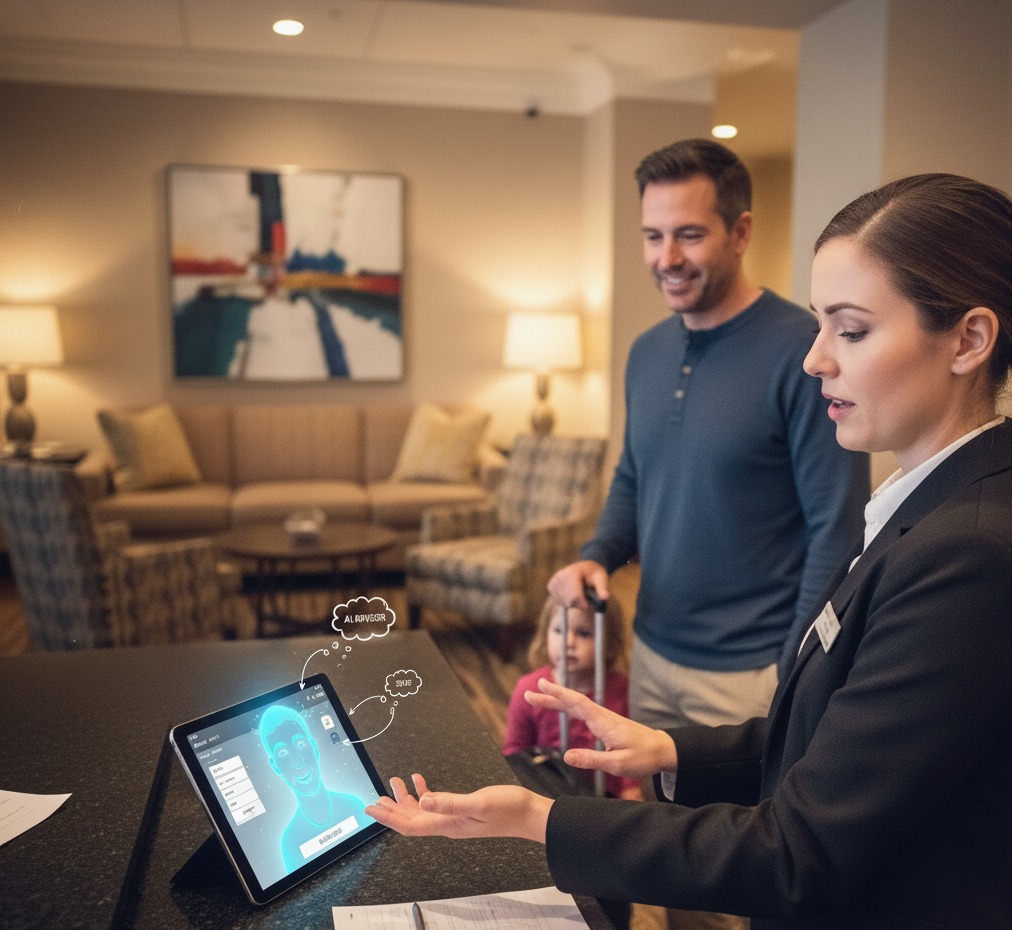
The internet has fundamentally changed what travel customers need from agents. Customers no longer need someone to look up flight times or check hotel availability -- they can do that in seconds on their phone. What they still struggle with is making confident decisions about complex, high-value, emotionally important purchases. That gap is where consultative selling lives.
Consultative selling is not a technique. It is a mindset. Instead of responding to what customers ask for, you guide them toward what they actually need. Instead of competing with OTAs on price, you compete on insight, expertise, and trust. According to McKinsey, sales professionals who adopt consultative approaches achieve 20-30% higher customer lifetime value than those who rely on transactional methods.
This guide will help you understand the difference between order-taking and advising, build a consultative selling framework, and develop the skills that turn first-time buyers into lifelong clients. For the complete overview of sales skills, see our Travel Sales Skills Complete Guide.
Order-Taker vs. Trusted Advisor
The distinction is not about personality. It is about approach, questions, and where you add value.
| Dimension | Order-Taker | Trusted Advisor |
|---|---|---|
| Opening question | "Where do you want to go?" | "Tell me about the holiday you're imagining." |
| Listening style | Waits for specifics to search | Explores underlying motivations and preferences |
| Product selection | Searches for exactly what the customer asked for | Recommends options the customer may not have considered |
| Price conversation | Leads with price, competes on cost | Leads with value, justifies investment |
| Objection response | Discounts or concedes | Explores the concern, reframes with insight |
| Upselling | Adds items at the end | Integrates enhancements naturally throughout |
| Follow-up | Waits for the customer to return | Proactively follows up with new ideas and information |
| Customer perception | "They booked what I asked for" | "They found me something I didn't know I wanted" |
| Repeat business | Dependent on price competitiveness | Built on trust and relationship |
| Revenue impact | Average booking values, low ancillary | Higher ABV, strong ancillary, referrals |
Source: Gallup Customer Engagement Research; CIPD Sales Capability Framework
The order-taker is not doing anything wrong. They are fulfilling requests competently. But in a world where customers can fulfil their own requests online, competent order-taking is not enough to sustain a travel agency. The trusted advisor creates value that cannot be replicated by an algorithm.
The Consultative Selling Framework
Consultative selling follows a structured process. It may feel natural once mastered, but it is built on deliberate steps that can be learned and practised through roleplay scenarios and coaching sessions.
Phase 1: Connect
Before any selling happens, build rapport. Customers share more with people they feel comfortable with.
| Technique | Example |
|---|---|
| Use their name | "Sarah, it's great to see you. Thanks for coming in." |
| Find common ground | "I see you're looking at the Maldives -- I was there last year and it was stunning." |
| Match their energy | If they are excited, be enthusiastic. If they are cautious, be calm and measured. |
| Show genuine interest | Ask about the occasion, who is travelling, what prompted the enquiry. |
| Remove pressure | "There's absolutely no pressure today. Let's just explore what might work for you." |
The connection phase should take 2-5 minutes. It is not wasted time -- it is the foundation of everything that follows.
Phase 2: Discover
This is the most important phase and the one most agents rush through. The quality of your recommendation depends entirely on the quality of your discovery.
The Discovery Question Framework
| Question Type | Purpose | Example |
|---|---|---|
| Situational | Understand the context | "Who's travelling? How long are you thinking?" |
| Motivational | Uncover the why | "What made you start thinking about this trip?" |
| Experiential | Learn from their past | "What did you love most about your last holiday? What would you change?" |
| Aspirational | Identify their ideal | "If money and time were no object, what would this trip look like?" |
| Priority | Determine what matters most | "If you had to choose, would you prefer a better hotel or more spending money for experiences?" |
| Concern | Surface objections early | "Is there anything that's worrying you about this trip?" |
Aim for at least 8-10 discovery questions before presenting any options. The deeper you dig, the more precisely you can match your recommendation -- and the more the customer trusts your expertise.
For more on the emotional and psychological drivers behind customer decisions, see our guide on The Psychology of Travel Buying.
Phase 3: Recommend
This is where your expertise transforms information into a curated solution. The goal is not to present everything available but to present the right 2-3 options with clear rationale.
The Recommendation Structure
| Element | What to Include | Why It Matters |
|---|---|---|
| Personalised introduction | "Based on everything you've told me, I think there are two options that would be perfect for you." | Shows you listened and curated |
| Option presentation | Lead with the premium option, then an alternative | Anchoring effect sets the value frame |
| Feature-to-benefit translation | "This hotel has a kids' club (feature) -- which means you and your partner get a couple of hours to relax by the pool each day (benefit)." | Customers buy benefits, not features |
| Social proof | "This resort has a 4.8 rating and I've had three families go there this year who loved it." | Reduces perceived risk |
| Differentiation | Explain what makes this recommendation better than what they would find online | Justifies booking through you |
Phase 4: Handle Concerns
In consultative selling, objections are not barriers -- they are buying signals. A customer who raises concerns is engaged and thinking seriously about booking. Use the LAER framework.
| Step | Action | Example |
|---|---|---|
| Listen | Let them finish without interrupting | Nod, maintain eye contact, take notes |
| Acknowledge | Validate their concern | "That's a really fair point, and you're not the first person to ask that." |
| Explore | Understand the concern fully | "When you say it's more than you expected, is it the total or the per-person cost that concerns you?" |
| Respond | Address with evidence and empathy | "Let me show you what's included in that price compared to booking separately." |
For detailed objection-handling strategies, see our guides on Handling Price Objections and Closing Techniques for Travel Agents.
Phase 5: Commit
Closing in consultative selling does not feel like closing. It feels like a natural conclusion to a well-guided conversation.
| Closing Approach | When to Use | Example |
|---|---|---|
| Assumptive | Customer is clearly positive | "Shall I go ahead and secure that for you?" |
| Summary | Customer needs reassurance | "So we've got 10 nights at the Sandals Royal, all-inclusive, flights from Gatwick, transfers, and the couples' spa package -- shall I book that today?" |
| Choice | Customer is deciding between options | "Both are excellent. Would you prefer the beachfront or the garden suite?" |
| Next step | Customer is not ready today | "Let me put this on a 48-hour hold so nothing changes, and you can confirm by Thursday." |
Building Needs Discovery Skills
Needs discovery is the engine of consultative selling. Here is how to develop it systematically.
Common Discovery Mistakes
| Mistake | Impact | Fix |
|---|---|---|
| Asking closed questions too early | Customer gives short answers; you miss insight | Start with open questions; save closed questions for confirmation |
| Skipping the "why" | You know what they want but not why | Always follow a what-question with a why-question |
| Presenting too quickly | Customer feels unheard; recommendation feels generic | Set a personal rule: no options until at least 8 questions asked |
| Assuming based on demographics | Stereotyping leads to mismatched recommendations | Treat every customer as unique; let their answers guide you |
| Not taking notes | You forget details and lose credibility | Write down key points during discovery; reference them later |
Practice Makes Permanent
The best way to develop discovery skills is through regular roleplay practice. TravAI's AI roleplay scenarios simulate different customer types and situations, allowing you to practise discovery conversations repeatedly with instant feedback.
The Recommendation Approach
Presenting Options Effectively
| Principle | Application |
|---|---|
| Three is the magic number | Present exactly 2-3 options. One feels like a take-it-or-leave-it; four or more causes decision paralysis. |
| Lead with the best | Present your top recommendation first. Anchoring bias means the first option sets the reference point. |
| Tell a story | "Imagine waking up, stepping onto your balcony, and seeing the Amalfi Coast spread out below you..." |
| Use specifics | "The transfer takes 20 minutes" is more credible than "It's really close to the airport." |
| Connect to their words | "You mentioned wanting quality family time -- this resort is designed exactly for that." |
Handling "I'll Think About It"
When a customer says they need to think about it after a consultative conversation, it usually means one of three things:
| Real Meaning | How to Identify | Response |
|---|---|---|
| Genuine need to consult partner/check dates | They say specifically who they need to speak to | "Of course. Shall I email the details so you can share them? When would be a good time for me to call you back?" |
| Unresolved concern they have not voiced | Hesitation, vague language, lack of enthusiasm | "Absolutely. Before you go, can I ask -- is there anything specific you'd like me to look into or change about what we've discussed?" |
| Price concern they are embarrassed to raise | Positive about the trip but pulled back at the price | "I completely understand. Would it help if I also looked at an alternative that comes in at a slightly different price point?" |
Building Long-Term Relationships
Consultative selling does not end at the booking. The most successful travel advisors build relationships that generate repeat business and referrals for years.
| Relationship Stage | Action | Impact |
|---|---|---|
| Post-booking | Send a personal "looking forward to your trip" message with practical tips | Builds anticipation and trust |
| Pre-departure | Check in 2 weeks before: visa reminders, weather updates, restaurant suggestions | Demonstrates ongoing care |
| During travel | Be available for questions or issues | Proves your value beyond the booking |
| Post-travel | Ask about their experience, request feedback, suggest their next trip | Opens the door to the next booking |
| Ongoing | Remember their anniversary/birthday, send destination inspiration | Keeps you top of mind |
According to ABTA's Holiday Habits Report, customers who feel a personal connection with their travel advisor are 3.5 times more likely to rebook and 4 times more likely to refer friends and family.
Measuring Your Consultative Selling Progress
Use these indicators to track your development.
| Indicator | Order-Taker Level | Advisor Level |
|---|---|---|
| Average booking value | At or below team average | Consistently above team average |
| Ancillary attachment rate | Below 40% | Above 60% |
| Customer requests for you specifically | Rare | Regular |
| Repeat booking rate | Below 25% | Above 40% |
| Average discovery conversation length | Under 5 minutes | 10-15 minutes |
| Customer satisfaction scores | Acceptable | Consistently excellent |
Track these metrics through your performance dashboard and discuss them in regular coaching sessions.
Developing the Consultative Mindset
The shift from order-taker to advisor is not about learning a script. It is about changing how you think about your role.
| Old Mindset | New Mindset |
|---|---|
| "My job is to give customers what they ask for" | "My job is to help customers make the best decision" |
| "I need to close this sale" | "I need to earn this customer's trust" |
| "The customer knows what they want" | "The customer knows what they think they want -- I can often find something better" |
| "Price is the deciding factor" | "Value is the deciding factor; price is just one component" |
| "My competition is online" | "My competition is irrelevant if I provide insight they can't get online" |
This mindset shift takes time and deliberate practice. TravAI's sales coaching tools provide the structured learning, roleplay practice, and performance feedback to accelerate the journey.
Start Your Consultative Selling Journey
This article is part of our comprehensive Sales Skills and Coaching series. Continue developing your approach with these related guides:
- The Psychology of Travel Buying
- Upselling Strategies for Travel Agents
- Handling Price Objections in Travel Sales
- 10 Sales Roleplay Scenarios to Practice
Ready to develop consultative selling skills across your team? Explore the TravAI platform or get in touch for a demo.