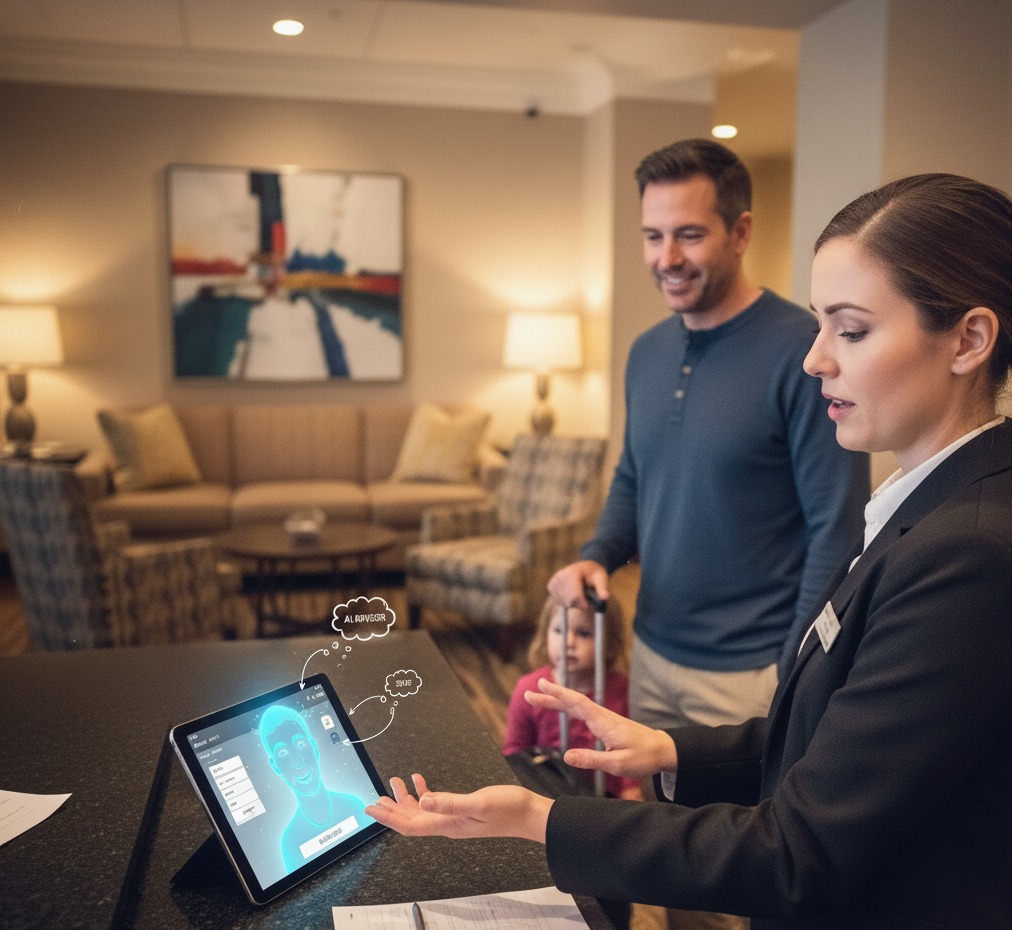
"I can book it cheaper online."
Every travel agent has heard some version of this sentence. And most have felt that stomach-dropping moment of uncertainty — what do I say now? Do I match the price? Defend our value? Change the subject?
Objection handling is the skill that most directly determines whether enquiries become bookings or whether they evaporate into "I'll think about it and get back to you." And yet it's the skill that traditional training methods handle worst.
Classroom sessions on objection handling typically involve a facilitator presenting scripted responses, maybe a group discussion, and occasionally an awkward roleplay exercise between two agents who both know it's artificial. The learning retention from these sessions is dismally low — research from the University of Waterloo confirms that within a week, agents will have forgotten the majority of those carefully crafted scripts.
There's a better way. And it doesn't require a venue, a facilitator, or a day out of the office.
Why Objection Handling Requires Practice, Not Just Knowledge
The fundamental problem with teaching objection handling through presentations or written scripts is that objections happen in real-time conversations. They're unpredictable, emotionally charged, and context-dependent. An agent needs to listen, process, and respond within seconds — not consult a reference sheet.
This makes objection handling a skill, not a knowledge topic. And skills are developed through repetition and practice, not through information delivery.
The Chartered Institute of Marketing draws a clear distinction between knowledge-based and skill-based learning, recommending simulation and practice for any competency that must be performed under pressure. Sales objection handling is a textbook example.
Think of it like learning to drive. You can read the Highway Code cover to cover, but you won't be a confident driver until you've spent hours behind the wheel, reacting to real situations in real time. Objection handling is the same — confidence comes from practice, not from knowing the right answer in theory.
The Seven Travel Objections Every Agent Must Master
Before examining training methods, let's establish the objection landscape. These seven objections account for the vast majority of resistance agents encounter:
1. "I can find it cheaper online"
Why customers say it: They've genuinely found a lower price on an OTA, or they're using the claim as a negotiating tactic.
Framework for response: Acknowledge the price difference. Explain what your price includes that the online price doesn't (ATOL protection, human support, package benefits, flexibility). Quantify the value gap. Let the customer decide with full information.
Example: "You might well find a slightly lower headline price online — that's how OTAs work. What they typically don't include is the ATOL financial protection, someone to call if your flight gets cancelled at midnight, or the ability to adjust your booking without navigating an automated system. For the £40 difference, you're getting a safety net and a personal service. Does that feel worth it to you?"
2. "We need to think about it"
Why customers say it: Genuine need for reflection, fear of making the wrong decision, or polite avoidance when something else is the real blocker.
Framework for response: Validate their need to consider. Gently explore whether "think about it" means "something else is bothering me." Offer specific follow-up.
3. "The reviews online aren't great"
Why customers say it: They've read negative TripAdvisor or Google reviews and are worried.
Framework for response: Acknowledge the reviews specifically (don't dismiss them). Provide context — when was the review written? Has anything changed? Share your own knowledge or recent customer feedback that provides a different perspective.
4. "We're not sure about the destination"
Why customers say it: Uncertainty about safety, weather, suitability, or simply unfamiliarity.
Framework for response: Ask what specifically concerns them. Provide specific, current information. Offer alternatives if the concern is valid. Use your destination expertise to provide the insider perspective they can't get from Google.
5. "Can you do it any cheaper?"
Why customers say it: Habitually — many customers ask for a discount regardless of whether the price is fair.
Framework for response: If you can offer a genuine discount or added value, do so. If not, reframe the conversation around value rather than price. Highlight what's included and what they'd lose by choosing a cheaper option.
6. "Our friends went somewhere else and loved it"
Why customers say it: Social proof is powerful, and they're wondering if they should copy their friends' trip rather than follow your recommendation.
Framework for response: Show interest in their friends' experience. Explore whether the same destination/experience would suit them (it might not — different group size, budget, time of year, interests). Use it as additional needs-analysis data rather than competition.
7. "We'll book when we get paid / after Christmas / next month"
Why customers say it: Genuine cash flow constraints, or procrastination disguised as planning.
Framework for response: Validate the timing concern. Explain any time-sensitive factors (availability, pricing, deposit structures). Offer deposit-based booking if available. Secure a specific follow-up date.
Training Methods That Actually Work
Method 1: AI-Powered Roleplay Simulation
AI roleplay is the single most effective method for developing objection handling skills remotely. Here's why:
Volume of practice. In a classroom roleplay exercise, each agent might get 2-3 practice conversations in a half-day session. With AI roleplay, they can complete 10-15 conversations in an hour — each with a different customer persona, different objection type, and different difficulty level.
Realistic behaviour. AI customers don't follow scripts. They respond dynamically to what the agent says, push back when responses are weak, and react positively when agents handle objections well. The experience feels like a real conversation, not a choreographed exercise.
Immediate, specific feedback. After each conversation, the AI coaching system provides detailed analysis: which objections were handled effectively, where the agent could have probed deeper, what language choices worked well, and specific suggestions for improvement.
No judgement. Agents often feel self-conscious during classroom roleplay because they're performing in front of colleagues. AI roleplay removes that social pressure entirely, allowing agents to experiment, make mistakes, and learn without embarrassment.
Consistent difficulty progression. The system can start with straightforward objections (single concern, reasonable customer) and progressively introduce more challenging scenarios (multiple objections, emotional customer, aggressive price negotiation). This builds confidence incrementally.
According to the Sales Management Association, sales professionals who practise through simulation-based training outperform those trained through traditional methods by 30-40% in real customer interactions.
Method 2: Real-Time AI Coaching
AI coaching during live customer conversations provides objection handling support at the moment it's needed — when the agent is actually facing a real objection from a real customer.
The system listens to the conversation and provides contextual prompts: suggested responses, relevant product information, value propositions that address the specific objection, or reminders of techniques the agent has practised.
This bridges the gap between training and application that traditional methods leave open. Instead of hoping agents remember what they learned in a classroom three weeks ago, the system provides support in real time.
Method 3: Micro-Learning Reinforcement
Short, focused learning modules that cover one objection type in 5-10 minutes. Each module includes:
- The objection explained (why customers say it, what they really mean)
- A response framework (structure, not script)
- A worked example (audio or text of a good response)
- A practice exercise (mini roleplay or scenario question)
- A quick assessment (can you handle this in your own words?)
Delivered daily or several times per week, these modules build a comprehensive objection handling toolkit over time through spaced repetition — the most effective technique for long-term skill retention.
Building an Objection Handling Training Programme
Here's a practical implementation plan using these methods:
Week 1-2: Foundation
- Deploy micro-learning modules covering each of the 7 core objections (one per day for 7 days, then reinforcement assessments)
- Each module takes 5-10 minutes
- Track completion and assessment scores via analytics dashboard
Week 3-4: Practice
- Introduce AI roleplay scenarios for each objection type
- Start with single-objection scenarios (customer has one concern)
- Progress to multi-objection scenarios (customer raises several concerns in one conversation)
- Agents complete 3-5 practice conversations per week
Week 5-6: Application
- Activate real-time AI coaching for a pilot group
- Monitor real customer conversations for objection handling quality
- Compare pilot group conversion rates against control group
Ongoing: Reinforcement and Advancement
- Weekly assessment quizzes on objection handling
- Monthly introduction of new scenario types reflecting seasonal objections or market changes
- Quarterly review of conversion data correlated with training activity
Measuring Objection Handling Improvement
Track these metrics to quantify the impact:
Directly measurable:
- Enquiry-to-booking conversion rate (the ultimate measure)
- Average number of customer interactions before booking (fewer touchpoints suggests better objection resolution)
- Roleplay performance scores over time
Indirectly measurable:
- Customer feedback mentioning agent confidence or helpfulness
- Reduction in "I'll think about it" outcomes
- Increase in bookings from previously lost enquiry sources
Travel Weekly research suggests that agencies with systematic objection handling training see conversion rate improvements of 15-25% — a direct and significant revenue impact.
The Confidence Factor
Perhaps the most important outcome of effective objection handling training isn't the technique itself — it's the confidence it builds.
Agents who feel equipped to handle any objection approach customer conversations differently. They're more relaxed, more assertive (not aggressive), more willing to recommend premium products, and less likely to default to discounting as their first response.
That confidence is visible to customers, and it builds trust. A confident agent who addresses concerns directly is far more convincing than an uncertain agent who avoids the topic or immediately offers a discount.
AI roleplay builds this confidence through sheer repetition. After handling "I can find it cheaper online" fifty times in practice, handling it the fifty-first time with a real customer feels natural rather than nerve-wracking.
Start building your team's objection handling skills →
This article is part of our Travel Agent Training series. Related reading: