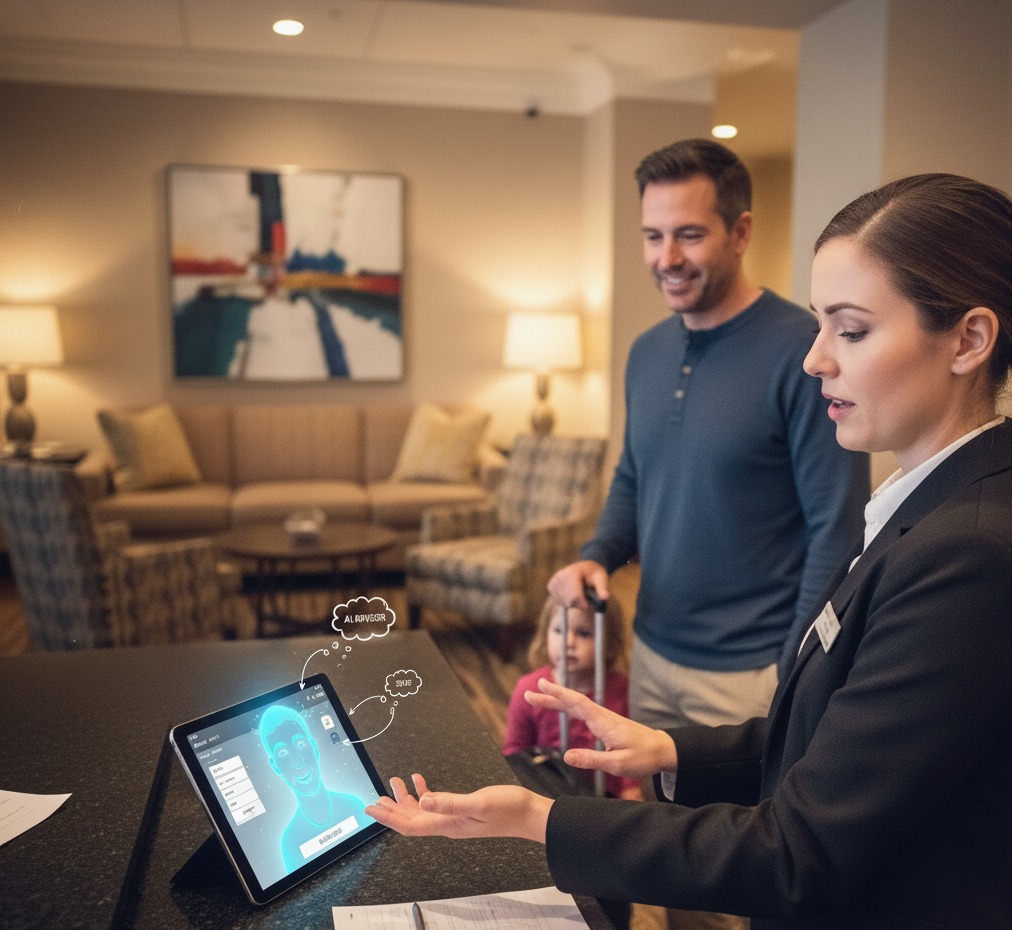
Professional athletes don't walk onto the pitch without practising. Surgeons don't operate without simulation training. Pilots don't fly passengers without hundreds of hours in flight simulators. Yet travel agents — whose conversations directly determine millions of pounds in revenue — are routinely expected to handle complex, high-stakes customer interactions with little or no practice.
The result is predictable. Agents make avoidable mistakes in live customer conversations: fumbling price objections, missing upsell opportunities, failing to ask the right discovery questions, and losing bookings they should have won. Each lost booking is a lost practice opportunity that never happened.
Sales roleplay — simulated customer conversations where agents practise selling skills and receive feedback — is the single most effective method for developing the conversational selling skills that travel demands.
Why Roleplay Works Better Than Any Other Training Method
The National Training Laboratory research on learning retention shows that different training methods produce dramatically different retention rates:
| Method | Average Retention |
|---|---|
| Lecture/presentation | 5% |
| Reading | 10% |
| Audio-visual (video) | 20% |
| Demonstration | 30% |
| Discussion | 50% |
| Practice by doing | 75% |
| Teaching others | 90% |
Roleplay sits in the "practice by doing" category — producing retention rates 15 times higher than lecture-based training and nearly 4 times higher than video content. For a skill like objection handling, where recall under pressure is essential, the retention advantage is critical.
But retention is only part of the story. Roleplay develops something that no other training method can: conversational fluency. An agent who has read about handling price objections knows the theory. An agent who has practised handling price objections 15 times can do it smoothly, confidently, and adaptively in a live conversation.
Research from the Journal of Marketing Education confirms that sales roleplay produces statistically significant improvements in objection handling, needs analysis, closing technique, and customer rapport — improvements that traditional training methods fail to achieve.
The Problem with Traditional Roleplay
If roleplay is so effective, why don't more travel businesses use it? Because traditional roleplay — two agents or an agent and a manager taking turns playing customer and seller — has practical problems:
It's awkward. Many agents find peer roleplay embarrassing. The social dynamic of pretending to be a customer while your colleague watches is uncomfortable enough to prevent genuine engagement. Agents either refuse to participate or go through the motions without real effort.
It's inconsistent. The "customer" in peer roleplay doesn't follow a script — they improvise based on their own personality and knowledge. The resulting practice scenario may be unrealistic, too easy, or irrelevant to the skills being developed.
It's unscalable. Peer roleplay requires two people in the same place at the same time. For distributed teams — homeworkers, multi-location agencies, partner agent networks — scheduling is a significant barrier.
It lacks expert feedback. After a peer roleplay, feedback comes from the colleague — who may not be qualified to assess selling technique. A colleague might say "that seemed fine" when an experienced coach would have identified three specific improvement areas.
How AI Roleplay Solves These Problems
AI-powered roleplay addresses every limitation of traditional roleplay:
No awkwardness. The agent practises with an AI customer — privately, on their own device, at their own pace. There's no audience, no social pressure, and no embarrassment. Agents consistently report that they practise more openly and honestly with AI than with peers.
Consistent scenarios. Each roleplay scenario is designed with a specific learning objective, a defined customer persona, and predictable (but variable) conversation paths. The AI customer responds realistically but within parameters that ensure the practice is relevant to the target skill.
Fully scalable. Every agent in the business can practise simultaneously — from their desk, their phone, their home office. No scheduling, no coordination, no venue. TravAI's platform makes roleplay available 24/7 on any device.
Expert AI coaching. After every roleplay, the agent receives detailed coaching feedback from the AI — specific observations about product knowledge accuracy, selling technique, missed opportunities, and recommended improvements. This feedback is more detailed, more consistent, and more frequent than most human coaching.
Types of Roleplay Scenarios for Travel
Effective roleplay programmes include scenarios across the full range of selling situations agents encounter:
Discovery Scenarios
The customer has a vague enquiry: "We want a holiday somewhere warm in October, maybe 2 weeks, budget around £3,000 for the family." The agent must conduct effective needs analysis — asking the right questions to narrow down 10,000 possible holidays to 3 relevant recommendations.
Skills developed: Questioning technique, active listening, customer profiling.
Recommendation Scenarios
The customer's requirements are clear; the agent must select and present the right option. "We're a couple in our 30s who want a week in Greece, boutique hotel, good restaurants nearby, near the sea but not a party area."
Skills developed: Product knowledge application, persuasive presentation, personalised selling.
Objection-Handling Scenarios
The customer raises a concern: price, safety, timing, a previous bad experience, a friend's alternative suggestion. The agent must handle the objection using value-based techniques.
Skills developed: Empathy, reframing, value articulation, composure under pressure.
Upselling Scenarios
The customer is ready to book a standard option. The agent needs to identify and suggest an appropriate upgrade — a better room, a premium package, additional excursions — in a way that feels helpful rather than pushy.
Skills developed: Upselling technique, timing, customer reading.
Competitive Scenarios
The customer has a specific offer from a competitor or OTA. The agent must position their recommendation as the better choice — on value, service, protection, or experience quality.
Skills developed: Competitive positioning, value differentiation, confidence.
Complex Scenarios
Multi-generational family trips, group bookings, multi-destination itineraries, customers with special requirements. These scenarios test the agent's ability to manage complexity while maintaining rapport.
Skills developed: Organisation, comprehensive recommendation, managing multiple stakeholder needs.
Implementing a Roleplay Programme
Week 1: Launch with Foundation Scenarios
Start with 3-4 scenarios covering the most common selling situations your agents face. Introduce the roleplay as a development tool, not an assessment — emphasise that it's practice, scores don't affect performance reviews, and the goal is improvement.
Encourage every agent to complete at least 2 roleplay sessions in the first week.
Week 2-4: Build the Habit
Add new scenarios weekly. Encourage agents to attempt each scenario at least twice — the first attempt for learning, the second for improvement. AI coaching feedback from the first attempt should inform the approach to the second.
Share anonymised examples of improvement: "An agent on the team improved their objection handling score from 55% to 82% after three practice sessions." This normalises practice and demonstrates that improvement is achievable.
Month 2+: Integrate with Coaching
Once agents are comfortable with roleplay practice, integrate it with management coaching:
- Managers review roleplay performance data for their team
- 1-to-1 coaching conversations reference specific roleplay feedback
- Team meetings include discussion of common challenges revealed by roleplay data
- New scenarios are added to address emerging performance patterns
Ongoing: Keep It Fresh
Rotate scenarios regularly. Add seasonal scenarios (Christmas booking rush, summer family holidays, January deals), product-specific scenarios (new hotel launches, cruise ship debuts), and topical scenarios (post-event selling, destination in the news).
If agents can predict every scenario, the practice becomes routine rather than challenging. Fresh scenarios maintain engagement and continue developing adaptability.
Measuring Roleplay Impact
The metrics that prove roleplay value:
Practice frequency: How many roleplay sessions are agents completing per week? Target: 2-3 sessions. Agents who practise more improve faster.
Score progression: Are individual agents' roleplay scores improving over time? Track across specific skill dimensions (objection handling, upselling, needs analysis) to identify both improvements and persistent gaps.
Practice-to-performance correlation: This is the definitive metric. Compare agents who engage regularly with roleplay against those who don't, on real sales metrics — conversion rate, average booking value, and ancillary attachment rate.
TravAI platform data across multiple travel businesses shows that agents who complete 8+ roleplay sessions per month achieve conversion rates 28% higher than agents who complete fewer than 2 sessions per month. The correlation is consistent across different agency types, team sizes, and product specialisms.
Coaching efficiency: With roleplay data informing coaching conversations, manager coaching time becomes more productive. Track whether the time-per-coaching-session decreases while the quality-of-coaching outcome (measured by subsequent agent performance) increases.
The Business Case
For a travel business evaluating whether to implement AI roleplay:
Cost: TravAI roleplay is included in the platform subscription — there's no additional per-session cost regardless of how many scenarios agents complete.
Time investment: 10-20 minutes per agent per week (2-3 sessions of 5-7 minutes each). This time is not lost selling time — sessions fit in gaps between calls and during quiet periods.
Expected return: Based on portfolio data:
- 15-35% improvement in conversion rates within 3 months
- 10-25% increase in average booking values within 3 months
- Measurable improvement in agent confidence (self-reported and manager-observed)
For a team of 20 agents where the average agent generates £25,000 per month, a 20% revenue improvement equals £100,000 per month in additional revenue. Against a platform cost measured in hundreds of pounds per month, the ROI is unambiguous.
The question isn't whether your travel business can afford AI roleplay. It's whether you can afford not to provide it.
Start AI roleplay for your team →
This article is part of our Sales Enablement for Travel series. Related reading: