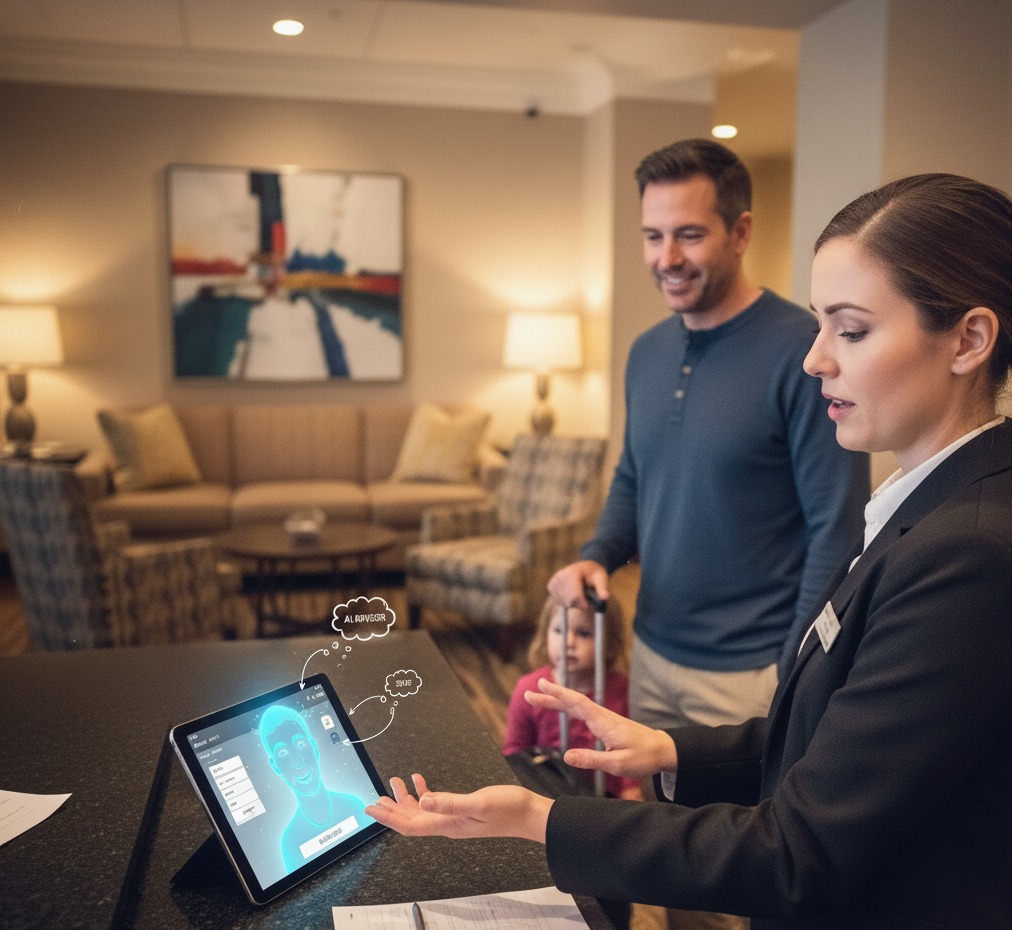
Sales enablement is the strategic function of equipping your sales team — or your extended network of agents and partners — with the knowledge, tools, content, and coaching they need to convert more enquiries into bookings at higher values.
It's broader than training. Training builds skills. Sales enablement builds an entire ecosystem that supports the seller at every stage of the customer conversation — from first enquiry to booking confirmation and beyond.
For travel businesses, sales enablement is particularly critical because the selling environment is uniquely complex. Your team isn't selling a single product with a fixed specification. They're selling combinations of flights, accommodation, transfers, excursions, insurance, and experiences — assembled in real time to match individual customer preferences, budgets, and travel dates. The number of possible product combinations is effectively infinite, and the agent must navigate this complexity while competing with the customer's ability to research and book independently online.
This guide covers everything you need to build a sales enablement function that drives measurable revenue growth for your travel business.
What Sales Enablement Actually Means in Travel
The Sales Enablement Society defines sales enablement as "the activities, systems, processes, and information that support and promote knowledge-based sales interactions with clients and prospects."
In travel, this translates to four interconnected pillars:
Pillar 1: Knowledge
Agents need to know the products they're selling — not at a brochure level, but at a recommendation level. They need to know which hotel suits which customer type, why your tour is worth the premium over a competitor's, what excursion will make a family's holiday, and when to suggest the upgrade that transforms a good trip into an unforgettable one.
AI-powered training builds this knowledge efficiently and at scale. But knowledge alone isn't enough — it needs to be accessible, current, and applied.
Pillar 2: Skills
Knowing the product is necessary but insufficient. Agents also need the selling skills to translate knowledge into bookings: consultative selling, needs analysis, objection handling, upselling, closing techniques, and follow-up.
These skills are best developed through practice. AI roleplay simulations provide the practice environment — letting agents rehearse difficult conversations with virtual customers who respond realistically and receive coaching feedback after each interaction.
Pillar 3: Content and Tools
Agents need sales content that supports the conversation — destination guides, comparison sheets, visual itineraries, pricing calculators, and objection-handling frameworks. This content needs to be easy to find, up to date, and designed for the selling context (not repurposed marketing material).
Pillar 4: Coaching and Performance Management
Even well-trained agents with good tools need ongoing coaching. Performance analytics identify where each agent excels and where they struggle, enabling targeted coaching interventions rather than generic feedback.
Why Travel Businesses Need Sales Enablement Now
Three market forces have made sales enablement urgent for travel businesses:
The Information Asymmetry Has Reversed
Twenty years ago, travel agents held an information advantage — they knew things about destinations and products that customers didn't. Today, customers arrive at enquiry already armed with TripAdvisor reviews, Google Maps street views, and Instagram inspiration. The agent's value is no longer information access; it's expertise, curation, and confidence.
Skift research shows that 74% of travellers research online before speaking to an agent. The agent who can add genuine value to what the customer already knows wins the booking. The agent who merely repeats what's available online loses to the OTA.
Sales enablement ensures agents consistently add value — through deeper knowledge, better recommendations, and superior service.
Product Complexity Is Increasing
Dynamic packaging, personalised itineraries, multi-destination trips, experiential add-ons, sustainability options, flexible booking conditions — the range of choices available to customers grows every year. This complexity should be the travel agent's competitive advantage (they navigate complexity so the customer doesn't have to), but only if agents are equipped to handle it.
An agent facing a customer who wants "two weeks in Southeast Asia, starting in Bangkok, moving south, with some beach time, some culture, good food, and a cooking class" needs deep product knowledge, sharp needs analysis skills, and confidence in their recommendations. Without enablement, that agent quotes a generic package and hopes for the best.
The Talent Gap Is Widening
The travel industry lost significant experienced talent during the pandemic. WTTC data indicates that many markets still haven't recovered their pre-pandemic workforce levels. The agents entering the industry today have less experience, less product knowledge, and less sales confidence than the agents they're replacing.
Sales enablement accelerates the development of this newer workforce — getting agents to productivity faster and supporting them with tools that compensate for gaps in experience.
Building a Travel Sales Enablement Strategy
Step 1: Diagnose Your Current State
Before building anything, assess where you stand. Audit your current sales performance across these dimensions:
Knowledge gaps: Do your agents know your products well enough to recommend confidently? AI-powered assessments can benchmark this objectively, identifying specific knowledge gaps across your team.
Skills gaps: Can your agents handle objections, upsell effectively, and close confidently? Roleplay assessments reveal skill levels more accurately than self-assessment or manager observation.
Content availability: When an agent needs a comparison sheet, a destination fact file, or a pricing summary, can they find it quickly? Or do they improvise, guess, or call the support desk?
Coaching consistency: Do all agents receive regular, quality coaching? Or does coaching depend on having a proactive manager with available time?
Data visibility: Can you see individual and team performance data in real time? Or do you rely on monthly reports that arrive too late to inform timely interventions?
Step 2: Define Your Sales Enablement Goals
Tie your enablement strategy to specific, measurable business outcomes:
- Conversion rate: Increase enquiry-to-booking conversion from X% to Y%
- Average booking value: Increase from £X to £Y through better upselling and cross-selling
- Time to productivity: Reduce new agent ramp-up time from X weeks to Y weeks
- Agent retention: Reduce turnover by improving job satisfaction through better support
- Customer satisfaction: Improve NPS by X points through better-informed, more confident agents
Phocuswright benchmarks suggest that top-performing travel agencies achieve enquiry-to-booking conversion rates of 35-45%, while average agencies sit at 20-25%. The gap between average and top performance is almost entirely explained by the quality of sales enablement — not marketing, not pricing, not product range.
Step 3: Build Your Knowledge Foundation
Start with product knowledge — it's the highest-impact, most measurable component of sales enablement.
For travel agencies: Build a comprehensive product knowledge programme covering your core suppliers, key destinations, and specialist products. Structure it in tiers: essential knowledge for all agents, specialist knowledge for specific teams or individuals, and advanced knowledge for top performers.
For tour operators: Create agent-facing training programmes that educate your trade partners on your product range. Make the training so good that agents actively want to complete it — because it makes them better at their job, not just because you incentivise it.
For DMOs: Develop destination specialist programmes that give agents the knowledge and confidence to recommend your destination over competitors.
AI-powered eLearning platforms transform this from a months-long content project into a streamlined process. Upload your product information, and the platform generates interactive, conversational training modules that agents can complete in minutes.
Step 4: Develop Sales Skills
Layer selling skills on top of the knowledge foundation:
Needs analysis training: Teach agents to ask the right questions before recommending. The agent who understands what the customer actually wants (not just what they initially ask for) makes better recommendations and achieves higher satisfaction scores.
Objection handling: The 10 most common travel objections — price, timing, safety, "I'll think about it," competitor comparisons — are predictable. Train agents with proven response frameworks and give them roleplay practice until the responses feel natural.
Upselling and cross-selling: Train the value-first approach — understanding what the customer values, connecting the upgrade to their priorities, and making it easy to say yes.
Closing: Teach agents to recognise buying signals and guide the conversation toward a booking decision without pressure. This is a skill that improves dramatically with practice — and AI roleplay provides unlimited, judgement-free practice opportunities.
Step 5: Create Sales Content That Supports Conversations
Audit your existing sales content. Most travel businesses have plenty of content but it's scattered, outdated, or designed for marketing rather than selling.
Effective sales content for travel agents includes:
Quick-reference product comparisons: Side-by-side comparisons of similar hotels, cruise ships, or tour itineraries that agents can consult during a customer conversation.
Customer persona cards: One-page profiles of common customer types with recommended products, conversation starters, and typical objections for each.
Objection-response guides: Specific, tested responses to common objections, organised by product type and customer segment.
Seasonal selling guides: What's in demand this month, what's offering the best value, and what upcoming promotions agents should proactively offer.
Visual itinerary builders: Tools that help agents show customers what their trip will look like — far more compelling than describing it verbally.
All of this content should be accessible from wherever the agent works — desktop, tablet, or phone. If an agent has to leave the customer conversation to find content, the moment is lost.
Step 6: Implement Coaching at Scale
Traditional coaching depends on managers observing agents and providing feedback. This is valuable but fundamentally limited by manager time and availability. In a team of 20 agents, a manager might observe 2-3 customer interactions per agent per month — a tiny sample.
AI-powered coaching supplements human coaching by providing immediate, specific feedback after every practice interaction. An agent who completes a roleplay scenario receives instant analysis of their product knowledge accuracy, selling technique, and areas for improvement.
This doesn't replace human coaching — it ensures that every agent receives consistent, frequent coaching regardless of manager availability. The human manager can then focus their limited time on the highest-impact coaching conversations, informed by data from the AI coaching system.
Step 7: Measure Everything
Sales enablement without measurement is just activity. Build a measurement framework that tracks:
Leading indicators (predict future sales performance):
- Training completion rates
- Assessment scores by competency area
- Roleplay performance scores
- Content engagement metrics
- Coaching frequency and quality
Lagging indicators (confirm actual sales impact):
- Enquiry-to-booking conversion rate
- Average booking value
- Ancillary attachment rate
- Revenue per agent
- Customer satisfaction scores
- Agent retention rates
The power of sales enablement measurement is the ability to correlate leading and lagging indicators. When you can demonstrate that agents who scored above 80% on product knowledge assessments convert 40% more enquiries than agents who scored below 60%, you've built an irrefutable business case for continued enablement investment.
TravAI's analytics dashboard provides this correlation automatically, showing the direct relationship between training engagement and sales outcomes.
Sales Enablement Technology for Travel
The technology landscape for sales enablement in travel includes several categories:
Training and Knowledge Platforms
AI-powered training platforms like TravAI that deliver product knowledge through interactive, adaptive learning — combined with roleplay practice and AI coaching. Purpose-built for travel, with features like destination-specific content, supplier training modules, and sales scenario simulations.
CRM Systems
Customer relationship management systems (Salesforce, HubSpot, travel-specific CRMs) that track customer interactions, manage pipelines, and provide customer data to inform selling conversations. CRM and sales enablement are complementary — the CRM tracks the customer; the enablement platform equips the seller.
Content Management
Systems for organising, distributing, and updating sales content — ensuring agents always have access to current, relevant materials.
Performance Analytics
Dashboards and reporting tools that provide visibility into individual and team performance, enabling data-driven coaching and resource allocation.
The ideal technology approach integrates these components. An agent should move seamlessly between learning a product (training platform), accessing product content during a sale (content management), logging the interaction (CRM), and receiving coaching on their performance (analytics and coaching).
Sales Enablement by Travel Sub-Sector
For Travel Agencies
Focus on agent development: building product knowledge across your supplier portfolio, developing consultative selling skills, and creating a coaching culture that accelerates new starter productivity. Key metric: revenue per agent.
For Tour Operators
Focus on trade enablement: equipping your agent partners with the knowledge and confidence to sell your products over competitors'. Scale through digital training and support through BDM intelligence. Key metric: market share through the trade channel.
For Cruise Lines
Focus on product complexity management: helping agents navigate ship types, cabin categories, itineraries, and onboard packages to match the right product to each customer. Key metric: cabin utilisation and ancillary revenue.
For DMOs
Focus on destination advocacy: building a global network of agents who know and love your destination well enough to recommend it proactively. Key metric: destination bookings from trained versus untrained agents.
For Hotels
Focus on direct sales team excellence: equipping reservations, front desk, and sales teams with the skills to maximise occupancy, ADR, and guest satisfaction. Key metric: RevPAR and upsell conversion.
The ROI of Sales Enablement
The Aberdeen Group found that organisations with formal sales enablement programmes achieve:
- 13.7% higher annual revenue growth
- 14% higher win rates on deals
- 12% higher quota attainment
In travel-specific terms, TravAI clients report:
- 35% average sales uplift within 6 months of implementation
- 60% cost reduction compared to traditional training methods
- 90%+ training completion rates (versus 20-30% for traditional eLearning)
- 3-5x ROI on enablement investment within the first year
The maths is clear: sales enablement isn't a cost centre. It's a revenue multiplier. Every pound invested in equipping your team to sell better returns multiple pounds in incremental revenue.
Getting Started
If you're new to formal sales enablement:
- Start with your biggest revenue gap. Where are you losing the most potential revenue — conversion rates, booking values, agent productivity, partner performance? Start there.
- Build knowledge first. Product knowledge is the foundation. Without it, skills training and coaching can't function.
- Choose purpose-built technology. Generic sales enablement tools lack travel-specific capabilities. A platform designed for travel delivers faster, better results.
- Measure from day one. Establish baselines before launching any enablement initiative so you can quantify impact.
- Think programme, not project. Sales enablement is ongoing, not a one-time initiative. Build a sustainable programme with regular content updates, continuous coaching, and iterative improvement.
Explore how TravAI powers sales enablement for travel businesses →
This article is the pillar page for our Sales Enablement for Travel series. Continue reading: