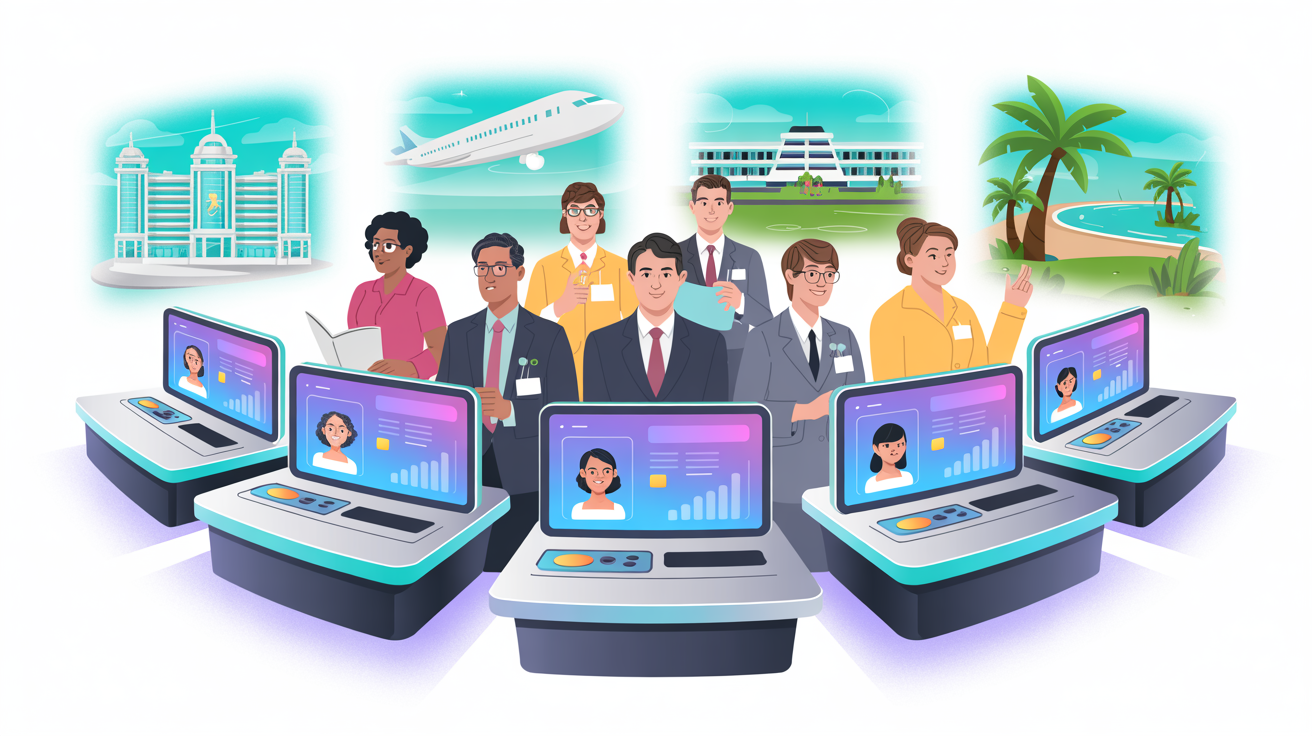
The sales enablement technology market has exploded. Gartner now tracks over 200 vendors in the sales enablement category, up from fewer than 50 a decade ago. For travel business leaders, the challenge isn't finding tools — it's identifying which categories of tool will actually move the needle on your sales performance.
This guide covers the 12 tool categories that matter most for travel businesses, what to look for in each, and how they fit together into a coherent sales enablement stack.
1. AI-Powered Training Platform
What it does: Delivers interactive, adaptive product knowledge training and sales skills development to your team or partner network.
Why it matters for travel: Product knowledge is the foundation of every sale. An agent who doesn't know the difference between two cruise cabin categories can't recommend the right one. An agent who hasn't practised handling price objections will fold when a customer pushes back. AI-powered training builds both knowledge and skills more effectively than any other method.
What to look for:
- Adaptive learning that personalises content to each agent's level
- Conversational/interactive delivery (not slide-based click-through)
- Built-in assessment and knowledge checks
- Mobile-first design for training on the go
- Travel-specific content formats and templates
- Analytics that link training to performance
Travel-specific option: TravAI — purpose-built for travel with AI-powered adaptive learning, roleplay, coaching, and performance analytics.
2. AI Sales Roleplay and Simulation
What it does: Provides simulated customer conversations where agents practise selling skills and receive immediate coaching feedback.
Why it matters for travel: Selling travel is a conversation. You can't learn conversations from slides — you learn them by having them. AI roleplay gives agents unlimited practice without risking real customer relationships.
What to look for:
- Realistic virtual customers with varied personas and scenarios
- Travel-specific scenarios (booking consultations, objection handling, upselling)
- Immediate AI coaching feedback on each conversation
- Performance tracking across multiple roleplay sessions
- Customisable scenarios matched to your products and customer types
Key consideration: Generic roleplay tools lack travel context. A tool trained on general sales scenarios won't simulate a customer comparing two Mediterranean cruise itineraries. Travel-specific simulation is essential for relevance.
3. AI Sales Coaching
What it does: Analyses sales interactions (practice or real) and provides specific, actionable coaching feedback on technique, product knowledge, and conversation quality.
Why it matters for travel: Traditional coaching depends on managers having time to observe and provide feedback — which happens infrequently. AI coaching provides consistent feedback to every agent after every practice interaction, supplementing (not replacing) human coaching.
What to look for:
- Feedback that's specific ("You missed an opportunity to mention the hotel's new spa facility") rather than generic ("Try to upsell more")
- Analysis of both what was said and what was missed
- Integration with training data (connecting knowledge gaps to coaching recommendations)
- Coaching dashboards for managers to review team patterns
4. CRM (Customer Relationship Management)
What it does: Tracks customer interactions, manages sales pipelines, and provides customer data to inform selling conversations.
Why it matters for travel: Repeat customers and referrals drive a significant share of travel agency revenue. A CRM that tracks customer preferences, past bookings, and communication history enables personalised service that OTAs can't match.
What to look for:
- Travel-specific fields (booking references, travel dates, destination preferences, passenger details)
- Integration with booking systems
- Pipeline management for tracking enquiries through to booking
- Customer communication logging (calls, emails, messages)
- Reporting on conversion rates and sales cycle length
Established options: Salesforce, HubSpot, and travel-specific CRMs like Tourwriter and iSell.
Key consideration: CRM and sales enablement platforms serve different purposes. The CRM manages the customer relationship; the enablement platform equips the agent. Most businesses need both.
5. Content Management and Distribution
What it does: Organises, stores, and distributes sales content — ensuring agents can find the right document, image, or guide when they need it.
Why it matters for travel: Travel agents work with enormous volumes of content — supplier brochures, rate sheets, destination guides, promotional materials, visa information, and more. Forrester research shows that sellers who can quickly access relevant content close 25% more deals than those who can't.
What to look for:
- Search functionality that actually works (filtering by supplier, destination, product type)
- Version control (ensuring agents access the latest content, not outdated versions)
- Mobile access
- Analytics showing which content is most used and most effective
- Integration with training platform and CRM
6. Knowledge Base and FAQ System
What it does: Provides a searchable repository of frequently asked questions, product details, booking procedures, and policy information.
Why it matters for travel: Agents handle repetitive questions daily — "What's included in all-inclusive?", "What's the cancellation policy for this supplier?", "Do I need a visa for Turkey?". A well-maintained knowledge base reduces the time agents spend searching for answers and reduces calls to support desks.
What to look for:
- Fast, accurate search
- Regular content updates (especially for changing policies and regulations)
- Category organisation by topic, supplier, and destination
- Integration with chat tools so agents can search without leaving the conversation
7. Booking and Quotation Tools
What it does: Streamlines the process of searching, pricing, and booking travel products.
Why it matters for travel: The faster an agent can produce an accurate quote, the more conversations they can handle and the shorter the gap between customer interest and commitment. Booking friction kills conversions.
What to look for:
- Multi-supplier search and comparison
- Dynamic packaging capability
- Visual itinerary presentation
- Quick-quote functionality for phone consultations
- Integration with CRM for automatic data capture
8. Communication and Engagement Tools
What it does: Manages customer communication across channels — email, phone, messaging, social media.
Why it matters for travel: Modern travel customers expect to communicate through their preferred channel. An agent who can seamlessly handle enquiries across email, WhatsApp, social media DMs, and phone converts more business than one confined to a single channel.
What to look for:
- Omnichannel inbox (all communications in one view)
- Template library for common responses
- Automated follow-up scheduling
- Analytics on response times and communication patterns
- Mobile access for distributed agents
9. Performance Analytics and Dashboards
What it does: Provides real-time visibility into individual and team sales performance, training engagement, and enablement programme effectiveness.
Why it matters for travel: You can't improve what you can't see. Performance dashboards that connect training data with sales outcomes reveal which enablement investments are working and which aren't.
What to look for:
- Individual agent performance cards
- Team comparison views
- Training-to-performance correlation
- Trend analysis (are things getting better or worse?)
- Exportable reports for leadership reviews
- Real-time data (not weekly or monthly batch reports)
10. Social Selling Tools
What it does: Helps agents generate leads and build relationships through social media channels.
Why it matters for travel: Instagram, Facebook, and TikTok are where potential travellers discover inspiration. Agents who build a social presence — sharing destination content, travel tips, and personal recommendations — create a pipeline of warm leads.
What to look for:
- Content libraries with pre-approved social posts
- Scheduling and automation
- Engagement tracking
- Lead capture from social interactions
- Compliance controls (ensuring posts meet regulatory requirements)
Established options: Hootsuite, Buffer, and travel-specific social tools.
11. Competitive Intelligence
What it does: Monitors competitor pricing, promotions, and activity to inform selling conversations.
Why it matters for travel: When a customer says "I can get a similar holiday for £200 less with [competitor]," the agent needs to know whether that's true and how to respond. Competitive intelligence tools provide the data; sales training provides the technique.
What to look for:
- Automated price monitoring for key competitors
- Promotion and campaign tracking
- Product comparison data
- Integration with agent-facing tools (so intelligence is accessible during conversations)
12. Survey and Feedback Tools
What it does: Collects customer feedback, agent feedback, and training programme feedback to inform continuous improvement.
Why it matters for travel: Customer satisfaction data reveals whether your sales enablement is actually improving the customer experience — not just your revenue numbers. Agent feedback reveals whether your enablement tools are genuinely helpful or just adding complexity.
What to look for:
- Post-booking customer satisfaction surveys
- NPS tracking
- Agent satisfaction and training feedback
- Automated survey distribution
- Analytics and trend reporting
Building Your Stack: Integration Matters
The worst approach to sales enablement technology is buying best-of-breed tools in every category and expecting agents to use 12 different systems. The best approach is choosing a core platform that covers multiple categories natively, then integrating specialist tools where needed.
For most travel businesses, the recommended starting stack is:
Core platform: AI-powered training, roleplay, coaching, and analytics (covers categories 1, 2, 3, and 9)
Essential additions: CRM (category 4), booking tools (category 7), and communication tools (category 8)
Growth additions: Content management (category 5), social selling (category 10), and competitive intelligence (category 11)
Nice-to-have: Knowledge base (category 6) and survey tools (category 12) — which can often be handled by features within your core platform or CRM.
The total cost of a well-integrated sales enablement stack for a mid-sized travel business is typically less than the cost of a single underperforming agent — and it lifts the performance of your entire team.
Evaluation Framework
When assessing any sales enablement tool, score it against these criteria:
| Criterion | Weight | Questions to Ask |
|---|---|---|
| Travel-specific capability | High | Does it understand travel products, booking flows, and industry terminology? |
| Ease of adoption | High | Will agents actually use it? Or will it become another ignored system? |
| Mobile accessibility | High | Does it work on phones for distributed and mobile agents? |
| Integration capability | Medium | Does it connect with your existing systems? |
| Analytics and reporting | Medium | Does it provide actionable data, not just vanity metrics? |
| Scalability | Medium | Can it grow with your business? |
| Cost relative to value | Medium | What's the ROI timeline? |
| Vendor stability | Low-Medium | Will the vendor still be around in 3 years? |
Book a demo to see how TravAI covers multiple enablement categories in a single platform →
This article is part of our Sales Enablement for Travel series. Related reading: