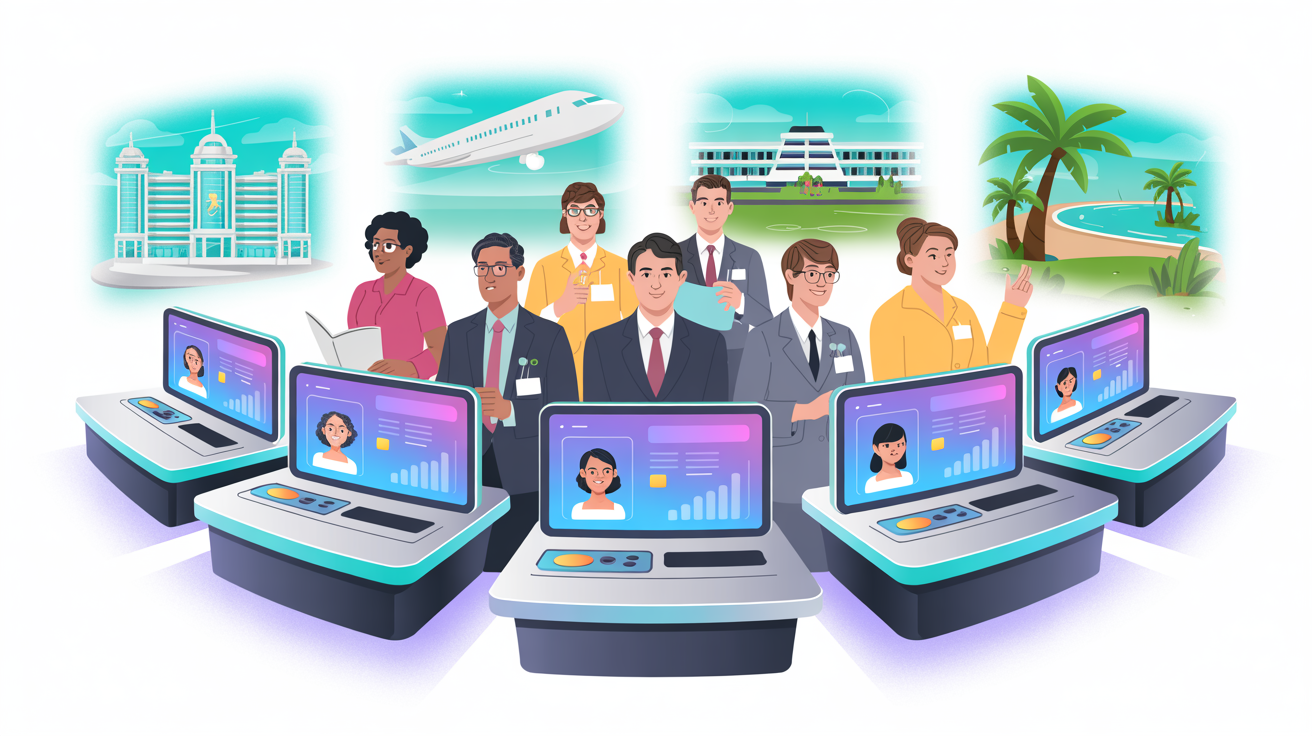
If you ask ten travel industry leaders what "sales enablement" means, you'll get ten different answers. Some will say it's training. Some will say it's technology. Some will say it's content. A few will look confused and admit they've heard the term but aren't sure what it means in practice.
This confusion matters because sales enablement — properly understood and implemented — is the single most effective lever for increasing revenue per agent, per partner, and per customer interaction. Travel businesses that get it right consistently outperform those that don't.
Let's clarify what it actually is, what it isn't, and why the distinction matters for your bottom line.
The Definition
The Sales Enablement Society, the professional body for the discipline, defines sales enablement as:
"The activities, systems, processes, and information that support and promote knowledge-based sales interactions with clients and prospects."
Notice what's in that definition: activities (including but not limited to training), systems (technology platforms), processes (workflows and methodologies), and information (content and data). Sales enablement encompasses all of these. Training is one component — an important one, but only one.
Gartner frames it differently but arrives at the same conclusion: sales enablement is "the process of providing the sales organisation with the information, content, and tools that help salespeople sell more effectively."
For travel businesses, a practical working definition might be: everything your business does to ensure that the person having the customer conversation is equipped to convert that conversation into the right booking at the best possible value.
What Sales Enablement Includes
1. Training and Knowledge Development
Training builds the knowledge and skills that agents need. This includes product knowledge (hotels, destinations, cruise ships, tours), selling skills (needs analysis, objection handling, upselling, closing), and compliance knowledge (regulations, booking procedures, financial protections).
Training is the foundation of sales enablement — without knowledge, nothing else works. But training alone is insufficient because knowledge without tools, content, coaching, and process support doesn't consistently translate into better sales outcomes.
The distinction: training is what you learn; enablement is what helps you apply what you've learned, every day, in every conversation.
2. Sales Content and Resources
Content includes everything an agent might reference during or around a customer interaction:
- Product fact sheets and comparison guides
- Destination selling guides with customer-matched recommendations
- Pricing tools and quick-reference rate sheets
- Visual content (hotel photography, destination videos, virtual tours)
- Objection-response frameworks
- Email templates for follow-up
- Social media content for prospecting
Research from Forrester shows that sales professionals spend up to 30% of their time searching for or creating content. In a travel agency, that's an agent spending 2.5 hours of an 8-hour shift looking for hotel images, checking rates, or writing follow-up emails instead of having customer conversations.
Effective sales enablement reduces this content search time to near zero by making the right content available at the right moment in the selling process.
3. Technology and Tools
The technology that supports the selling process — from AI-powered training platforms that build knowledge, to CRM systems that track customer relationships, to booking engines that process transactions.
In travel, the technology stack typically includes:
- Training platform: AI-powered eLearning, roleplay, and coaching
- CRM: Customer and pipeline management
- Booking system: GDS, mid-office, or direct supplier connections
- Communication tools: Email, phone, messaging, social media
- Content library: Centralised access to sales materials
- Analytics dashboard: Performance tracking and reporting
The enablement technology challenge isn't acquiring tools — most travel businesses have plenty. It's integrating them so agents experience a seamless workflow rather than juggling between disconnected systems.
4. Coaching and Performance Support
Ongoing coaching that helps agents apply their knowledge and skills to real selling situations. This includes:
- Manager coaching: Regular 1-to-1 sessions reviewing performance data and developing specific skills
- AI coaching: Real-time or post-interaction feedback on selling technique, product knowledge accuracy, and conversation quality
- Peer coaching: Structured knowledge sharing between experienced and less experienced agents
- Performance analytics: Data-driven identification of each agent's specific strengths and development areas
Coaching closes the gap between knowing and doing. An agent might score 90% on a product knowledge assessment but still fail to apply that knowledge in customer conversations. Coaching identifies why and provides targeted support.
5. Process and Methodology
The selling processes and methodologies that standardise best practice across the team. In travel, this includes:
- A defined sales process (from enquiry handling through to booking confirmation)
- Qualification criteria (how to assess and prioritise enquiries)
- Follow-up cadences (when and how to re-contact undecided customers)
- Handoff procedures (how to transfer customers between agents or departments)
- Escalation protocols (when to involve a manager or specialist)
Without defined processes, sales performance depends entirely on individual agent initiative. Some agents will have excellent personal systems; many won't. Process standardisation ensures consistency without eliminating individual style.
Sales Enablement vs Training: The Key Differences
| Dimension | Training | Sales Enablement |
|---|---|---|
| Scope | Builds knowledge and skills | Builds knowledge, skills, and supports their ongoing application |
| Timing | Happens in defined sessions (courses, workshops, modules) | Happens continuously — before, during, and after customer interactions |
| Focus | The learner | The customer interaction |
| Content | Learning materials | Learning materials + sales tools + reference content + analytics |
| Measurement | Completion rates, assessment scores | Revenue impact, conversion rates, booking values |
| Ownership | L&D / HR department | Cross-functional (sales, marketing, L&D, operations) |
| Technology | LMS or training platform | Integrated stack spanning training, CRM, content, analytics |
The practical implication: if your "sales enablement" consists only of training courses and nothing else, you're missing most of the value. Training is the starting line; enablement is the entire race.
Why Travel Businesses Specifically Need Sales Enablement
Several characteristics of travel selling make enablement particularly valuable:
High Product Complexity
A typical travel agency sells products from 15-20+ suppliers, across hundreds of destinations, with thousands of accommodation options. No agent can hold all of this in their head. Enablement systems — training that builds core knowledge, content that provides just-in-time reference, tools that support the selling conversation — bridge the gap between what agents know and what they need to know in the moment.
Distributed Selling
Travel is increasingly sold by distributed workforces — homeworkers, franchise agents, trade partners, and contact centre teams across multiple locations. These distributed sellers can't walk down the corridor to ask a colleague for help. Enablement technology replaces the physical support network with a digital one that's available everywhere.
Emotional Purchase Decisions
Holidays are emotional purchases. Customers aren't buying a room — they're buying a vision of relaxation, adventure, romance, or family connection. The selling conversation requires empathy, storytelling, and the ability to paint a picture of the experience. These are higher-order skills that require ongoing coaching and practice to develop — not just a one-off training course.
Perishable Inventory
Unsold hotel rooms, cruise cabins, and flight seats generate zero revenue once the date passes. The cost of a missed sale in travel isn't just lost revenue — it's permanently lost revenue. Enablement that improves conversion rates by even a few percentage points directly reduces the volume of perishable inventory that goes unsold.
Competitive Pressure from OTAs
Online travel agencies compete primarily on price and convenience. Traditional travel agents compete on expertise and service. But expertise without enablement infrastructure is inconsistent — some agents deliver it brilliantly, others don't. Sales enablement is what makes expert service consistent across your entire team.
Deloitte's travel industry analysis highlights that travel businesses competing on service and expertise need "systematic approaches to knowledge management and sales support" — which is precisely what sales enablement provides.
The Maturity Model: Where Does Your Business Stand?
Travel businesses typically fall into one of four sales enablement maturity levels:
Level 1: Ad Hoc
No formal enablement. Training happens reactively. Sales content is scattered. Coaching is inconsistent. Performance data is limited to basic revenue reports. Most small travel businesses sit here.
Level 2: Foundational
Basic training programmes exist (supplier courses, onboarding checklists). Some sales content is organised. Managers coach when time allows. Monthly performance reports track top-line metrics. Most mid-sized agencies sit here.
Level 3: Strategic
A deliberate enablement strategy with AI-powered training, roleplay practice, organised sales content, regular coaching cadences, and performance analytics that inform decisions. Training is linked to competency frameworks and business outcomes. Industry leaders are reaching this level.
Level 4: Optimised
Fully integrated enablement ecosystem where training, content, coaching, and analytics work together seamlessly. AI personalises every agent's development pathway. Performance data drives real-time coaching interventions. Enablement ROI is measured and optimised continuously. The target state for competitive advantage.
How to Start
If you recognise your business at Level 1 or 2 and want to move to Level 3:
- Acknowledge that training alone isn't enough. This mindset shift is the first and most important step.
- Audit your current capabilities across all five enablement dimensions (training, content, technology, coaching, process).
- Identify your highest-impact gap. For most travel businesses, it's either product knowledge (agents don't know enough to sell confidently) or coaching (agents have knowledge but don't apply it consistently).
- Choose a platform that covers training AND enablement. TravAI combines AI-powered training, roleplay practice, real-time coaching, and performance analytics in a single platform designed for travel.
- Build a 90-day implementation plan with specific, measurable goals. Our guide to building a sales enablement strategy in 90 days provides a step-by-step framework.
Sales enablement isn't a product you buy — it's a capability you build. But with the right approach and the right technology, most travel businesses can move from ad hoc to strategic within a single quarter.
Explore TravAI's sales enablement platform →
This article is part of our Sales Enablement for Travel series. Related reading: