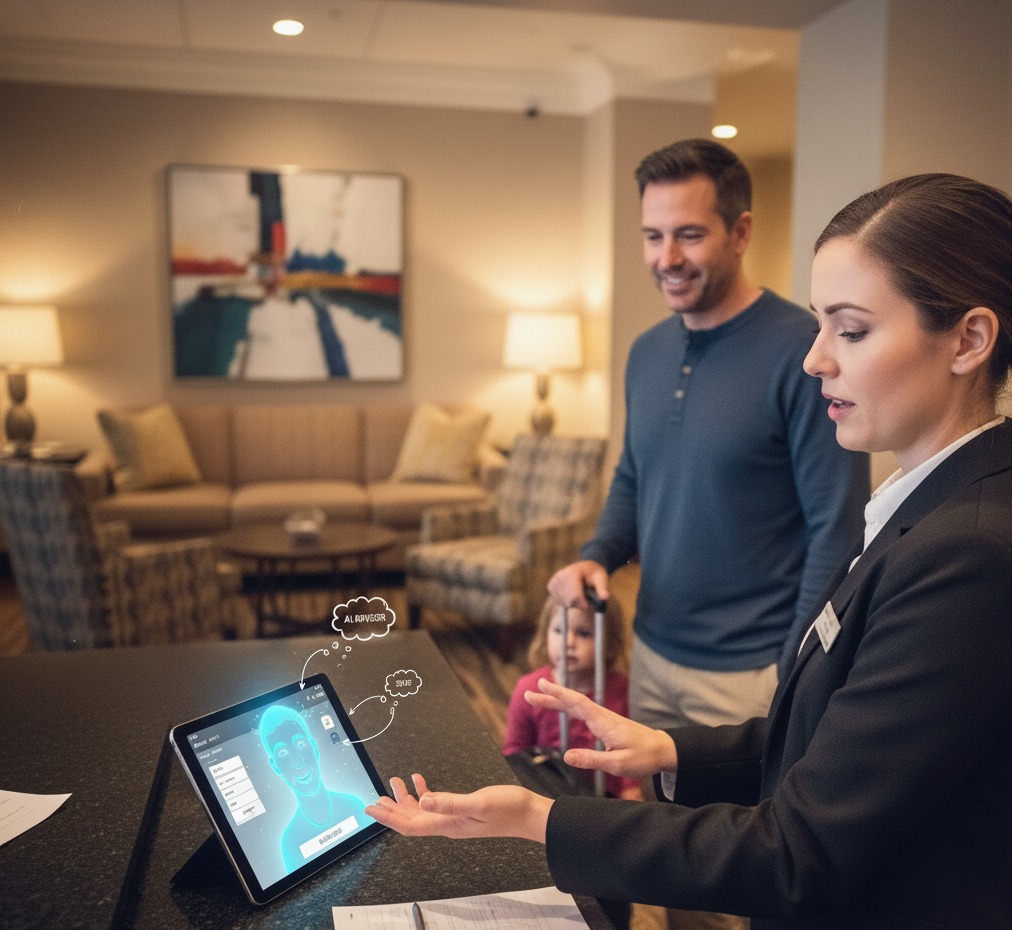
Travel agency sales agents sit at the intersection of expertise and trust. Customers walk through the door — or call, or message — because they want something an OTA search cannot provide: personal advice from someone who genuinely knows the product and cares about getting it right. That expectation makes the sales agent role both commercially valuable and demanding to train for.
This guide provides a structured framework for training travel agency sales agents, from first-week induction through to full competency and beyond.
Role Overview
Core Responsibilities
A travel agency sales agent advises customers on holiday options, researches and books travel arrangements, manages post-booking service, and builds long-term client relationships. The role spans the full breadth of leisure travel — package holidays, tailor-made itineraries, flights, accommodation, car hire, insurance, visas, and ancillaries. In many agencies, agents also handle corporate travel, group bookings, and specialist sectors.
A Typical Day
Depending on the agency model (high street, homeworking, call centre, or hybrid), a typical day involves responding to walk-in or phone enquiries, researching options across multiple operator and supplier systems, building and presenting quotes, following up on proposals, processing bookings, handling amendments and after-sales queries, and proactively contacting existing customers about relevant offers.
Key Challenges
The defining challenges include breadth of knowledge required across hundreds of destinations and thousands of products, competing with OTAs on price while selling on value, managing customer expectations shaped by online research, staying current with constantly changing products and regulations, and converting browsers into bookers in a comparison-shopping environment.
Required Knowledge and Skills
| Skill Area | Proficiency Needed | How to Develop |
|---|---|---|
| Destination knowledge | Broad foundation with specialist depth in key selling destinations | E-learning modules, ABTA destination training, personal travel, supplier webinars |
| Product and supplier knowledge | Strong — must navigate multiple tour operator portfolios | Operator training programmes, product update briefings, assessments |
| Booking systems (Galileo, Amadeus, operator portals) | Confident — speed and accuracy under pressure | System-specific certification, supervised practice, regular refresher training |
| Consultative selling | Strong — must convert enquiries through advice, not price | Sales coaching, call observation, roleplay practice |
| Objection handling | Confident — particularly around price comparison with online | Scenario-based training, real objection analysis, peer coaching |
| Upselling and cross-selling | Proficient — must naturally add value to every booking | Targeted coaching on ancillary margins, AI roleplay on upgrade conversations |
| Customer relationship management | High — repeat business is the agency model's strength | CRM training, communication standards, loyalty programme knowledge |
| Compliance (ATOL, PTRs, GDPR) | Solid — errors carry financial and regulatory risk | Mandatory compliance modules, ABTA guidelines, annual certification |
Source: ABTA; The Travel Network Group
Competency Framework
| Competency | Beginner | Intermediate | Advanced |
|---|---|---|---|
| Destination knowledge | Knows top 20 selling destinations at overview level | Advises confidently across full destination range with resort-level detail | Recognised specialist in 3-5 destinations; mentors peers and creates content |
| Needs analysis | Asks standard qualifying questions from a checklist | Conducts structured discovery conversations that uncover preferences and motivations | Identifies unstated needs, builds emotional connection, positions holidays against life moments |
| Multi-supplier itinerary building | Books single-operator packages accurately | Combines flight, accommodation, and ground arrangements across suppliers | Builds complex multi-centre itineraries with seamless connections and contingencies |
| Objection handling | Uses scripted responses to common objections | Addresses objections confidently using product knowledge and value framing | Turns objections into opportunities; reframes price conversations around total value |
| Upselling | Offers upgrades when customer mentions interest | Proactively recommends relevant add-ons based on customer profile and trip type | Consistently maximises booking value through consultative upselling across all touchpoints |
| After-sales and retention | Processes amendments and handles queries reactively | Proactively contacts customers pre-departure and post-return | Builds a personal client book and generates repeat and referral business systematically |
| Compliance | Follows compliance procedures with checklist | Understands regulatory rationale and applies independently | Identifies risks proactively, stays current with regulatory changes, coaches colleagues |
This framework builds on the principles outlined in our travel agent competency framework guide.
Training Programme Structure
| Week/Phase | Focus Area | Activities | Assessment |
|---|---|---|---|
| Week 1: Induction | Agency culture, systems, compliance | Welcome programme, system access and navigation training, compliance modules, brand standards | System navigation test, compliance quiz (90%+ pass) |
| Week 2: Destination foundations | Core destination knowledge | E-learning modules on top selling destinations, brochure review, virtual FAM content | Destination knowledge assessment — 80%+ |
| Week 3: Products and suppliers | Tour operator portfolios, supplier systems | Operator training sessions, portal navigation, product differentiation exercises | Supplier knowledge test, quote-building exercise |
| Week 4: Selling skills | Consultative selling, needs analysis | Sales coaching workshops, call listening, roleplay scenarios | Mock customer consultation — assessed |
| Weeks 5-8: Supervised live selling | Real customer enquiries with support | Handle live enquiries with experienced agent support, progressive independence, daily debriefs | Weekly conversion tracking, quality audits on quotes and bookings |
| Weeks 9-12: Independent operation | Full role with coaching focus | Independent enquiry handling, weekly coaching sessions, upselling focus | KPI review against targets, roleplay assessments |
| Months 4-6: Development | Specialisation and advanced skills | Specialist destination training, complex itinerary workshops, performance tracking | Full competency framework assessment, revenue per booking analysis |
AI Training Recommendations
Travel agency sales agents face a unique training challenge: the sheer breadth of knowledge required. An agent might need to advise on a Maldives honeymoon at 10am and a family camping holiday in France at 10:30am. TravAI's platform addresses this through:
Scalable destination training — AI-powered e-learning enables agencies to deploy destination and product training across their entire team simultaneously. Agents complete modules on their own schedule, and AI adapts the content difficulty based on existing knowledge. This is how leading agencies train at scale.
Realistic selling practice — AI roleplay simulates the full range of customer scenarios agents encounter, from straightforward package enquiries to demanding tailor-made requests. Agents build confidence and technique in a safe environment before facing real customers, following best practice for travel agent onboarding.
Personalised coaching — AI sales coaching analyses individual agent performance data and identifies specific skill gaps. Rather than applying one-size-fits-all training, each agent receives targeted development that addresses their particular weaknesses, helping increase sales through precision rather than volume.
Continuous assessment — TravAI assessments evaluate knowledge in context, testing not just recall but application. This ensures agents can deploy their destination knowledge within a selling conversation, not just pass a quiz.
Performance visibility — Management dashboards track performance across the team, linking training completion to sales outcomes and identifying which training interventions drive the greatest commercial impact.
These tools are designed specifically for the travel agency use case, where breadth of knowledge and selling skill must develop in parallel.
Common Skill Gaps
| Skill Gap | Impact | Training Solution |
|---|---|---|
| Narrow destination knowledge | Unable to advise on full range of enquiries; defers to colleagues or loses bookings | Structured e-learning programme with progressive destination modules |
| Price-led selling | Margin erosion, inability to compete with OTAs on value | Sales coaching on value articulation and price reframing techniques |
| Weak follow-up | Quotes sent but not converted; revenue left on the table | Process training, CRM discipline, follow-up roleplay scenarios |
| Inconsistent upselling | Low ancillary revenue; missed margin opportunities | Upsell-focused coaching, identification of natural upsell triggers per booking type |
| System slowness | Long customer wait times, frustration, dropped enquiries | Additional system training, keyboard shortcut proficiency, workflow optimisation |
| Compliance uncertainty | Regulatory risk, incorrect documentation, customer complaints | Mandatory compliance assessments with regular refresher cycles |
| Limited digital skills | Struggles with online channels, chat, social media enquiries | Digital communication training, multi-channel response standards |
Onboarding Milestones
| Timeframe | Milestone | Measurable Outcome |
|---|---|---|
| End of Week 1 | Completes induction and compliance training | Passes compliance assessment at 90%+, navigates agency systems independently |
| End of Week 2 | Demonstrates core destination knowledge | Passes destination assessment at 80%+, can recommend top 20 destinations confidently |
| End of Week 4 | Completes first supervised bookings | Processes 5+ bookings accurately, receives positive quality audit feedback |
| End of Month 2 | Handles enquiries independently | Manages full enquiry flow, conversion rate within 20% of team average |
| End of Month 3 | Meets baseline performance targets | Achieves 65-70% of experienced agent conversion and revenue targets |
| End of Month 6 | Fully competent across core role | Meets team average on conversion, average booking value, and customer satisfaction |
Measuring Training Effectiveness
| KPI | What It Measures | Target |
|---|---|---|
| Time to first unassisted booking | Onboarding speed and confidence | Within 10 working days of starting live selling |
| Enquiry conversion rate | Combined selling skill and knowledge | 20-30% (varies by channel — walk-in higher, phone/online lower) |
| Average booking value | Upselling ability and consultative approach | 10%+ increase over first 6 months |
| Ancillary attach rate | Cross-selling consistency (insurance, transfers, excursions) | 60%+ of bookings include at least one ancillary |
| Training module completion | Engagement with learning programme | 95%+ for mandatory, 70%+ for optional |
| Assessment scores | Knowledge acquisition and retention | 80%+ across all required modules |
| Customer satisfaction | Service quality | 4.5/5 or equivalent |
| Repeat booking rate | Relationship building and service quality over time | Track from Month 6 onwards |
Source: Travel Weekly agency benchmarks; TTG workforce data
For practical guidance on reducing onboarding time and cost, see our detailed travel agent onboarding guide.