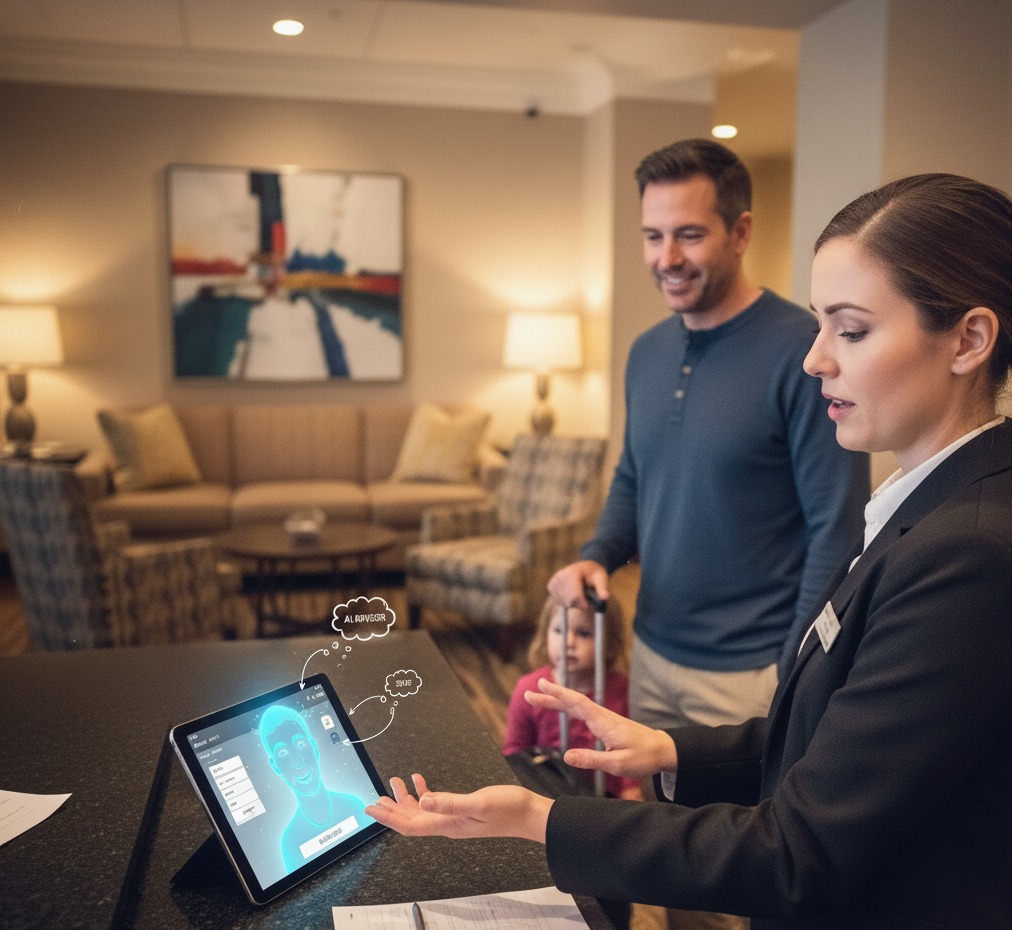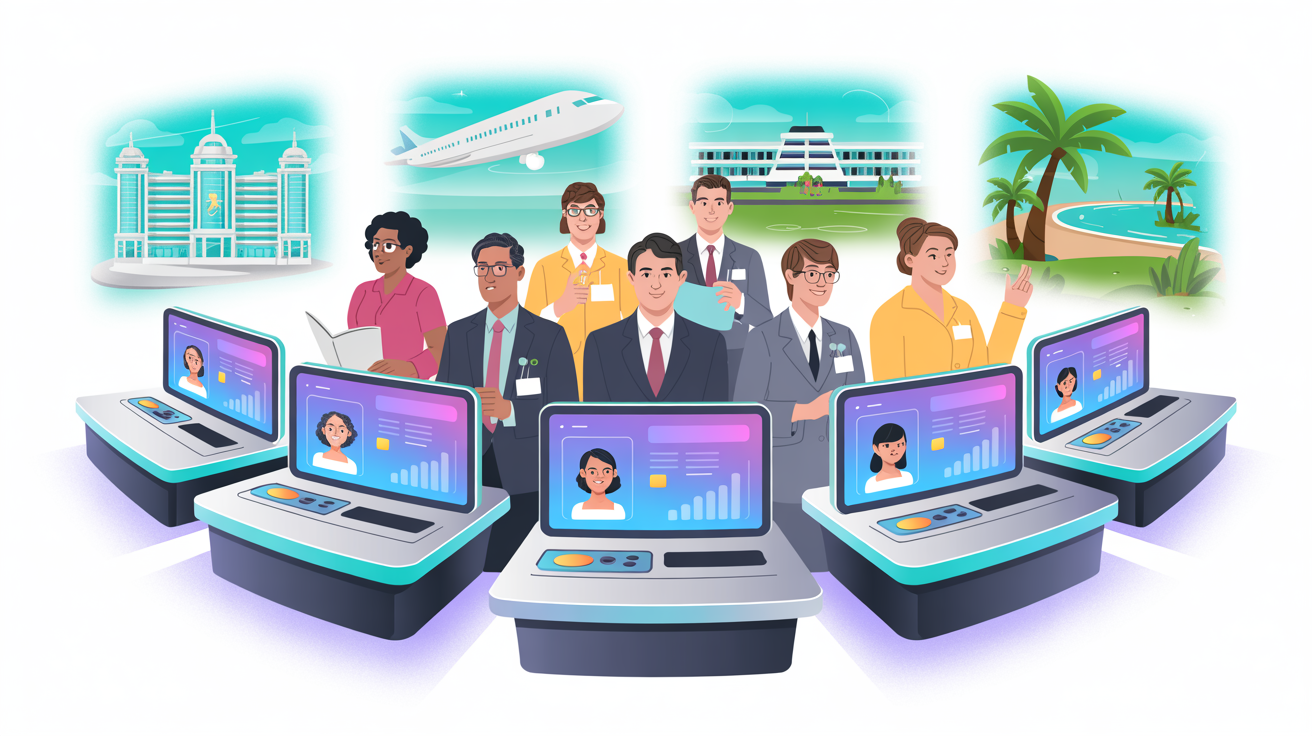
Every travel agent is different. An experienced luxury specialist with 15 years of Caribbean knowledge needs fundamentally different development than a new homeworker who's never sold long-haul. Yet most training programmes treat them identically — same content, same sequence, same pace.
AI changes this equation entirely. AI-powered platforms can now deliver genuinely personalised experiences to every agent in a network, at scale, without the cost of individual human attention.
Why Personalisation Matters
The One-Size-Fits-All Problem
Traditional training treats agents as a homogeneous group:
| Traditional Approach | Result |
|---|---|
| Same training for all experience levels | Beginners overwhelmed, experts bored |
| Fixed content sequence | Agents skip what they know, miss what they need |
| Generic coaching advice | Irrelevant to individual performance gaps |
| Uniform assessment difficulty | Too easy for some, too hard for others |
| Same communication frequency | Under-served and over-contacted simultaneously |
The consequence: training completion rates of 18-25% across the industry. Agents disengage because the training isn't relevant to them.
The Personalisation Impact
McKinsey research shows that personalisation delivers:
- 10-15% revenue increases
- 10-30% improvement in engagement
- 20-30% reduction in training time (by skipping irrelevant content)
- Higher satisfaction and lower disengagement
For travel training specifically, case study data shows personalised AI training achieves 60-80% completion rates versus 18-25% for generic programmes.
How AI Personalisation Works
The Data Foundation
AI personalisation requires data about each agent. The more data, the better the personalisation:
| Data Source | What It Tells AI | How It Personalises |
|---|---|---|
| Registration profile | Role, experience level, specialisms | Starting content and difficulty level |
| Assessment scores | Knowledge strengths and gaps | Fills specific knowledge gaps |
| Training activity | What they've completed, time spent | Recommends next logical content |
| Roleplay performance | Selling technique strengths and weaknesses | Targets specific skill development |
| Booking data | What they actually sell, volumes, values | Aligns training to commercial priorities |
| Engagement patterns | When they learn, preferred formats, session length | Optimises delivery timing and format |
The Personalisation Engine
AI analyses these data points to create unique experiences for each agent:
Step 1: Baseline Assessment
When an agent first engages, AI assessments establish a knowledge baseline — what they already know and where the gaps are. This takes minutes, not hours, and replaces the assumption that everyone starts at zero.
Step 2: Adaptive Pathway
Based on the baseline, AI creates a personalised learning pathway:
| Agent Profile | Pathway Adaptation |
|---|---|
| New agent, no experience | Full programme: product basics → destination knowledge → selling skills → advanced techniques |
| Experienced generalist | Skip basics, focus on specialist product knowledge and advanced selling |
| Destination specialist | Skip known destinations, focus on new products and cross-selling skills |
| High performer | Advanced content, leadership development, mentoring skills |
| Returning after break | Refresher on changes since last active, then advanced content |
Step 3: Continuous Adaptation
The pathway isn't static. AI continuously adjusts based on:
- Assessment results (scoring well? → skip ahead. Struggling? → add reinforcement)
- Roleplay performance (confident with upselling? → move to objection handling)
- Engagement patterns (completing sessions quickly? → increase difficulty)
- Booking data (selling one destination heavily? → introduce complementary products)
Step 4: Personalised Coaching
AI coaching analyses each agent's specific performance and provides targeted feedback:
- "Your needs analysis questions are excellent, but you consistently skip asking about special occasions. Knowing it's an anniversary lets you recommend upgraded options."
- "You describe features well but rarely translate them into customer benefits. Try: 'The private pool means you can swim at midnight without queuing' instead of 'The villa has a private pool.'"
This feedback is specific to the agent's actual performance, not generic tips.
Personalisation in Practice
Personalised Product Recommendations
Instead of presenting all 200 products equally, AI recommends products for each agent to learn based on:
| Factor | Example |
|---|---|
| Customer base match | Agent serves luxury clients → recommend luxury product training first |
| Geographic relevance | Agent's customers book Mediterranean → prioritise Med destinations |
| Commission opportunity | Products with higher margin/commission → highlighted for commercially minded agents |
| Seasonal timing | Summer destinations recommended in January for booking season |
| Gap analysis | Products the agent's customer base would buy but the agent doesn't currently sell |
Personalised Assessment
AI generates assessment questions at the right difficulty level for each agent:
| Agent Level | Assessment Adaptation |
|---|---|
| Foundation | Factual recall: "What room types does Hotel X offer?" |
| Intermediate | Application: "A couple celebrating their anniversary wants a beachfront room. Which category would you recommend and why?" |
| Advanced | Scenario: "A family of five with a teenager and a toddler asks about Hotel X. What are the suitability considerations, and what alternative would you suggest if it's not ideal?" |
This prevents the disengagement caused by assessments that are too easy (boring) or too hard (discouraging).
Personalised Communication
AI determines when and how to communicate with each agent:
| Agent Behaviour | AI Response |
|---|---|
| Highly engaged, completing modules daily | Reduce notifications; suggest stretch goals |
| Engaged but slowing down | Gentle nudge with specific next module recommendation |
| Completed training, not yet booking | Connect with BDM; provide selling practice |
| Inactive for 30+ days | Re-engagement campaign with new content preview |
| Booking well after training | Share performance data; recommend advanced content |
Implementation for Travel Businesses
What You Need
| Requirement | Purpose | Available Via |
|---|---|---|
| AI training platform | Delivers personalised learning experiences | TravAI platform |
| Product content | Training modules for your product range | AI-generated from product information |
| Agent profiles | Basic registration data per agent | Platform registration |
| Booking data connection | Links training to commercial outcomes | API integration |
What You Don't Need
- A data science team
- Custom AI model development
- Complex technical infrastructure
- Months of implementation time
Modern AI platforms handle the personalisation engine. Your job is to provide quality product content and agent data — the platform does the rest.
Measuring Personalisation Impact
| Metric | Without Personalisation | With Personalisation | Improvement |
|---|---|---|---|
| Training completion rate | 18-25% | 60-80% | +200-300% |
| Time to competence | 4-8 weeks | 1-3 weeks | -60-75% |
| Knowledge retention (90 days) | 20-30% | 55-70% | +130% |
| Agent satisfaction with training | 3.2/5 | 4.4/5 | +38% |
| Training-to-booking conversion | Unmeasured | Tracked and optimised | Measurable |
The Future of Personalisation
Where It's Heading
| Current State | Near Future (2027) | Longer Term (2029+) |
|---|---|---|
| Adaptive learning pathways | Real-time pathway adjustment during sessions | Predictive pathways based on career goals |
| Personalised assessments | Conversational assessment (chat-based) | Continuous passive assessment from interactions |
| AI coaching feedback | Live coaching during customer interactions | Proactive coaching before predicted challenges |
| Personalised content recommendations | AI-generated content per agent | Fully personalised training materials per learner |
| Post-training booking correlation | Real-time training-booking dashboard | Prescriptive recommendations (train X to sell Y) |
The Competitive Advantage
Travel businesses that personalise agent experiences will outperform those that don't — not because the technology is magic, but because personalisation respects the fundamental truth that every agent is different.
An agent who receives training that's relevant to their level, their customers, and their gaps doesn't just complete more training. They sell more effectively, recommend with more confidence, and deliver better customer experiences.
That's the competitive advantage that AI personalisation delivers.
Personalise your agent experience with TravAI →
This article is part of our Travel Industry Trends series. Related reading: