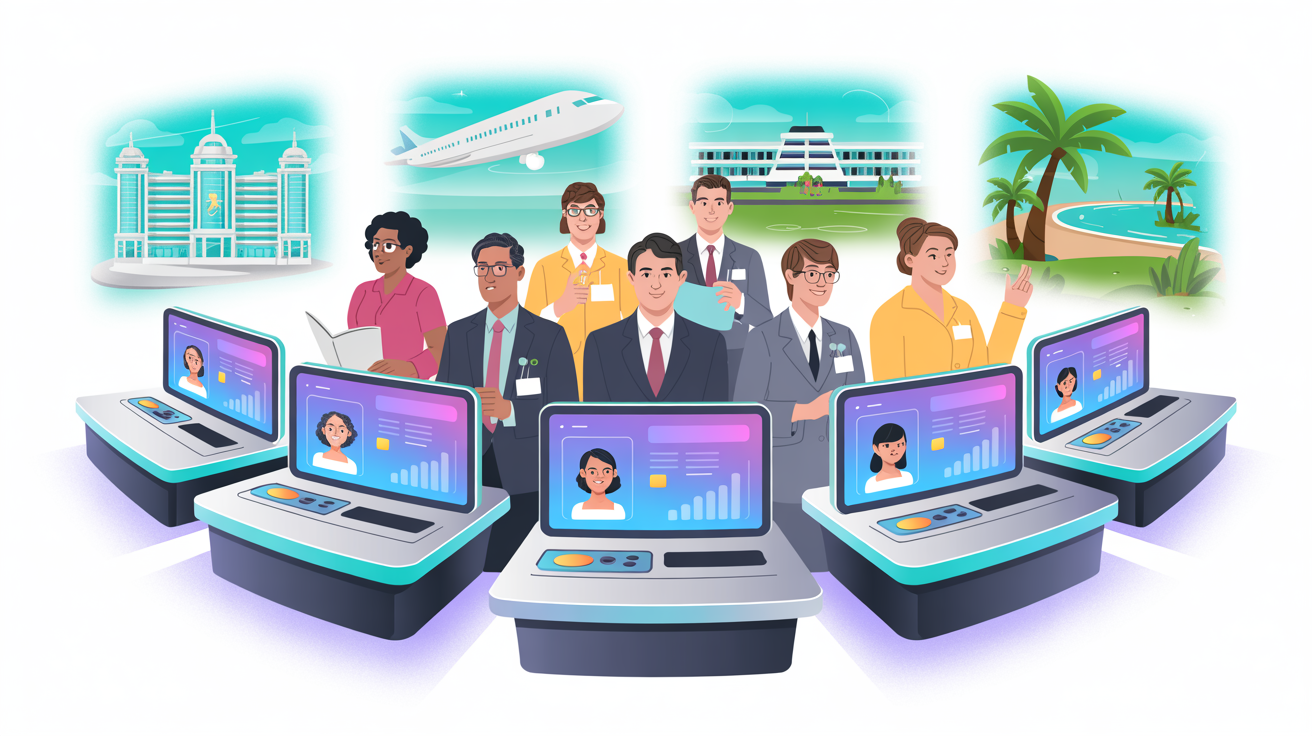
Travel businesses have a content problem. Not a lack of information — most have plenty of product data, destination details, supplier materials, and customer reviews. The problem is transforming raw information into polished, engaging, channel-specific content at the speed and volume the business requires.
A tour operator launching 50 new itineraries needs descriptions for the website, selling guides for agents, social media posts, email campaigns, and training modules — for each itinerary. That's hundreds of content pieces, each requiring a different tone, format, and purpose. Traditional content production can't keep pace.
AI content generation changes the equation. Not by replacing human creativity, but by handling the volume so humans can focus on quality, strategy, and differentiation.
What AI Content Generation Actually Does
AI content generation tools take source material — product specifications, destination data, hotel descriptions, customer reviews — and transform it into finished content for specific purposes and channels.
Input: Raw hotel fact sheet — 500 rooms, 3 restaurants, beachfront, adults-only, all-inclusive available, opened 2024, Cancun Riviera Maya.
Output options:
- A 200-word website description optimised for search
- A 100-word selling guide highlighting key differentiators for agents
- A 5-minute interactive training module for agent product knowledge
- Three social media posts with different hooks for different audiences
- An email campaign segment for customers who've previously booked Mexico
- A customer-facing itinerary description with experiential language
Each output is generated in minutes — formatted, styled, and ready for review. A human editor then refines, adds personality, and ensures accuracy. The result: content production that takes hours instead of weeks.
Where Travel Businesses Use AI Content
1. Product Training Content
The highest-ROI application for most travel businesses. When a tour operator adds a new hotel to their portfolio, AI can generate a complete agent training module — including product highlights, customer matching guidance, comparison with similar products, selling points, and assessment questions — from the supplier's fact sheet.
Traditional approach: Send fact sheet to training team → instructional designer creates module → review cycle → upload to LMS → available in 3-6 weeks.
AI approach: Upload fact sheet to AI training platform → platform generates interactive module → human review and refinement → available in 1-3 days.
TTG research indicates that training content currency is a major challenge for travel businesses — products change faster than training can keep up. AI content generation closes this gap.
2. Website Product Descriptions
Travel websites need descriptions for hundreds or thousands of products. Writing unique, engaging, SEO-optimised descriptions for each is prohibitively time-consuming without AI assistance.
AI generates first-draft descriptions that capture key features, appeal to target customer segments, and incorporate relevant search terms. Human editors then add the distinctive voice, local knowledge, and experiential detail that makes content compelling.
Volume example: A tour operator with 800 hotel products needs updated descriptions annually. At 30 minutes per description (manual), that's 400 hours — 10 full weeks of a content writer's time. AI generates first drafts in under 20 hours total, with human editing adding another 80 hours. Total savings: approximately 300 hours.
3. Agent Selling Guides
Sales content that helps agents sell specific products — quick-reference comparison sheets, customer persona matching guides, objection-handling frameworks for specific products.
AI generates these guides from product data, customer feedback, and selling performance data. An agent selling guide for a new cruise ship, for example, can be generated from the ship specifications, combined with top-performing selling approaches from similar products.
4. Email Marketing Campaigns
AI generates personalised email content based on customer segments, booking history, and seasonal relevance. Instead of sending the same generic newsletter to all customers, AI creates multiple versions targeting different segments with relevant products, personalised recommendations, and timing-optimised content.
Salesforce research shows that personalised email campaigns achieve 2-3x higher open rates and 4-6x higher click-through rates than generic campaigns. AI makes this personalisation achievable at volume.
5. Social Media Content
Social media requires volume, consistency, and variety. AI generates social posts that highlight different aspects of destinations, products, and offers — adapting tone and format for different platforms (Instagram visual focus, LinkedIn professional angle, Facebook community engagement).
A DMO promoting a destination across social channels might need 60-100 unique posts per month across platforms. AI generates draft content that a social media manager then curates, sequences, and personalises.
6. Customer Communications
Pre-departure emails, booking confirmations, travel documentation, post-trip follow-ups — the operational communications that shape customer experience. AI generates professional, personalised versions of these communications based on booking details, customer preferences, and travel requirements.
Implementation Guide
Step 1: Audit Your Content Bottleneck
Before implementing AI content generation, identify where the bottleneck is most costly:
| Content Type | Volume Needed | Current Production Speed | Impact of Delay |
|---|---|---|---|
| Product training | High — every new product | Slow (weeks) | Agents sell uninformed |
| Website descriptions | High — hundreds of products | Slow (manual writing) | Poor SEO, low conversion |
| Agent selling guides | Medium — key products | Slow (requires expertise) | Inconsistent selling quality |
| Email campaigns | High — weekly/monthly | Moderate | Generic, low engagement |
| Social media | Very high — daily | Fast but shallow | Inconsistent quality |
Start with the content type where delay has the highest business cost. For most travel businesses, that's product training content — because untrained agents lose bookings daily.
Step 2: Choose Your AI Content Tools
For training content: AI-powered training platforms that generate interactive training modules from product information are the most efficient option. Look for platforms that create assessments, roleplay scenarios, and multimedia content — not just text.
For marketing content: AI writing tools (both general-purpose and travel-specific) that generate website copy, email content, and social posts from product data and customer insights.
For sales content: Platforms that generate selling guides, comparison sheets, and objection-handling frameworks from product and performance data.
Step 3: Establish Your Quality Framework
AI-generated content requires human oversight. Establish a review process:
Accuracy check: Does the content accurately represent the product? Are prices, dates, and features correct? AI can hallucinate details — human verification is essential.
Brand voice check: Does the content sound like your brand? AI can match a brand voice with guidance, but consistency requires human review.
Differentiation check: Is the content distinct from generic descriptions? The value of AI is efficiency, not mediocrity. Human editors add the insights, experiences, and personality that differentiate your content from competitors.
Compliance check: Does the content comply with advertising standards, ABTA guidelines, and CAA regulations? AI isn't trained on your specific compliance requirements.
ABTA guidelines on travel advertising require specific accuracy standards that AI content must meet before publication.
Step 4: Build Your Content Workflow
A sustainable AI content workflow:
- Source material collection: Product data, supplier updates, customer feedback
- AI generation: Platform creates first-draft content across all required formats
- Human review: Subject matter expert reviews for accuracy, voice, and differentiation
- Compliance review: Legal/compliance check for regulatory requirements
- Distribution: Published across appropriate channels
- Performance monitoring: Track engagement, conversion, and feedback
- Iteration: Use performance data to refine AI prompts and quality standards
Step 5: Measure Content Performance
Track the impact of AI-assisted content:
- Production speed: How much faster is content published compared to pre-AI?
- Content volume: How many more pieces are you producing?
- Engagement metrics: Are agents completing more training modules? Are customers engaging more with marketing content?
- Sales impact: Is improved content currency translating to better-informed agents and higher conversion rates?
- Cost per piece: What's the total cost (platform + human review) per content piece compared to fully manual production?
The Quality Question
The most common concern about AI content generation is quality. Will it be good enough?
The honest answer: AI-generated content is a strong first draft, not a finished product. It's accurate, well-structured, and comprehensive — but it lacks the human touches that make content exceptional. The personal anecdote from an agent who visited the hotel, the insider tip about the restaurant with the sunset view, the honest assessment of who this product isn't right for.
The ideal workflow uses AI for efficiency and humans for excellence. Forrester research suggests that AI-assisted content production (AI draft + human editing) delivers content that's 85-90% as good as fully human-written content at 20-30% of the cost. For most business content, that's an excellent trade-off.
For premium, brand-defining content — pillar pages, thought leadership, key campaign materials — human writing with AI assistance (research, structure, first-draft sections) produces the best results.
The businesses getting the most value from AI content generation aren't those that eliminated human involvement — they're those that redirected human talent from routine production to strategic creativity.
Explore AI content generation with TravAI →
This article is part of our AI in Travel & Tourism series. Related reading: