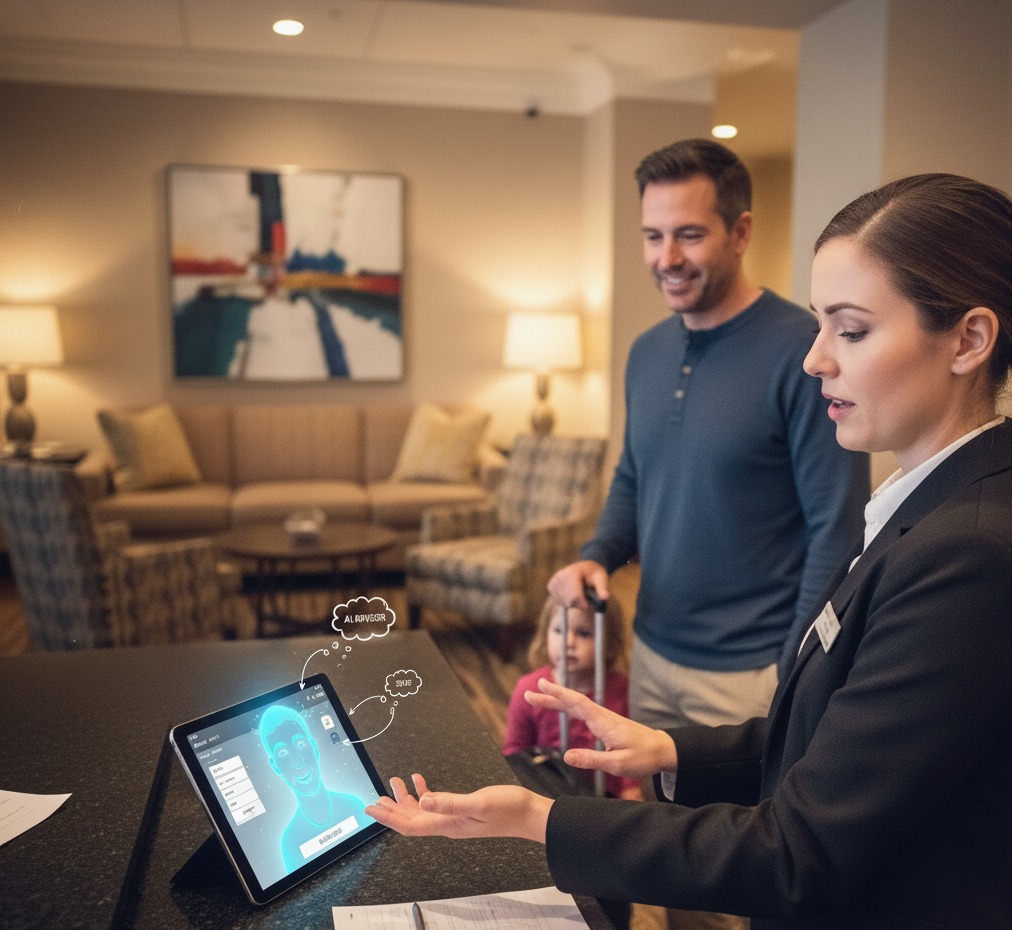
Confidence is the single biggest differentiator between agents who sell well and agents who don't. Product knowledge, system proficiency, and customer service skills all matter — but without confidence, none of them translate into sales. A knowledgeable agent who hesitates at the point of recommendation, avoids suggesting upgrades, or retreats at the first objection will consistently underperform a less knowledgeable agent who engages customers with conviction.
The challenge for travel agency managers is that confidence is difficult to teach through traditional training. You can deliver a workshop on objection handling, but that doesn't mean the agent will actually use the techniques when a customer pushes back on price. The gap between knowing and doing is almost always a confidence gap.
The Confidence Problem in Travel Sales
How Widespread Is It?
| Confidence Indicator | Percentage of Agents Affected | Revenue Impact |
|---|---|---|
| Avoid recommending higher-value options | 52% | Lost upselling revenue: estimated £3,000-£8,000 per agent annually |
| Discount too quickly under pressure | 47% | Unnecessary margin erosion: 5-12% per affected booking |
| Avoid cross-selling ancillaries | 45% | Lost ancillary revenue: estimated £2,000-£5,000 per agent annually |
| Struggle to close after objections | 41% | Conversion rate 15-25% below potential |
| Defer to colleagues on complex enquiries | 38% | Reduced personal productivity; dependency on others |
Source: ABTA Agent Skills Survey; Gallup Workplace Confidence Study
The cumulative cost of low confidence across a team of ten agents can exceed £100,000 per year in lost revenue — revenue that was available but not captured because agents hesitated, discounted, or failed to ask.
The Four Confidence Barriers
1. Fear of Rejection
The most common barrier. Agents avoid making recommendations because they fear the customer will say no, react negatively, or perceive them as pushy.
| What Agents Think | What Actually Happens |
|---|---|
| "They'll think I'm being pushy" | Customers appreciate being offered options — 72% say they want agents to recommend |
| "If they say no, it's awkward" | A "no" to an upgrade is not a rejection of the agent — it's a preference |
| "I'd rather they like me than buy more" | Customers respect agents who demonstrate expertise, not agents who are passive |
| "I might lose the booking entirely" | Presenting options has virtually no risk of losing a booking already in progress |
Root cause: Fear of rejection is often rooted in the agent's personal relationship with money and selling, not in any real customer behaviour. Agents project their own discomfort onto the customer.
2. Price Sensitivity (on Behalf of the Customer)
Agents assume customers cannot afford higher options without ever asking. This is one of the most damaging confidence barriers because it is invisible — the agent simply never presents the option, so neither the agent nor the manager sees the lost opportunity.
| Agent Assumption | Reality |
|---|---|
| "They can't afford the upgrade" | You don't know a customer's budget unless you ask |
| "The cheaper option is fine for them" | "Fine" is not memorable; customers often want better but need permission |
| "I'd never spend that much" | Your personal spending habits are irrelevant to your customer's choices |
| "Suggesting something expensive is rude" | Customers who book through agents expect expert guidance, including premium options |
Phocuswright research on travel purchasing behaviour shows that 40% of customers will accept an upgrade when it is presented well — but only 15% will ask for one unprompted. The gap between these numbers represents pure lost revenue.
For specific techniques to handle price conversations, see our guide on handling price objections in travel sales.
3. Product Knowledge Gaps
Agents who feel uncertain about a destination, product, or operator will avoid recommending it — even when it might be the best fit for the customer. The knowledge gap becomes a confidence gap.
| Knowledge Gap | Impact on Sales Behaviour |
|---|---|
| Unfamiliar destination | Steers customer toward destinations the agent knows, not destinations that fit |
| New tour operator | Recommends established operators even when the new operator is better value |
| Premium products | Avoids presenting luxury options because they can't articulate the value |
| Ancillary products | Skips cross-selling because they can't answer follow-up questions confidently |
Solution pathway: Continuous product training through TravAI's e-learning platform keeps product knowledge current. When agents feel informed, they feel confident.
4. Impostor Syndrome
Newer agents and homeworkers are particularly susceptible. Impostor syndrome manifests as the belief that the agent is not experienced, knowledgeable, or qualified enough to advise customers — especially high-spending or well-travelled customers.
| Impostor Syndrome Thought | Reframing |
|---|---|
| "This customer knows more than me" | "I know the booking process, the operators, and the industry. My expertise is different from their travel experience." |
| "I've only been doing this for six months" | "Six months of daily booking experience exceeds most customers' annual travel research." |
| "What if they ask something I can't answer?" | "Saying 'Let me find that out for you' is professional and builds trust." |
| "They'd be better off with a more experienced agent" | "Every experienced agent started exactly where I am." |
CIPD research indicates that impostor syndrome affects up to 70% of professionals at some point in their career, and it is especially prevalent in roles where performance is visible and measurable — exactly the situation in travel sales.
Why Traditional Training Doesn't Fix Confidence
Traditional training approaches address knowledge but rarely address confidence directly.
| Training Method | Knowledge Impact | Confidence Impact | Why |
|---|---|---|---|
| Classroom workshops | High | Low-Medium | Agents learn techniques but don't practise enough to feel natural |
| Shadowing experienced agents | Medium | Low | Observation doesn't transfer to personal competence |
| Printed scripts | Low | Low | Scripts feel robotic; agents abandon them under pressure |
| Peer role play | Medium | Medium | Social pressure makes practice stressful rather than safe |
| Manager feedback | Medium | Variable | Depends entirely on manager skill; often feels like criticism |
Source: McKinsey Learning & Development Effectiveness Report
The fundamental problem is that confidence comes from doing, not from knowing. An agent can memorise every objection-handling technique in a sales coaching programme and still freeze when a real customer says "That's too expensive." Confidence requires repeated, low-stakes practice with realistic scenarios.
How AI Coaching Builds Confidence
The Safe Practice Environment
TravAI's AI roleplay simulations create a fundamentally different learning environment. The AI customer responds realistically — with objections, hesitations, follow-up questions, and emotional reactions — but the stakes are zero. No real customer, no real booking, no real consequence.
This changes everything about how agents practise.
| Traditional Practice | AI Roleplay Practice |
|---|---|
| Practise with colleagues (social pressure, embarrassment) | Practise alone (no judgement, no audience) |
| Limited scenarios (colleagues have limited range) | Unlimited scenarios (varied customer types, objections, situations) |
| Infrequent (depends on colleague availability) | Available 24/7 (practise whenever needed) |
| Feedback is subjective (colleague opinion) | Feedback is structured (AI analysis of specific behaviours) |
| Hard to repeat exact scenarios | Repeat the same scenario until confident |
| Agents avoid practising weaknesses | Agents can safely target their weakest areas |
The Confidence-Building Cycle
AI coaching creates a virtuous cycle that classroom training cannot replicate.
| Stage | What Happens | Confidence Effect |
|---|---|---|
| 1. Identify weakness | Agent or manager recognises a specific confidence gap (e.g., closing, upselling) | Awareness without shame |
| 2. Practise in simulation | Agent rehearses the specific scenario multiple times with AI customers | Familiarity reduces anxiety |
| 3. Receive structured feedback | AI provides specific, actionable feedback on language, timing, and approach | Agent knows exactly what to improve |
| 4. Refine and repeat | Agent adjusts approach and practises again until natural | Competence builds confidence |
| 5. Apply with real customers | Agent uses practised techniques in real conversations | Success reinforces confidence |
| 6. Review and celebrate | Manager reviews performance data; acknowledges improvement | Positive reinforcement sustains momentum |
Specific Confidence Scenarios
| Confidence Gap | AI Roleplay Scenario | Practice Objective |
|---|---|---|
| Fear of upselling | Customer on a moderate budget; premium option available | Present the upgrade naturally and handle "That's too much" |
| Price objection anxiety | Customer compares agent price to online competitor | Articulate value without discounting; use objection handling frameworks |
| Cross-selling hesitation | Post-booking insurance and transfer recommendation | Introduce ancillaries as part of the complete holiday |
| Closing uncertainty | Customer says "I'll think about it" | Use closing techniques to progress the conversation |
| Complex customer handling | Demanding customer with detailed knowledge | Demonstrate expertise; manage expectations professionally |
Measuring Confidence Improvement
Confidence is subjective, but its effects are measurable. Track these indicators to assess whether your confidence-building programme is working.
| Metric | What It Indicates | How to Track |
|---|---|---|
| Upsell attempt rate | Willingness to present higher-value options | Number of upsell offers / total bookings |
| Ancillary attach rate | Willingness to cross-sell | Ancillary products / total bookings |
| Discount frequency | Resistance to discounting unnecessarily | Discounted bookings / total bookings |
| Conversion rate after objection | Ability to continue selling after pushback | Bookings closed after objection / objections received |
| Self-reported confidence score | Agent's own assessment of readiness | Monthly 1-10 self-assessment survey |
| Coaching session engagement | Active participation in practice | AI roleplay sessions completed per week |
Use TravAI's performance tracking dashboards to monitor these metrics across your team and identify agents who need additional support.
Building a Confidence-First Culture
Manager Behaviours That Build Confidence
| Do This | Not This |
|---|---|
| Celebrate specific improvements: "Your upsell rate went from 15% to 28% this month" | Give vague praise: "You're doing well" |
| Ask agents what they found difficult and help them practise | Wait for agents to ask for help |
| Share your own early-career mistakes | Project an image of having always been confident |
| Normalise practice: "I want everyone doing two AI roleplay sessions per week" | Treat practice as remedial: "You need extra training" |
| Review AI coaching data together as a development tool | Use performance data as a performance management weapon |
Team Practices
| Practice | Frequency | Purpose |
|---|---|---|
| Group scenario practice | Weekly (30 min) | Normalise practice; share techniques |
| Win sharing | Daily (5 min stand-up) | Build collective confidence; celebrate success |
| Peer coaching | Fortnightly | Agents learn from each other's strengths |
| AI roleplay challenges | Weekly | Gamify practice; make it engaging |
| Confidence check-ins | Monthly | Track self-reported confidence; identify support needs |
For a comprehensive guide to embedding coaching in your agency culture, see building a sales coaching culture in your travel agency.
The Business Case for Confidence Investment
| Investment | Cost | Expected Return |
|---|---|---|
| TravAI AI coaching platform | See pricing | 15-25% increase in conversion; 20-40% increase in average booking value |
| Manager coaching skills training | 2-3 days manager time per quarter | Improved agent retention; better team performance |
| Weekly practice time | 1 hour per agent per week | Cumulative improvement in all sales metrics |
| Total estimated ROI | — | 5-8x return within first year |
Source: McKinsey Sales Effectiveness Study; Gallup Employee Development ROI Analysis
Agencies that prioritise confidence-building consistently outperform those that focus solely on product knowledge or process compliance. The reason is simple: confident agents act on what they know. Unconfident agents don't.
Getting Started
If confidence is holding your team back, start with three actions:
- Assess the gap. Use TravAI's assessment tools to identify which agents struggle with which aspects of selling.
- Introduce AI practice. Give every agent access to TravAI's roleplay simulations and set a minimum practice expectation of two sessions per week.
- Coach differently. Train managers to recognise confidence barriers and respond with practice opportunities, not just instruction.
For a complete overview of sales skills development in travel, see our complete guide to travel sales skills. To discuss how TravAI can support confidence development in your agency, contact our team or explore the full platform.
Related reading: