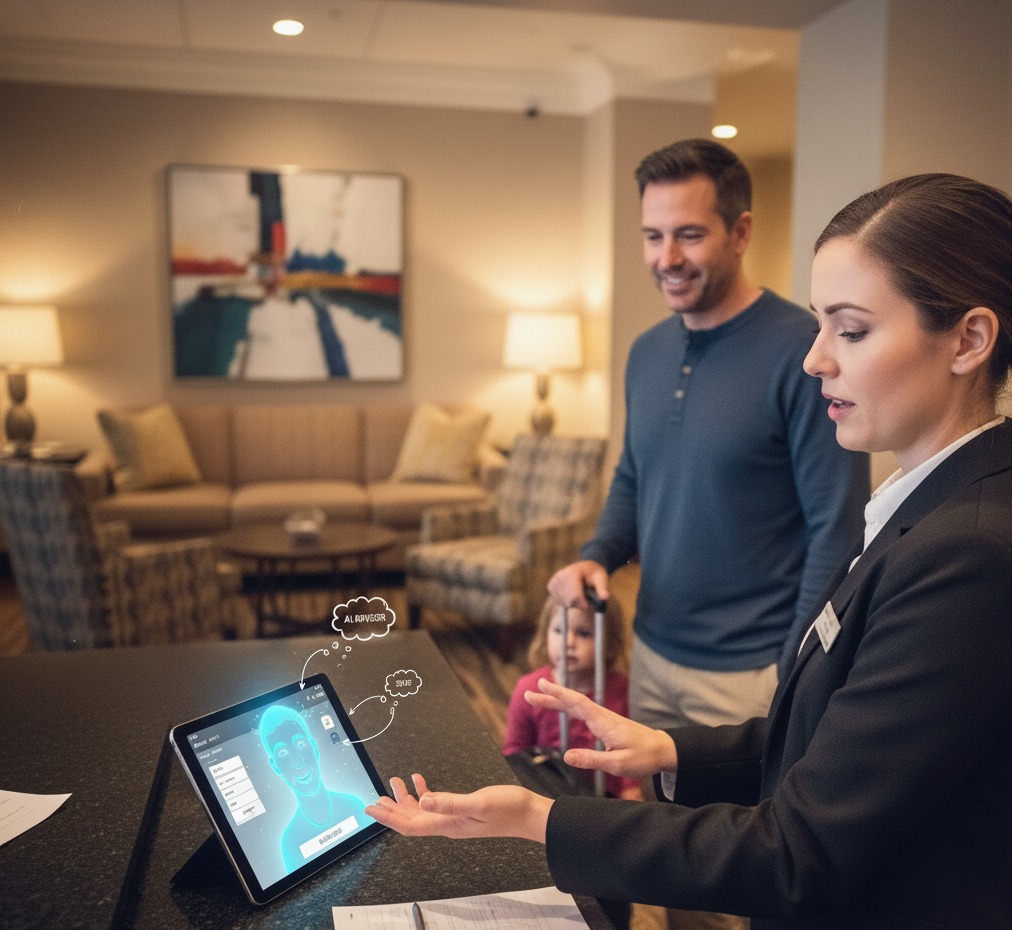
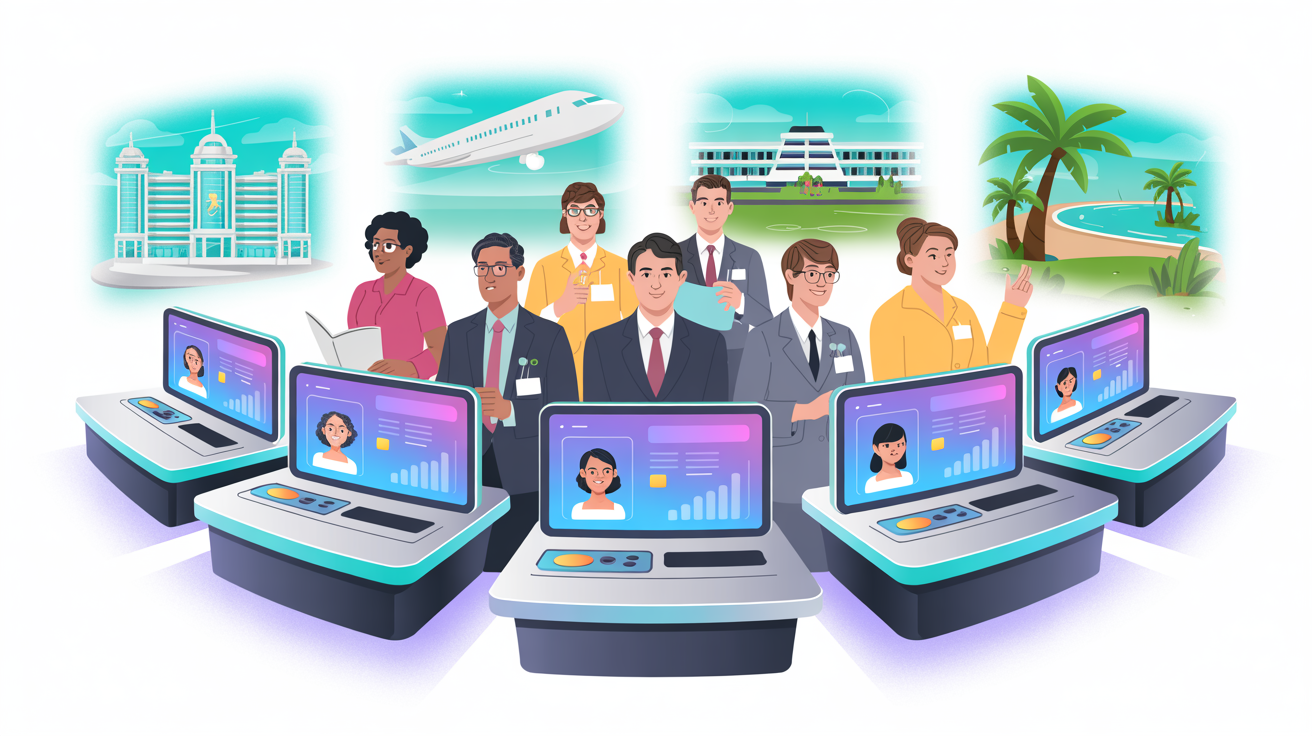
The way travel is sold is undergoing its most significant transformation since the internet moved bookings online. AI isn't replacing travel sellers — it's augmenting them, making the human selling process faster, better informed, and more personalised than ever before.
This comparison maps the traditional selling process against AI-enhanced selling at every stage, showing where technology adds the most value.
The Selling Process: Stage by Stage
Stage 1: Agent Preparation
Before the customer calls or walks in, the agent needs product knowledge and selling readiness.
| Aspect | Traditional | AI-Powered |
|---|---|---|
| Product knowledge | Brochures read (maybe), roadshow attended (if selected), BDM visit (if prioritised) | Interactive training modules for every product, completed and assessed |
| Knowledge depth | Knows 5-10 products well; vaguely aware of many more | Trained on 50-100+ products; knowledge tested and measurable |
| Selling preparation | Annual workshop on selling technique (if available) | AI roleplay practice — unlimited scenarios, anytime |
| Confidence level | Variable — depends on experience and memory | Built through systematic practice and coaching |
| Update currency | May not know about recent changes | Training updated instantly when products change |
Impact: An AI-prepared agent enters every customer conversation with broader knowledge, practised skills, and current information. The preparation gap between experienced and new agents narrows dramatically.
Stage 2: Needs Analysis
Understanding what the customer wants before recommending anything.
| Aspect | Traditional | AI-Powered |
|---|---|---|
| Question framework | Learned through experience (or not at all) | Trained and practised on structured needs analysis |
| Destination matching | Limited to agent's personal knowledge | Broader product range knowledge enables better matching |
| Customer profiling | Intuitive | Data-informed (CRM data, previous bookings) |
| Time to understand | 15-25 minutes (if thorough) | 10-15 minutes (more structured approach) |
Impact: Trained agents ask better questions, understand customer needs faster, and match to a wider range of products. The customer feels heard and the recommendation feels tailored.
Stage 3: Product Recommendation
Matching the right product to the customer's needs.
| Aspect | Traditional | AI-Powered |
|---|---|---|
| Products considered | 3-5 that the agent knows personally | 10-20+ from comprehensive training |
| Recommendation confidence | High for familiar products; low for others | Consistently high across trained product range |
| Comparison ability | Limited ("I think Hotel X is better than Y") | Evidence-based ("Hotel X scores higher on family facilities because...") |
| Alternative suggestions | Few (agent defaults to safe options) | Multiple alternatives matched to customer profile |
| Value articulation | Variable ("It's really nice") | Trained to articulate specific value ("The sunset-facing suites include a private plunge pool and butler service") |
Impact: Research from Phocuswright shows that customers convert 25-40% more when the recommendation feels specific and expert rather than generic.
Stage 4: Objection Handling
Responding to customer concerns and hesitations.
| Aspect | Traditional | AI-Powered |
|---|---|---|
| Preparation | Learn from experience; sink or swim | Practised through AI roleplay before facing real customers |
| Response quality | Inconsistent; depends on agent's experience | Coached and consistent across the team |
| Confidence | Often uncomfortable with objections | Practice builds confidence; objections become opportunities |
| Product-specific responses | Generic objection handling theory | Product-specific responses (trained for each product's common objections) |
| Recovery from mistakes | Agent may lose the sale if response is poor | Fewer mistakes because of practice; better recovery when they happen |
Impact: Objection handling is where the AI-practice advantage is most pronounced. Agents who have practised handling "I found it cheaper online" twelve times in simulation handle it smoothly when a real customer says it.
Stage 5: Upselling and Cross-Selling
Increasing the booking value through appropriate upgrades and add-ons.
| Aspect | Traditional | AI-Powered |
|---|---|---|
| Upselling frequency | Rarely attempted (agents fear being "pushy") | Regularly and naturally (trained to sell value, not push) |
| Upgrade knowledge | Knows 1-2 upgrade options | Trained on full upgrade range per product |
| Cross-sell awareness | Remembers insurance, forgets excursions | Systematic cross-sell knowledge for all ancillary products |
| Value framing | "Would you like to upgrade?" (weak) | "The sea-view suite includes a balcony — perfect for your anniversary sunset. It's £280 more for the week" (value-framed) |
| Impact on booking value | 0-5% uplift | 15-25% uplift from trained agents |
Impact: Upselling training delivers the highest per-booking revenue improvement. A £300 average uplift across 1,000 bookings = £300,000 additional revenue from training alone.
Stage 6: Closing
Converting the conversation into a confirmed booking.
| Aspect | Traditional | AI-Powered |
|---|---|---|
| Close rate | 25-35% (industry average) | 40-55% (trained agents) |
| Closing technique | Unstructured; waits for customer to decide | Practised with appropriate closing techniques |
| Urgency creation | "Book soon" (vague) | Specific, honest: "This departure has 4 rooms remaining at this price" |
| Follow-up | Inconsistent; may forget | Structured follow-up protocol |
| Lost sale analysis | No data | AI coaching identifies patterns in lost sales |
The Agent Experience
How AI Changes the Agent's Day
| Time of Day | Traditional Agent | AI-Empowered Agent |
|---|---|---|
| Start of day | Check emails, hope for enquiries | 5-minute microlearning session on today's focus product |
| Customer enquiry | Rely on memory; check brochure if needed | Access product training on phone during conversation for real-time reference |
| Between calls | Administrative tasks | Quick roleplay practice on a selling scenario |
| Quiet period | Idle or non-revenue activities | AI coaching session reviewing recent sales technique |
| End of day | Go home | 3-minute quiz reinforcing today's learning |
Agent Satisfaction Impact
| Factor | Traditional Environment | AI-Enhanced Environment |
|---|---|---|
| Confidence | Variable; dependent on experience | Built through systematic practice |
| Development | Limited to annual workshops | Continuous, self-directed, supported |
| Recognition | Informal | Certification, measurable achievements |
| Career progression | Unclear pathway | Visible progression through skill levels |
| Job satisfaction | Moderate | Higher (feeling competent and developing) |
CIPD research shows that employees with access to continuous development are 2.5x more likely to report high job satisfaction and 3x less likely to leave within 12 months.
The Business Impact
Revenue Comparison
| Metric | Traditional Selling | AI-Enhanced Selling | Difference |
|---|---|---|---|
| Enquiry conversion rate | 28-35% | 42-55% | +50-60% |
| Average booking value | Baseline | +15-25% | Significant yield improvement |
| Ancillary attachment rate | 25-35% | 50-65% | Near-doubled ancillary revenue |
| Customer satisfaction | 3.8/5 | 4.3/5 | Better reviews, more referrals |
| Repeat booking rate | 18-25% | 25-35% | Higher customer lifetime value |
Cost Comparison
| Cost Factor | Traditional | AI-Enhanced |
|---|---|---|
| Training delivery | £500-£1,500 per agent (workshops, BDM visits) | £50-£150 per agent (AI platform) |
| Content creation | £2,000-£5,000 per module | £200-£500 per module |
| Coaching | Not scalable (1:1 human coaching) | Scalable AI coaching |
| Skills practice | Workshop only (2-3 per year) | Unlimited roleplay |
| Performance analytics | Manual, limited | Automated, comprehensive |
The Transition: Not Replacement
AI doesn't replace the human elements that make travel selling effective:
| What AI Does | What Humans Do |
|---|---|
| Builds product knowledge at scale | Applies knowledge with empathy and intuition |
| Provides unlimited practice | Brings genuine enthusiasm and personal experience |
| Gives objective coaching | Builds emotional connections with customers |
| Tracks performance data | Makes nuanced judgement calls |
| Ensures consistent quality | Delivers exceptional, memorable service |
The best-performing agents in 2026 aren't choosing between traditional selling and AI. They're using AI to prepare better, practise more, and perform with greater confidence — while bringing their irreplaceable human qualities to every customer conversation.
Enhance your sales team with AI →
This article is part of our Travel Industry Trends series. Related reading: