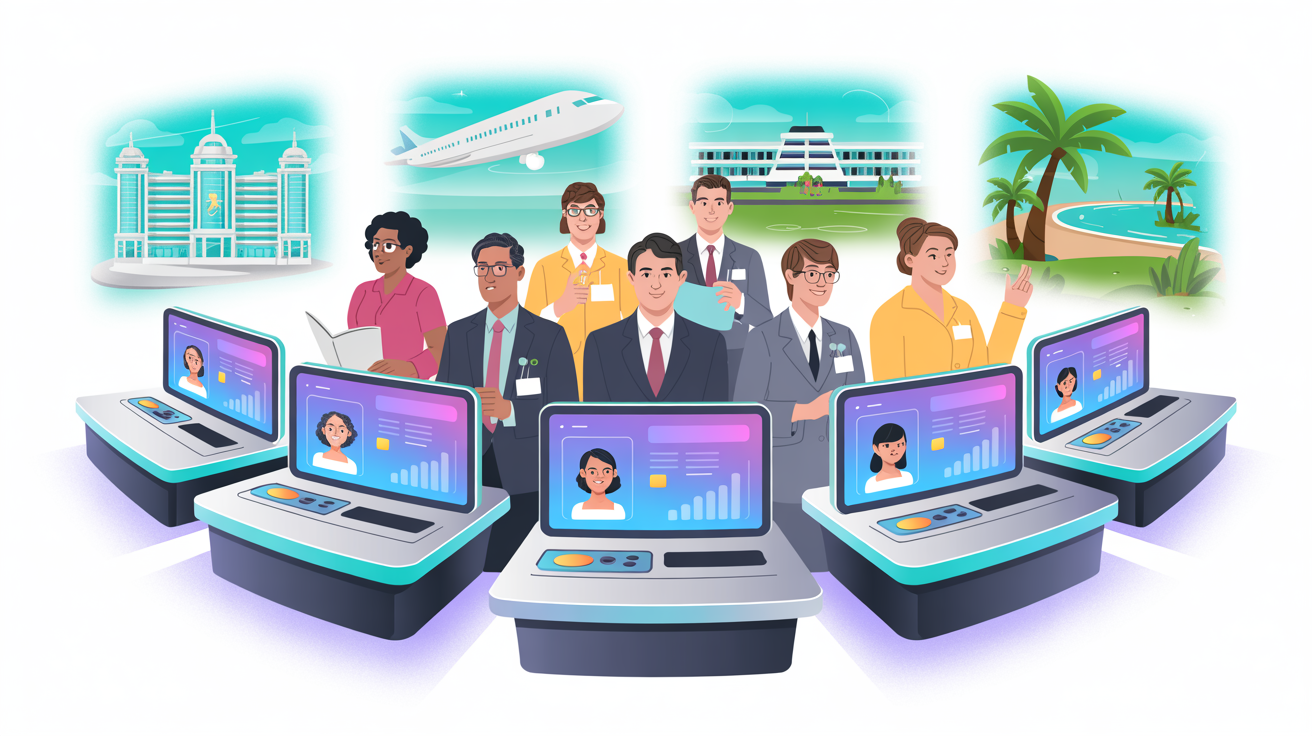
AI is transforming travel sales, but it's not making skills obsolete — it's changing which skills matter. The travel professionals who thrive in the AI era won't be the ones who resist technology. They'll be the ones who combine AI tools with distinctly human capabilities that no algorithm can replicate.
Here are the seven skills that separate the travel professionals who flourish from those who struggle.
1. Consultative Selling
Why It Matters More Than Ever
AI can present options. Humans can understand what customers truly want — often before the customer knows themselves.
Consultative selling means moving beyond "Where do you want to go?" and "What's your budget?" to understanding the customer's deeper motivations, concerns, and expectations. It's the difference between an order-taker (replaceable by AI) and a trusted advisor (irreplaceable).
What It Looks Like
| Order-Taking (At Risk) | Consultative Selling (Future-Proof) |
|---|---|
| "When do you want to travel?" | "Tell me about what you're hoping this holiday will feel like" |
| "What's your budget?" | "What matters most — and where are you happy to flex?" |
| "Here are three options" | "Based on everything you've told me, I'd recommend this — here's why" |
| "Let me check prices" | "Before we look at prices, let me make sure I've understood what makes this trip special for you" |
How to Develop It
- AI roleplay practice with diverse customer scenarios — first-time luxury, adventure seekers, anxious travellers, celebration trips
- AI coaching feedback on needs analysis technique
- Study the psychology of travel buying — understand emotional drivers
2. Deep Specialist Knowledge
Why It Matters More Than Ever
AI has access to every fact about every destination. But agents who have been there, who know the hidden details, who can speak from experience — they offer something AI cannot: authentic, tested expertise.
The future belongs to specialists, not generalists. An agent who knows everything about Southeast Asia is more valuable than one who knows a little about everywhere.
What It Looks Like
| Generalist Knowledge (Commoditised) | Specialist Expertise (Valuable) |
|---|---|
| "Thailand has beautiful beaches" | "Koh Lipe is quieter than Koh Samui but the snorkelling is better — specifically off Sunrise Beach" |
| "The hotel is well-rated" | "Room 204 has the best sunset view, and the chef's table on Fridays is worth booking in advance" |
| "It's a good destination for families" | "For families with teens, I'd avoid the south coast in July — the sea conditions aren't great for swimming" |
How to Develop It
- Complete AI-powered destination training to build comprehensive product knowledge
- Pursue specialist certification programmes
- Travel to your specialist destinations — nothing replaces personal experience
- Stay current with microlearning updates as products and destinations change
3. Emotional Intelligence
Why It Matters More Than Ever
Travel is emotional. Customers are spending significant money on experiences tied to life milestones — honeymoons, family reunions, anniversaries, bucket-list dreams. The ability to read, respond to, and manage emotions is a distinctly human skill that AI approximates but cannot genuinely replicate.
What It Looks Like
| Low EQ (Replaceable) | High EQ (Irreplaceable) |
|---|---|
| Follow the sales script regardless of mood | Adapt approach based on customer's emotional state |
| Push the upsell when customer is anxious | Recognise anxiety and address it before proceeding |
| Miss the subtext of "we just want to get away" | Understand this might signal stress, relationship difficulties, or burnout |
| Treat every enquiry identically | Recognise that an anniversary trip requires different energy than a lads' holiday |
How to Develop It
- Roleplay diverse emotional scenarios — nervous customers, excited couples, grieving families, stressed parents
- Practice active listening techniques in every customer interaction
- Seek coaching feedback specifically on emotional responsiveness
- Learn to identify emotional buying triggers beyond stated preferences
4. Storytelling and Experience Communication
Why It Matters More Than Ever
AI generates accurate descriptions. Humans tell stories that create desire. The ability to paint a picture of an experience — to make someone feel the warmth, see the sunset, taste the food — is what converts interest into bookings.
What It Looks Like
| Feature Description (AI Can Do This) | Experiential Storytelling (Human Strength) |
|---|---|
| "The hotel has an infinity pool overlooking the ocean" | "Imagine floating in the infinity pool at golden hour — the ocean stretches to the horizon and the only sound is waves" |
| "The room has a king-size bed and sea view" | "You wake up, pull back the curtains, and the first thing you see is turquoise water. That moment sets the tone for the whole day" |
| "The restaurant serves Mediterranean cuisine" | "The chef sources from the same fisherman every morning. Your seabass was in the Mediterranean three hours before it reached your plate" |
How to Develop It
- Practice sensory language: sight, sound, smell, taste, touch
- Use AI roleplay to practise descriptive selling with feedback on narrative technique
- Build a personal library of destination stories and experiences
- Study how luxury brands communicate experience, not features
5. Technology Fluency
Why It Matters More Than Ever
Paradoxically, thriving in the AI era requires understanding and embracing AI tools. Technology-fluent agents use AI to handle research, administration, and content creation — freeing time for the human skills above.
What It Looks Like
| Tech-Resistant (Struggling) | Tech-Fluent (Thriving) |
|---|---|
| Manually researches every enquiry from scratch | Uses AI research tools and training platforms to prepare efficiently |
| Types every proposal from blank page | Uses AI to generate proposal drafts, then personalises |
| Avoids new systems | Embraces AI coaching as a development tool |
| Spends 2 hours on admin per booking | Automates routine tasks, spends time with customers |
| "I don't do social media" | Uses social platforms as research and lead generation tools |
How to Develop It
- Start with one AI tool and master it before adding others
- Complete platform training thoroughly — don't just skim
- Follow travel technology news through Skift and Phocuswright
- Use AI roleplay and coaching regularly — familiarity builds fluency
6. Complex Problem-Solving
Why It Matters More Than Ever
AI handles routine problems. But when things go wrong in travel — cancelled flights, natural disasters, customer emergencies, supplier failures — the situations are unpredictable, emotionally charged, and require creative solutions that AI cannot provide.
What It Looks Like
| Routine Problem (AI Can Handle) | Complex Problem (Needs Human) |
|---|---|
| Rebooking a standard cancelled flight | Family stranded in Bali during volcanic ash closure with a diabetic child running low on medication |
| Processing an amendment request | Customer wants to completely restructure a multi-destination trip two days before departure due to a family emergency |
| Answering a pricing query | Supplier has overbooked; customer arrives to find no room available on their honeymoon |
How to Develop It
- Build a mental library of crisis scenarios and resolutions
- Practice with challenging roleplay situations that have no obvious answer
- Develop strong supplier relationships — knowing who to call matters more than knowing what to say
- Learn from every problem you solve — each one adds to your toolkit
7. Relationship Building and Trust
Why It Matters More Than Ever
Trust takes time, consistency, and authenticity — things AI cannot manufacture. Customers who trust their travel advisor return year after year, refer friends, and buy higher-value trips. This relationship is the ultimate competitive moat against both AI and OTAs.
According to ABTA research, 72% of repeat customers cite their relationship with their travel advisor as the primary reason for returning.
What It Looks Like
| Transactional (Replaceable) | Relationship-Based (Irreplaceable) |
|---|---|
| Contact customer only when they enquire | Proactive outreach with relevant opportunities |
| Know the customer's booking history | Know the customer's family names, travel dreams, and preferences |
| Send generic marketing emails | Share personally selected ideas based on their interests |
| See each booking as a transaction | See each customer as a long-term relationship |
How to Develop It
- Keep detailed customer notes — not just booking data, but personal information shared during conversations
- Use training time to learn about products your specific customers would enjoy
- Schedule proactive outreach based on customer milestones (birthdays, anniversaries, post-trip follow-up)
- Build your personal brand as a trusted expert through content and social media
The Skills Development Plan
| Skill | Development Tool | Time Investment |
|---|---|---|
| Consultative selling | AI roleplay + coaching | 30 min/week |
| Specialist knowledge | AI training modules | 20 min/day |
| Emotional intelligence | Roleplay with diverse scenarios | 30 min/week |
| Storytelling | Practice in roleplay + real conversations | Ongoing |
| Technology fluency | Platform training + AI tool exploration | 1 hour/week |
| Problem-solving | Complex scenario practice | Monthly |
| Relationship building | Proactive customer outreach | Daily |
The travel professionals who master these seven skills will find that AI doesn't threaten their livelihood — it amplifies it. AI handles the tasks that consume time. Human skills create the value that earns trust, builds relationships, and closes bookings.
Develop your AI-era skills with TravAI →
This article is part of our Travel Industry Trends series. Related reading: