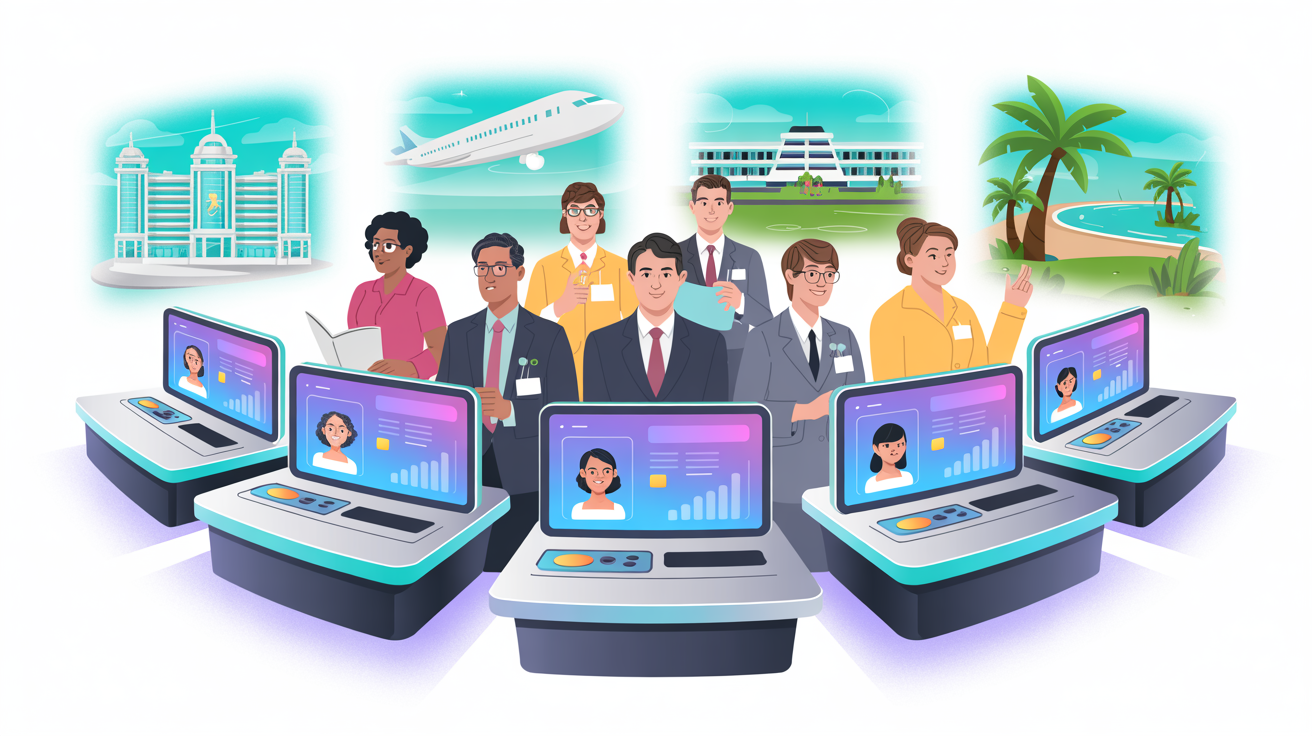
Global travel demand has fully recovered and surpassed 2019 levels. But the workforce hasn't kept pace. The industry lost an estimated 62 million jobs during the pandemic, according to the World Travel & Tourism Council, and while many have returned, critical gaps remain — in numbers, in skills, and in the pipeline of future talent.
This creates both an urgent problem and a strategic opportunity for travel businesses that respond effectively.
The Numbers
Demand vs Workforce Recovery
| Metric | 2019 Baseline | 2024 | 2026 (Projected) |
|---|---|---|---|
| Global international arrivals | 1.46 billion | 1.36 billion | 1.55 billion |
| UK outbound trips | 93 million | 88 million | 96 million |
| UK travel industry employment | 3.2 million | 2.8 million | 3.0 million |
| Travel industry vacancies (UK) | ~80,000 | ~115,000 | ~105,000 |
| Average time to fill travel role | 28 days | 45 days | 40 days |
The gap: Demand has recovered to approximately 106% of 2019 levels. The workforce has recovered to approximately 94%. This 12-percentage-point gap means the same or more work is being done by fewer people.
Where the Gaps Are Worst
| Sub-sector | Vacancy Rate (UK) | Impact |
|---|---|---|
| Hospitality (hotels, restaurants) | 8-10% | Service quality decline; increased workload |
| Aviation (ground staff, cabin crew) | 6-8% | Flight delays; cancellations; customer frustration |
| Travel agencies | 5-7% | Experienced agent shortage; rising salaries |
| Tour operations | 4-6% | Slower product development; weaker trade support |
| Cruise | 6-8% | Crew shortages affecting onboard service |
| Attractions | 7-9% | Seasonal staffing crises; inconsistent experience |
Why People Left and Aren't Returning
| Reason for Leaving | % Citing This Reason | % Returning |
|---|---|---|
| Found work in another industry during pandemic | 35% | 40% only |
| Sought better pay | 28% | Low — pay gap remains |
| Wanted more stable hours | 18% | Low — irregular hours persist |
| Relocated | 12% | Very low |
| Retired early | 7% | Minimal |
CIPD research shows that 60% of travel industry leavers who moved to other sectors during the pandemic have no intention of returning — primarily due to better pay, more predictable hours, and perceived career stability in their new industries.
The Five Workforce Challenges
Challenge 1: The Skills Gap
It's not just about numbers — it's about capability. Experienced professionals who left took institutional knowledge with them:
| Skills Gap | Business Impact |
|---|---|
| Product knowledge loss | Agents sell narrower range; miss upsell opportunities |
| Selling skills deficit | Lower conversion rates; lower booking values |
| Destination expertise drain | Generic recommendations; reduced customer confidence |
| System/process knowledge | Errors, delays, and inefficiency |
| Leadership pipeline | Fewer internal candidates for management roles |
For travel agencies, ABTA reports that the average experience level of front-line agents dropped from 8.2 years to 5.1 years between 2019 and 2024 — a loss of three years of collective experience.
Challenge 2: The Onboarding Bottleneck
With more new hires and fewer experienced mentors, onboarding has become a critical bottleneck:
| Onboarding Metric | Pre-Pandemic | Current |
|---|---|---|
| Experienced mentors per new hire | 1:1 to 1:2 | 1:4 to 1:6 |
| Time to independent selling | 4-6 weeks | 8-12 weeks |
| New hire productivity (first 90 days) | 60% of experienced agent | 35-45% of experienced agent |
| New hire attrition (first 6 months) | 15-20% | 25-35% |
Traditional mentoring models don't scale when there aren't enough mentors. AI-powered onboarding addresses this by providing consistent, comprehensive training and coaching regardless of mentor availability.
Challenge 3: Retention
Replacing a travel professional costs 1-2x their annual salary when you account for recruitment, training, lost productivity, and customer relationship disruption. Yet turnover in travel remains 30-45% — well above the UK average of 15%.
| Retention Factor | What Employees Want | Current Industry Reality |
|---|---|---|
| Career development | Clear progression path | Limited training budgets; ad hoc development |
| Competitive pay | Market-rate or above | 10-20% below comparable roles in other sectors |
| Work-life balance | Predictable hours | Weekend/evening work; seasonal pressure |
| Recognition | Achievement acknowledged | Focus on metrics, not individual development |
| Modern tools | Technology that helps them succeed | Outdated systems; manual processes |
Challenge 4: The Pipeline Problem
Fewer young people are entering travel careers:
| Pipeline Metric | Trend |
|---|---|
| Travel and tourism university enrolments | -22% since 2019 |
| Travel apprenticeship starts | -18% since 2019 |
| Travel careers rated "attractive" by 18-25s | 28% (vs 45% in 2018) |
| Average age of travel agent | Increasing (now 42, up from 38 in 2019) |
The industry's image problem — low pay, long hours, pandemic vulnerability — is deterring the next generation. Without a stronger pipeline, the workforce crisis will deepen.
Challenge 5: The Productivity Imperative
With fewer people doing more work, productivity must increase:
| Productivity Approach | Feasibility | Impact |
|---|---|---|
| Work longer hours | Short-term only (causes burnout and turnover) | Low sustainability |
| Hire more staff | Constrained by labour market and budgets | Limited availability |
| Improve skills through training | Highly feasible with AI | High — 15-35% productivity gain |
| Automate routine tasks | Feasible with modern tools | Medium-High — frees capacity |
| Use AI tools to augment capability | Highly feasible | High — each person does more, better |
AI as the Workforce Solution
How AI Addresses Each Challenge
| Challenge | AI Solution | Impact |
|---|---|---|
| Skills gap | AI training at scale — every team member gets comprehensive product and skills training | Closes knowledge gaps 3-5x faster than traditional methods |
| Onboarding bottleneck | AI-powered onboarding replaces mentor dependency | New hires productive in 1-2 weeks instead of 8-12 |
| Retention | AI coaching and development signals investment in people | Reduces turnover by 25-40% |
| Pipeline | Modern, technology-enabled workplaces attract younger workers | Competitive positioning for recruitment |
| Productivity | AI handles research, admin, content — humans focus on high-value work | 25-40% productivity improvement |
The Economic Case
| Investment | Annual Cost | Annual Return |
|---|---|---|
| AI training platform | £12,000-£30,000 | £50,000-£150,000 in productivity gains |
| AI coaching | Included in platform | 15-25% conversion improvement |
| Reduced turnover | Included in platform | £30,000-£100,000 saved per year (mid-size business) |
| Faster onboarding | Included in platform | £15,000-£40,000 in accelerated productivity |
| Total | £12,000-£30,000 | £110,000-£340,000 |
Based on industry benchmarks.
Practical Strategies
Immediate Actions (This Quarter)
| Action | Purpose | Tool |
|---|---|---|
| Implement AI training platform | Address skills gap at scale | TravAI platform |
| Redesign onboarding programme | Reduce time to competence | AI-powered modules |
| Launch certification programme | Create career progression pathway | Assessments |
| Enable AI coaching for existing team | Accelerate skills development | AI coaching tools |
Medium-Term Actions (This Year)
| Action | Purpose |
|---|---|
| Develop internal career pathways | Improve retention through visible progression |
| Build employer brand on social media | Attract next-generation talent |
| Connect training to performance data | Prove development investment value |
| Introduce flexible working where possible | Compete with other sectors on work-life balance |
| Review compensation against market | Address the pay gap reality |
Longer-Term Actions (12-24 Months)
| Action | Purpose |
|---|---|
| Partner with education providers | Build talent pipeline |
| Create apprenticeship and graduate programmes | Attract career starters |
| Develop leadership training for internal promotion | Build management pipeline |
| Establish travel as a technology-enabled career | Change industry perception |
The Opportunity
The workforce crisis is real and serious. But it also creates opportunity for businesses that respond strategically:
| If You Act Now | Competitive Advantage |
|---|---|
| Train faster with AI | Your team sells effectively while competitors struggle |
| Retain better through development | Your experienced staff stay while competitors churn |
| Onboard faster | Your new hires contribute sooner |
| Attract talent with modern tools | Best candidates choose you over competitors |
| Build productivity with AI | Same headcount delivers more revenue |
The travel businesses that treat the workforce challenge as a technology and training problem — not just a recruitment problem — will emerge stronger, more productive, and more competitive.
Address your workforce challenges with TravAI →
This article is part of our Travel Industry Trends series. Related reading: