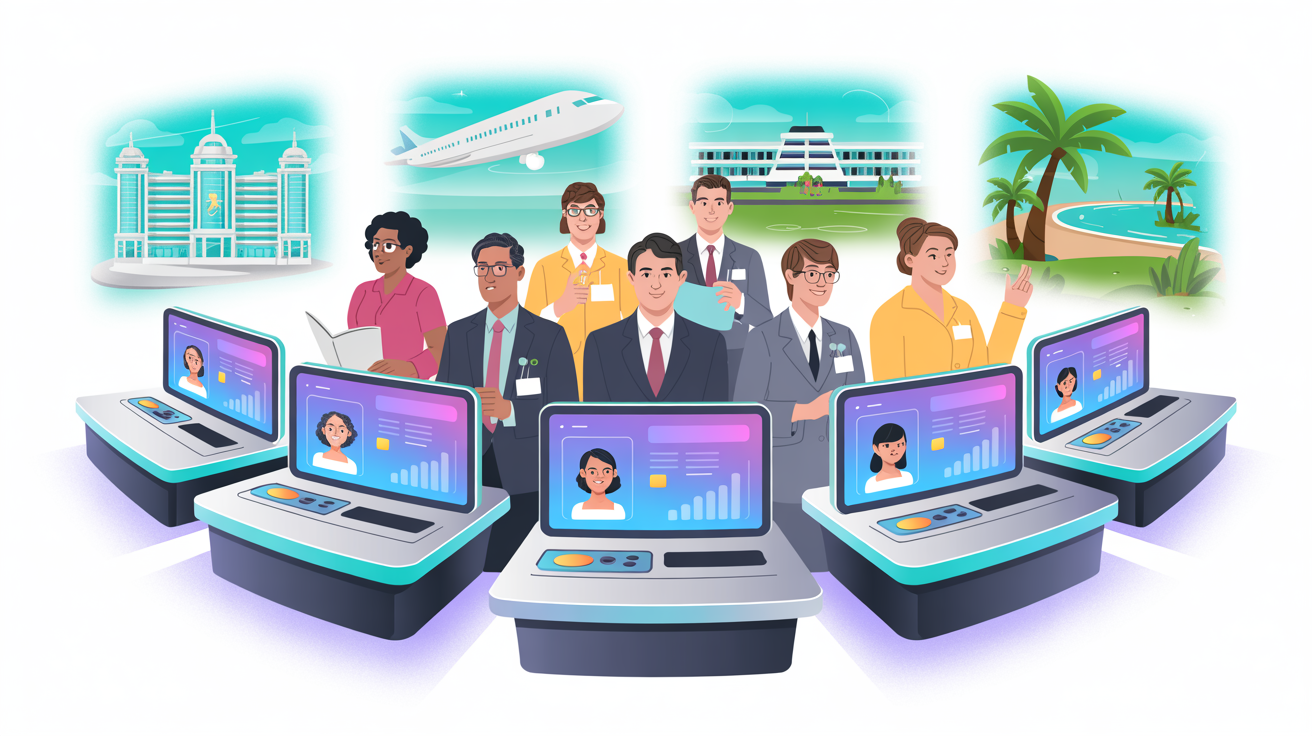
Marketing creates demand. Sales enablement converts it. When these functions operate in silos — which they do in most travel businesses — the result is a leaky funnel: marketing generates customer interest that sales teams can't capitalise on, while sales teams request support that marketing doesn't prioritise.
The alignment problem is structural, not personal. Marketing teams are measured on reach, engagement, and brand metrics. Sales teams are measured on bookings, revenue, and conversion rates. Neither function is incentivised to support the other's objectives — so they don't, except through ad hoc favours and occasional frustration.
In travel businesses, where customer enquiries often follow an inspiration-to-booking journey that crosses both marketing and sales touchpoints, this misalignment costs bookings. Here's how to fix it.
Where Misalignment Costs Revenue
The Content Gap
Marketing creates beautiful destination content — Instagram posts, blog articles, email campaigns, brochure photography — designed to inspire customers. Agents need selling content — product comparisons, objection responses, customer-matching guides, quick-reference sheets — designed to close bookings.
Neither department creates what the other needs. The marketing team doesn't produce selling tools because it's not their remit. The sales team doesn't create inspirational content because they lack the skills and time. The gap between inspiration and conversion goes unfilled.
The Sales Enablement Society estimates that 60-70% of content created by marketing teams is never used by sales teams — not because it's bad, but because it's designed for a different purpose.
The Messaging Gap
Marketing communicates one message to customers (aspirational, brand-focused, emotionally driven). Agents communicate a different message (product-specific, practical, decision-oriented). When a customer moves from seeing a marketing campaign to speaking with an agent, the messaging disconnects.
A customer inspired by a campaign about "adventure in Costa Rica" speaks to an agent who has never seen the campaign and talks about room types and transfer times. The emotional thread is broken. The agent sells from their default script rather than building on the marketing narrative.
The Timing Gap
Marketing campaigns run on planned calendars — January sale, Easter promotions, summer launch, Black Friday. Sales teams work on customer-driven timelines — the enquiry arrives when it arrives. If agents aren't briefed on current campaigns, they can't leverage campaign momentum in customer conversations.
"You mentioned you're interested in Greece? We actually have a special promotion running right now on Greek islands — 25% off selected properties until the end of the month."
This sentence converts enquiries. But it only happens if the agent knows about the promotion. In businesses without marketing-sales alignment, agents often learn about campaigns from their customers — which is embarrassing and unprofessional.
The Alignment Framework
Shared Content Strategy
Create a unified content strategy that serves both marketing and sales needs from the same source material.
The principle: Every piece of content should have two lives — a marketing version (for customer-facing channels) and an enablement version (for agent-facing use).
| Marketing Content | Enablement Content (from same source) |
|---|---|
| Destination blog post (customer-facing) | Destination selling guide (agent-facing) |
| Hotel photography campaign | Annotated property comparison cards |
| Social media destination series | Agent social sharing toolkit with pre-written posts |
| Email campaign promoting an offer | Agent briefing on the offer with selling tips and talk tracks |
| Customer testimonial video | Agent training module using testimonial as a selling tool |
This dual-purpose approach maximises the value of every content investment. Marketing gets the reach they need; sales gets the tools they need. Both are created from the same source material, ensuring message consistency.
Campaign Alignment Rhythm
Establish a regular cadence where marketing briefs the sales team on upcoming campaigns and sales feeds customer insights back to marketing:
Weekly: Marketing shares the week's active campaigns, promotions, and content. Sales shares which customer questions and objections are trending. 15-minute sync — can be asynchronous via a shared channel.
Monthly: Joint planning session. Marketing previews next month's campaigns. Sales provides feedback on which current content is most useful and what's missing. Enablement team identifies training needs aligned to campaign themes.
Quarterly: Strategic review. Are campaigns generating the right enquiries? Are agents converting campaign-driven enquiries effectively? What adjustments to messaging, content, or training would improve the pipeline from awareness to booking?
Agent Campaign Briefings
Before every major campaign launch, create an agent briefing that covers:
- What the campaign is: The offer, the target audience, the dates, the messaging
- How to sell it: Specific talk tracks for converting campaign-generated enquiries
- Common questions: What customers will ask and how to answer
- Product knowledge: Quick training module on the featured products
- Resources: Links to promotional materials, images, and booking procedures
Deliver briefings through your training platform with a brief assessment quiz to confirm agents have absorbed the key information. This takes 5-10 minutes and transforms agent readiness from "unaware" to "prepared."
Shared Metrics
The most powerful alignment lever: give both teams shared metrics they're jointly accountable for.
Marketing-only metrics (reach, impressions, click-through rates) don't incentivise conversion support. Sales-only metrics (bookings, revenue) don't incentivise demand generation. Shared metrics create joint accountability:
-
Campaign-to-booking conversion rate: What percentage of campaign-generated enquiries become bookings? Marketing controls the quality and volume of enquiries; sales controls the conversion. Both have skin in the game.
-
Content-influenced revenue: Revenue from bookings where the customer engaged with marketing content and the agent used enablement content. This measures the full journey.
-
Agent recommendation rate for promoted products: Are agents actually recommending the products marketing is promoting? If marketing drives customer interest in Greece but agents recommend Spain, the alignment is broken.
Performance analytics platforms that track both marketing engagement and sales conversion data make shared metrics measurable. Without integrated data, shared accountability is aspirational.
Customer Journey Mapping
Map the typical customer journey from first awareness to booking confirmation, identifying every marketing and sales touchpoint:
Awareness: Customer sees Instagram ad / travel show / newspaper feature → Marketing touchpoint Interest: Customer visits website / downloads brochure / signs up for email → Marketing touchpoint Consideration: Customer makes enquiry to agency / calls for advice → Sales touchpoint Decision: Customer receives recommendation / discusses options / handles objections → Sales touchpoint Purchase: Customer confirms booking / pays deposit → Sales touchpoint Post-booking: Customer receives confirmation / pre-departure info / travel documents → Shared touchpoint
At each transition from marketing to sales, ensure:
- The agent has visibility into which marketing content the customer engaged with
- The messaging is consistent (the agent builds on what marketing started, not contradicts it)
- The agent has been trained on the current campaign offerings
Practical Steps for Travel Businesses
If You're a Small Agency
Marketing and sales are often the same people — the agents. Alignment is simpler but still requires discipline:
- Ensure agents know what's being posted on social media and can follow up on engagement
- Brief agents on email campaign offers before they launch
- Create a simple shared document listing current promotions and selling tips
If You're a Tour Operator
Marketing targets consumers; enablement targets your agent network. Alignment means ensuring:
- Agent training reflects current consumer messaging (agents sell what marketing promotes)
- Trade enablement content supports consumer campaigns
- BDM visits are timed to coincide with major campaign launches
- Agent feedback on customer questions feeds back into marketing messaging
If You're a DMO
Marketing promotes the destination to consumers and to the trade. Alignment means:
- Agent training programmes reflect current brand positioning
- Seasonal marketing campaigns have corresponding seasonal agent enablement content
- Trade and consumer messaging tell the same story from different angles
- Agent engagement data informs marketing channel decisions
If You're a Hotel Group or Cruise Line
Direct sales teams and trade distribution need coordinated enablement:
- Direct sales teams receive the same product updates as trade partners
- Marketing campaigns targeting consumers are mirrored by training campaigns targeting agents
- Central marketing provides assets that both direct and trade teams can use
The Technology Bridge
The technical integration between marketing and sales enablement platforms creates the data flow that makes alignment measurable:
- Marketing automation → CRM: Customer engagement data available to agents
- Training platform → Marketing: Agent readiness data informs campaign timing
- CRM → Marketing: Booking data attributes revenue to marketing campaigns
- Analytics dashboard → Both teams: Shared view of the full funnel
TravAI's platform integrates with marketing and CRM systems to provide the shared data view that makes alignment actionable rather than aspirational.
The goal isn't perfect alignment — it's functional alignment where both teams work from the same information, towards the same outcomes, with shared accountability for the customer journey from inspiration to booking.
Align your marketing and enablement with TravAI →
This article is part of our Sales Enablement for Travel series. Related reading: